A laptop screen extender can turn a single display into a more productive dual- or triple-screen workstation without requiring a full desktop setup. The best models balance useful screen space with manageable weight, reliable connections, and easy installation.
We compared 10 portable laptop monitors across screen size, resolution, compatibility, portability, and flexibility. Whether you need more room for spreadsheets, coding, creative work, or video calls, this roundup can help you find the right fit for your laptop and workflow.
Best 10 Laptop Screen Extenders Picks for 2026
Best All-Around Extender
KEFEYA 14-Inch FHD Laptop Screen Extender

- 14-inch 1080p IPS display
- USB-C and HDMI connectivity
- Rotates 180° with multiple display modes
Best For: Flexible work, travel, and entertainment setups
Best for Flexible Viewing
Funhill 14.1-Inch Rotating Screen Extender

- 14.1-inch 1080p IPS display
- Rotates from 0 to 280 degrees
- Includes USB-C, HDMI, and adapter cables
Best For: Presentations, travel, and portrait-mode work
Best Triple-Screen Option
Vixtan 14-Inch Triple Laptop Screen Extender

- Adds triple-screen productivity
- FHD IPS display with 100% sRGB
- Lightweight 3-pound travel design
Best For: Traders, developers, designers, and intensive multitasking
Most Flexible Triple-Screen Extender
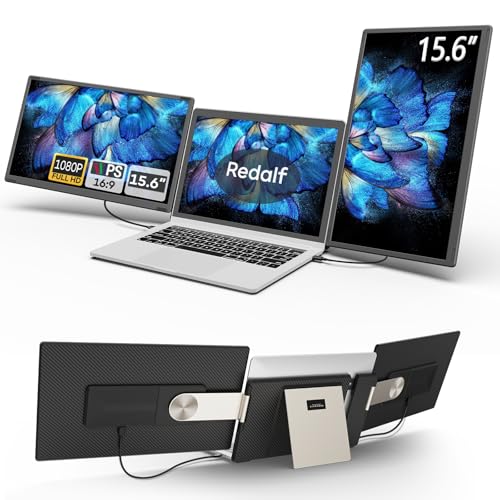
- 235° horizontal and 90° vertical rotation
- Detachable 15.6-inch screens
- USB-C, USB-A, and HDMI connectivity
Best For: Flexible triple-screen setups and presentations
Best for Vertical Workspace

- 16:10 1920×1200 IPS displays
- 350-nit brightness and 60Hz refresh rate
- Two-cable USB-C setup
Best For: Documents, coding, spreadsheets, and mobile offices
Best Compact Option
14" 1080P Rotating Dual Monitor

- 14.1-inch 1080p IPS display
- 180° rotation with portrait mode
- Foldable design with HDMI and USB-C
Best For: Travel, remote work, and compact second-screen setups
Best Lightweight Pick
Synnov 15.6-inch Portable Monitor Extender

- 15.6-inch 1080p IPS screen with 178-degree viewing angle
- 0.19-inch-thin aluminum design weighing about 4 pounds
- Supports portrait mode and includes cables and carry bag
Best For: Mobile workers who need a portable triple-screen setup
Best Simple Pick
14-inch FHD Triple Monitor Extender

- Dual 1080p IPS displays with 300-nit brightness
- 3.37-pound body designed for travel
- Supports portrait and presentation modes
Best For: Students and travelers seeking a lighter, compact triple-screen setup
Best All-Around Extender – KEFEYA 14-Inch FHD Laptop Screen Extender
The KEFEYA is a practical choice among laptop screen extenders for users who want a portable second display without installing drivers. Its 14-inch 1080p IPS screen supports USB-C and HDMI connections, while multiple display modes and 180-degree rotation make it adaptable for work, calls, entertainment, and gaming.
Best For: Remote workers, travelers, programmers, stock traders, and multitaskers who need a flexible second screen.
Pros:
- 14-inch 1920×1080 IPS display with 60Hz refresh rate and 300-nit brightness
- Plug-and-play setup with USB-C, USB-A, and HDMI cables included
- Supports mirror, extended, landscape, and portrait modes
- Broad compatibility with Windows, Mac, Chrome, Linux, Android, and selected consoles
Cons:
- HDMI connections require an additional USB cable for power
- USB-C video requires a compatible full-featured port
With its strong compatibility list and included cables, the KEFEYA offers a well-rounded laptop screen extender for mobile productivity. Confirm your laptop’s port capabilities before buying, especially if you plan to use USB-C video.
Best for Flexible Viewing – Funhill 14.1-Inch Rotating Screen Extender
The Funhill is one of the more adaptable laptop screen extenders for users who frequently change viewing angles. Its 14.1-inch 1080p IPS panel rotates up to 280 degrees and connects through USB-C or HDMI, with the necessary cables and adapter included.
Best For: Remote workers, business travelers, presenters, programmers, and users who need portrait or mirrored display options.
Pros:
- 14.1-inch FHD IPS display with 1920×1080 resolution
- Wide 0–280-degree rotation range for flexible positioning
- Plug-and-play USB-C or HDMI connection without driver installation
- Includes USB-C, USB-A, HDMI, Mini-HDMI, and adapter cables
Cons:
- USB-C connection requires full-featured USB-C with DisplayPort or Thunderbolt support
- HDMI use requires a separate USB connection for power
The Funhill stands out when adjustability and connection flexibility matter most. Its rotation range is useful for collaboration and portrait-oriented work, but checking your laptop’s USB-C specifications is essential before relying on one-cable operation.
Best Triple-Screen Option – Vixtan 14-Inch Triple Laptop Screen Extender
The Vixtan expands compatible laptops into a triple-screen workstation, making it a strong pick among laptop screen extenders for heavy multitasking. It combines a 14-inch FHD IPS display with a lightweight design, adjustable stand, and plug-and-play connectivity for Windows, macOS, ChromeOS, and other supported devices.
Best For: Traders, developers, designers, remote workers, students, and digital nomads who need maximum screen space.
Pros:
- Creates a triple-screen setup with extended, mirrored, and portrait modes
- 14-inch 1080p IPS display with 300-nit brightness and 100% sRGB coverage
- Thin, travel-oriented design weighing 3.0 pounds
- Adjustable stand with 180-degree horizontal rotation and non-slip supports
Cons:
- MacBook M1, M2, and M3 models support only a single external screen without a DisplayLink adapter
- Power may require a 5V/3A or higher adapter if flickering or low brightness occurs
The Vixtan is the most productivity-focused option here, especially for users who routinely manage several apps or dashboards. Its triple-screen capability is compelling, but Mac users should verify model-specific display limitations before purchasing.
Best Large-Screen Setup – KYY 15.6-Inch Triple Screen Extender
The KYY provides a larger dual-panel expansion for users comparing laptop screen extenders built for workstation-style use. Its two 15.6-inch 1080p IPS screens offer generous viewing space, while the one-cable USB-C connection, adjustable stand, and rotating panels support flexible desk and meeting setups.
Best For: Stock traders, financial analysts, designers, and professionals who want a large multi-screen workspace.
Pros:
- Two 15.6-inch FHD IPS screens with 178-degree viewing angles
- One USB-C to USB-C cable can simplify the connection process
- Panels rotate from 0 to 360 degrees for flexible viewing and sharing
- Aluminum alloy construction, built-in stand, and included cables and power adapter
Cons:
- Drivers must be downloaded before use
- Not compatible with PS5, Xbox Series X, and other gaming consoles
- Its larger size may be less convenient for compact travel setups
The KYY is suited to users who prioritize screen size over the smallest possible travel footprint. Its two large panels and rotation range are useful for multi-monitor work, but plan for driver installation and confirm that your operating system is supported.
Most Flexible Triple-Screen Extender – 15.6" 1080P Rotating Monitor
This laptop screen extender is a versatile choice for users who want a configurable triple-screen workspace. Its dual 15.6-inch 1080p IPS displays support horizontal and vertical positioning, while the detachable design lets you use either side independently when traveling.
Best For: Professionals, presenters, programmers, and multitaskers who want flexible landscape, portrait, or stacked-screen configurations.
Pros:
- 235° horizontal and 90° vertical rotation supports multiple viewing layouts.
- 15.6-inch 1080p IPS screens offer 300-nit brightness, anti-glare viewing, and low-blue-light features.
- Plug-and-play connectivity supports USB-C, USB-A, and HDMI connections without drivers.
- Detachable screens can be used independently, with each side weighing 2.1 pounds.
Cons:
- HDMI use requires an additional USB-A-to-USB-C cable for power.
- Compatibility varies by device; the listed Mac support excludes M1, M2, and M3 chips.
- The dual-sided setup may be relatively heavy for frequent travel.
This model stands out among laptop screen extenders for its rotation options and detachable construction. It is a strong fit when layout flexibility matters more than minimizing travel weight.
Best for Vertical Workspace – 16" 1200P Ultra-Slim Extender
This laptop screen extender prioritizes workspace and portability with two 16-inch IPS displays using a taller 16:10 aspect ratio. The 1920×1200 resolution provides additional vertical room for documents, spreadsheets, web pages, and code.
Best For: Remote workers, students, developers, traders, and professionals who need more vertical screen space in a portable triple-screen setup.
Pros:
- 16-inch 1920×1200 displays provide more vertical space than standard 1080p screens.
- 350-nit brightness and IPS panels support clear text and vivid visuals.
- Two USB-C cables provide a simple, driver-free setup with less cable clutter.
- Ultra-slim 6.5mm screens and an aluminum-alloy construction suit travel between locations.
Cons:
- The laptop must have two full-featured USB-C ports for the stated two-cable setup.
- The 16:10 displays may require checking application or device compatibility before purchase.
- The supplied details do not specify support for HDMI connections.
Choose this extender when extra vertical workspace and a slim aluminum design are higher priorities than broad connection options. Its two-cable setup is particularly convenient for compatible USB-C laptops.
Best Compact Option – 14" 1080P Rotating Dual Monitor
This compact laptop screen extender adds a 14.1-inch 1080p IPS display for multitasking without the larger footprint of some dual-screen models. It supports extension, mirroring, landscape, and portrait modes and includes cables for USB-C, USB-A, and HDMI connections.
Best For: Travelers, remote workers, programmers, stock traders, and anyone needing a foldable second screen for work or entertainment.
Pros:
- 14.1-inch 1920×1080 IPS display offers 300-nit brightness and a 60Hz refresh rate.
- 180° rotation supports landscape, portrait, and screen-sharing configurations.
- Plug-and-play operation requires no driver installation.
- Foldable, lightweight design fits conveniently in a computer bag.
Cons:
- HDMI connections require an extra cable for power.
- The 14.1-inch screen provides less workspace than the 15.6- and 16-inch alternatives.
- At approximately 0.89 kg, it may still add noticeable weight to a travel setup.
This is a practical pick among laptop screen extenders for users who value portability and connection flexibility. Its smaller display balances added workspace with a more travel-friendly foldable form.
Best Overall – 15.6-inch FHD Triple-Screen Extender
This 15.6-inch model is a strong all-around choice among laptop screen extenders, combining a large 1080p IPS display with a slim, freestanding design. It supports extend, mirror, and second-screen modes without requiring drivers, provided your laptop has the necessary video-output ports.
Best For: Remote workers, traders, designers, and frequent travelers who want a roomy triple-screen setup.
Pros:
- 15.6-inch 1920×1080 IPS display with 300-nit brightness
- Ultra-slim 0.18-inch design with included leather carry bag
- Freestanding adjustable stand avoids pressure on the laptop lid
- Built-in software offers display controls, split-screen, and low-blue-light modes
Cons:
- Requires two video-output connections for the standard setup
- Some laptops, including M1-M4 MacBooks, may require a separate H5 cable
- At 3.9 pounds, it is not the lightest option in this group
Its combination of screen size, brightness, software controls, and laptop-friendly stand makes it a well-rounded pick. Confirm your laptop’s ports before ordering, especially if you use a newer MacBook.
Best Lightweight Pick – Synnov 15.6-inch Portable Monitor Extender
The Synnov is a practical option for shoppers comparing laptop screen extenders for travel and flexible workspaces. Its 15.6-inch 1080p IPS panel, aluminum construction, and simplified USB-C or USB-C-and-HDMI setup make it suited to mobile productivity.
Best For: Business travelers, home-office users, programmers, and anyone prioritizing a relatively light portable setup.
Pros:
- 15.6-inch Full HD IPS screen with a 178-degree viewing angle
- About 4 pounds and 0.19 inches thick for easier packing
- Supports extend, mirror, and portrait modes
- Includes cables, power adapter, and leather carry bag
Cons:
- Requires at least one full-featured USB-C port
- Listed as incompatible with M1, M2, and M3 MacBooks because of chip limitations
- Its 280-nit brightness is slightly lower than some alternatives
The Synnov balances portability and workspace expansion well, but compatibility is the key consideration. Check for a full-featured USB-C port before buying, particularly when using a MacBook.
Best Simple Pick – 14-inch FHD Triple Monitor Extender
This 14-inch model is a compact choice among laptop screen extenders, offering dual 1080p IPS displays, wide viewing angles, and a lightweight design. It fits 13- to 17-inch laptops and supports multiple viewing modes for work, study, and presentations.
Best For: Students, digital nomads, commuters, and users who want to minimize carry weight without giving up a triple-screen layout.
Pros:
- Dual 1080p IPS displays with 300-nit brightness and 100% sRGB coverage
- Lightweight 3.37-pound design with a slim 0.3-inch body
- Supports extend, mirror, portrait, and presentation modes
- Built-in telescopic stand adjusts up to 90 degrees
Cons:
- Smaller 14-inch screen size may provide less workspace than 15.6-inch models
- Laptops without full-featured USB-C ports may need an additional H5-T cable
- M1, M2, and M3 MacBooks require the additional cable and a more involved connection
Choose this model when portability matters most. Its color coverage, brightness, and lighter build are appealing for mobile use, while the connection requirements should be checked carefully before purchase.
How We Picked the Best Laptop Screen Extenders
We focused on the features that matter most in everyday use: display size and resolution, connection options, laptop compatibility, mounting flexibility, weight, and portability. The products in this roundup include dual- and triple-screen designs ranging from compact 14-inch models to larger 15.6- and 16-inch options.
We also considered practical setup details. USB-C plug-and-play support can simplify installation, while HDMI compatibility may be essential for laptops that lack a suitable USB-C video output. Detachable panels, wide rotation ranges, and adjustable viewing angles add flexibility, but they can also affect stability and total carrying weight.
Quick Comparison
| What to Compare | Best For | What to Check |
|---|---|---|
| 14-inch extender | Travel and smaller laptops | Screen fit, brightness, and mounting clearance |
| 15.6- or 16-inch extender | Maximum workspace | Weight, hinge strength, and bag space |
| Dual-screen design | Simple productivity upgrades | Port requirements and laptop support |
| Triple-screen design | Heavy multitasking | Power delivery, graphics support, and stability |
| Detachable monitor | Flexible positioning | Stand or mounting method when detached |
Key Buying Factors for Laptop Screen Extenders
Compatibility and Connections
Check your laptop’s screen size range, operating system, ports, and graphics capability before buying. USB-C is convenient, but not every USB-C port supports video output. Some setups require HDMI, USB power, a DisplayLink driver, or an adapter. If you use a work laptop, confirm that installing drivers is permitted.
Size, Resolution, and Viewing Comfort
Most models here use Full HD resolution, which is suitable for documents, web pages, messaging, and general multitasking. Larger panels provide more usable space but may extend beyond the laptop’s footprint. Match the extender’s size and aspect ratio to your laptop to avoid an awkward or unstable fit.
Portability and Construction
Weight matters when the monitor travels every day. Slim 14-inch models are generally easier to carry, while 15.6- and 16-inch extenders can provide a more comfortable workspace at the cost of bulk. Look for sturdy hinges, protective covers, and a design that fits your existing laptop bag.
Power and Desk Stability
Multiple displays can draw significant power, especially at higher brightness. Check whether the extender needs one or more USB connections and whether your laptop can supply enough power. On a desk, confirm that the open laptop and attached screens remain balanced.
Who Should Buy Which Laptop Screen Extenders?
Choose a compact 14-inch dual-screen extender if you travel frequently, use a 13- to 14-inch laptop, or want a straightforward productivity boost. A 15.6-inch model is better for users who prioritize larger text and workspace and do not mind carrying extra weight.
Triple-screen laptop extenders suit analysts, developers, traders, students, and other multitaskers who regularly keep several applications visible. For the most flexible setup, consider a detachable or rotating design, but verify how it stands independently. If you mainly work from hotel rooms or cafés, prioritize low weight and simple USB-C connectivity over maximum screen size.