Choosing the right hard drive for a NAS or RAID array means looking beyond capacity. Recording technology, workload rating, rotational speed, cache, and drive health features all affect reliability and day-to-day performance.
We’ve gathered 10 CMR internal hard drives spanning compact NAS upgrades, high-capacity home storage, and enterprise-class options. Use the guide below to match capacity and endurance with your enclosure, budget, and workload.
Best 10 Cmr Internal Hard Drives Picks for 2026
Balanced NAS Pick
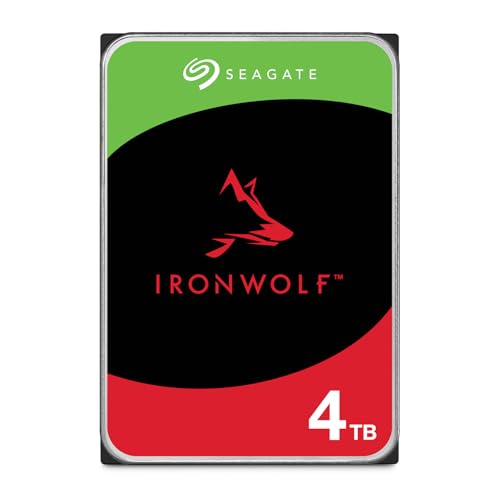
- 4TB CMR NAS drive
- 5,400 RPM and 64MB cache
- Health monitoring and recovery services included
Best For: Up to 8-bay home or small-office NAS systems
Fast 8TB NAS Option

- 8TB NAS-oriented capacity
- 7,200 RPM and 256MB cache
- Health monitoring and recovery services included
Best For: Growing multi-user NAS libraries and backups
Maximum-Capacity Enterprise Pick
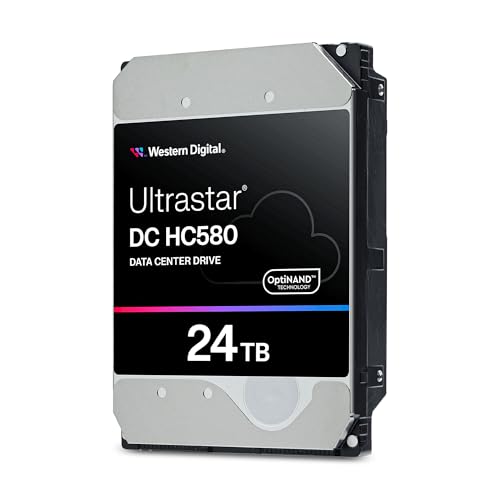
- 24TB capacity with CMR recording
- 7,200 RPM, SATA 6Gb/s, and 512MB cache
- Designed for 24/7 enterprise workloads
Best For: Data centers, servers, cloud storage, and big-data applications
High-Performance NAS Pick

- 10TB CMR capacity for NAS workloads
- 7,200 RPM and up to 210MB/s sustained transfers
- RAID features plus Rescue Data Recovery Service
Best For: 24/7 NAS systems, RAID arrays, and shared business storage
Best with Extra Features

- 26TB capacity for large-scale storage
- 7,200 RPM with SATA 6Gb/s
- Helium-sealed enterprise design
Best For: Servers and high-capacity storage pools
Compact NAS Value Pick

- NASware firmware for compatibility
- Supports RAID systems up to eight bays
- 3-year limited warranty
Best For: Home and small-business NAS systems
Balanced NAS Performance Pick

- 10TB capacity with 512MB cache
- 7,200 RPM NAS-oriented performance
- Up to 180TB/year workload rating
Best For: 24x7 small and medium-business NAS use
Balanced NAS Pick – Seagate IronWolf 4TB CMR
For buyers comparing CMR internal hard drives for a home or small-office NAS, this 4TB Seagate IronWolf offers NAS-focused features in a compact 3.5-inch SATA design. Its 5,400 RPM operation, 64MB cache, and stated read speed of up to 180MB/s suit everyday file storage and sharing.
Best For: Up to 8-bay NAS systems, personal storage, and small multi-user environments that need a balanced capacity and feature set.
Pros:
- Designed for NAS environments supporting up to eight bays
- CMR-based 4TB capacity with SATA 6Gb/s connectivity
- Includes IronWolf Health Management, a three-year limited warranty, and three years of Rescue Data Recovery Services
Cons:
- 5,400 RPM speed is less performance-oriented than 7,200 RPM alternatives
- 64MB cache is smaller than the cache listed for some higher-capacity IronWolf models
This is a practical choice when dependable NAS integration and included support services matter more than maximum rotational speed. It provides a sensible starting point for a smaller RAID or file-sharing setup.
High-Capacity NAS Workhorse – Seagate IronWolf 12TB
Among CMR internal hard drives, this 12TB Seagate IronWolf stands out for users who need substantial NAS capacity. The 7,200 RPM design, 256MB cache, and SATA 6Gb/s interface are suited to demanding storage and file-sharing workloads.
Best For: Multi-user NAS setups and business or personal storage projects where high capacity and faster rotational performance are priorities.
Pros:
- Large 12TB capacity for consolidating files and media
- 7,200 RPM speed and up to 256MB cache
- NAS-optimized for up to eight bays, with IronWolf Health Management and three years of Rescue Data Recovery Services
Cons:
- Its larger capacity may be unnecessary for lighter storage needs
- Mechanical hard-drive design is less compact and responsive than an SSD
Choose this model when storage headroom and a 7,200 RPM performance class are more important than minimizing capacity. It is particularly compelling for a multi-user NAS that may grow over time.
Proven CMR Value – WD Red Plus 4TB
This Western Digital WD Red Plus is a straightforward option for shoppers seeking CMR internal hard drives for a small or medium NAS. Its 4TB capacity, 5,400 RPM performance class, 64MB cache, and NASware firmware are aimed at compatibility in always-on storage systems.
Best For: Small and medium-business NAS systems with up to eight bays and workloads of up to 180TB transferred annually.
Pros:
- CMR technology clearly identified for NAS use
- NASware firmware supports compatibility in 24×7 NAS environments
- 4TB capacity with SATA 6Gb/s connectivity and a 64MB cache
Cons:
- 5,400 RPM performance class is aimed at efficiency rather than top speed
- Warranty coverage depends on purchase through an authorized distributor or reseller
The WD Red Plus is a sensible fit for buyers who want a clearly designated CMR NAS drive without moving to higher capacities. Confirm the model number and seller authorization when purchasing, especially because labeling may vary during the Red-to-Red Plus transition.
Fast 8TB NAS Option – Seagate IronWolf 8TB
For shoppers comparing CMR internal hard drives with a blend of capacity and speed, this 8TB Seagate IronWolf is a strong NAS-oriented candidate. It pairs a 7,200 RPM design with a 256MB cache and SATA 6Gb/s connectivity for storage-heavy personal or business systems.
Best For: Up to 8-bay multi-user NAS enclosures that need more capacity than a 4TB drive and a faster rotational class.
Pros:
- 8TB capacity for larger file libraries and backups
- 7,200 RPM speed and 256MB cache
- Includes IronWolf Health Management, a three-year limited warranty, and three years of Rescue Data Recovery Services
Cons:
- Higher-capacity NAS storage may exceed the needs of basic users
- Mechanical drives can be less responsive than solid-state storage
This model occupies a useful middle ground: it offers considerably more space than a 4TB drive while retaining the 7,200 RPM and 256MB-cache specifications associated with faster IronWolf configurations. It is well suited to growing NAS libraries and shared storage.
Maximum-Capacity Enterprise Pick – Ultrastar DC HC580 24TB
For buyers comparing CMR internal hard drives for large-scale storage, the renewed Western Digital Ultrastar DC HC580 stands out with 24TB of capacity, a 7,200 RPM spindle speed, and enterprise-oriented hardware. Its SATA 6Gb/s interface and 512MB cache suit demanding server, cloud, and data-center workloads.
Best For: High-capacity servers, data centers, cloud storage, and big-data applications.
Pros:
- Class-leading 24TB capacity for consolidating large data sets.
- 7,200 RPM speed, SATA 6Gb/s interface, and 512MB cache.
- CMR recording supports consistent performance across varied workloads.
- Rated for 24/7 operation with a 2.5 million-hour MTBF.
Cons:
- Renewed condition may be less appealing than a new drive.
- Its enterprise-focused design may be excessive for ordinary desktop storage.
- Mechanical HDDs are generally less responsive than SSDs.
This is the capacity-focused choice in the group. If your system can accommodate a 3.5-inch SATA enterprise drive and you need maximum storage density, its 24TB capacity and high-duty-cycle design are compelling.
High-Performance NAS Pick – Seagate IronWolf 10TB
The Seagate IronWolf 10TB is a practical option among CMR internal hard drives for NAS systems. It combines 10TB of storage with 7,200 RPM performance, a 256MB cache, RAID-oriented features, and support for multi-user NAS workloads.
Best For: 24/7 NAS systems, RAID arrays, workstations, and shared business storage.
Pros:
- CMR 10TB capacity supports multi-user NAS workloads.
- 7,200 RPM speed and up to 210MB/s sustained transfer performance.
- AgileArray, dual-plane balancing, and error recovery support RAID use.
- Includes a 3-year Rescue Data Recovery Service.
Cons:
- Lower capacity than the 24TB enterprise option.
- Designed primarily for NAS and RAID environments rather than basic desktop use.
- Its 7,200 RPM operation may not be the quietest choice for home setups.
Choose the IronWolf when NAS compatibility and sustained shared-storage performance matter more than maximum capacity. Its CMR design, RAID features, and included recovery service make it a well-rounded NAS-focused drive.
Balanced Small-Business NAS Pick – WD Red Plus 8TB
The Western Digital WD Red Plus 8TB offers a balanced choice for buyers seeking CMR internal hard drives for small or medium-business NAS systems. Its 8TB capacity, SATA 6Gb/s connection, NASware firmware, and support for up to eight bays target dependable 24/7 storage rather than maximum spindle speed.
Best For: Small and medium-business NAS systems, home servers, and arrays with up to eight bays.
Pros:
- CMR 8TB capacity for business and NAS storage.
- NASware firmware supports compatibility with NAS systems.
- Supports up to eight bays and a 180TB-per-year workload rate.
- Includes a 3-year limited warranty.
Cons:
- 5,640 RPM speed is lower than the 7,200 RPM alternatives.
- Its 8TB capacity is smaller than the enterprise model.
- Best suited to NAS use rather than high-performance server workloads.
The WD Red Plus is a sensible middle ground for a compatible NAS build. It emphasizes NAS firmware support, moderate business workloads, and multi-bay flexibility, making it a strong fit when dependable storage matters more than peak rotational performance.
Best with Extra Features – Seagate Exos 26TB
For buyers seeking cmr internal hard drives with exceptional capacity, the renewed Seagate Exos ST26000NM000C delivers 26TB in a 3.5-inch enterprise HDD. Its 7,200 RPM speed, SATA 6Gb/s interface, and helium-sealed design suit large-scale storage and continuous-operation environments.
Best For: Large storage pools, servers, and data-intensive enterprise workloads.
Pros:
- Very high 26TB storage capacity
- 7,200 RPM speed for sustained workloads
- Enterprise-oriented 2.5M MTBF and high workload rating
- SATA 6Gb/s and hot-plug support
Cons:
- Renewed product rather than new
- Large capacity may be unnecessary for basic desktop storage
- Seller warranty is listed as two years
This Seagate Exos drive is the capacity leader in this roundup. Choose it when storage density and enterprise-oriented operation matter more than a compact personal-storage budget.
Compact NAS Value Pick – WD Red Plus 4TB
The 4TB WD Red Plus is a practical choice among cmr internal hard drives for smaller NAS setups. It is designed for RAID-optimized systems with up to eight bays and includes NASware firmware, RV sensors, and a 3-year limited warranty.
Best For: Home users and small NAS systems needing dependable 4TB storage.
Pros:
- NAS-focused design with NASware firmware
- Supports RAID systems with up to eight bays
- Designed for continuous operation
- Includes a 3-year limited warranty
Cons:
- 4TB capacity is lower than the other drives here
- Listed read speed is 180 MB/s
- Product details identify it as a 3.5-inch desktop-compatible drive
For a modest NAS, this WD Red Plus offers the most approachable capacity in the group while retaining NAS-specific features. It is a sensible fit when eight-bay compatibility and continuous operation are priorities.
Balanced NAS Performance Pick – WD Red Plus 10TB
The 10TB WD Red Plus combines NAS-focused compatibility with a 7,200 RPM mechanism and a 512MB cache. As one of these cmr internal hard drives, it is tested for small- and medium-business NAS use in 24×7 environments and supports systems with up to eight bays.
Best For: Small and medium-business NAS systems requiring higher capacity and sustained availability.
Pros:
- 10TB capacity for growing NAS storage needs
- 7,200 RPM speed and 512MB cache
- NASware firmware for compatibility
- Supports up to 180TB per year workload rate and includes a 3-year limited warranty
Cons:
- Higher capacity may cost more than a smaller NAS drive
- 3.5-inch form factor requires a compatible bay
- Designed for NAS use rather than a portable storage setup
This WD Red Plus is the balanced option for NAS buyers who want more capacity than a 4TB model without moving to an enterprise-class 26TB drive. Its NASware firmware and stated workload rating support demanding always-on deployments.
How We Picked These Cmr Internal Hard Drives
We selected drives designed for sustained storage workloads, with CMR recording rather than slower, workload-sensitive SMR technology. The lineup includes NAS-focused models from Seagate IronWolf and Western Digital Red Plus, plus higher-capacity enterprise drives for demanding arrays and servers.
We considered capacity, interface compatibility, spindle speed, cache size, RAID suitability, workload-oriented features, and overall fit for home and business NAS systems. Renewed enterprise models can offer excellent capacity per dollar, but buyers should verify warranty coverage, seller reputation, power requirements, and return terms.
Quick Comparison
| Best For | Typical Capacity Range | What to Prioritize |
|---|---|---|
| Home NAS | 4TB–8TB | Low noise, efficiency, CMR, NAS compatibility |
| Media libraries and backups | 8TB–12TB | Capacity, sustained write behavior, warranty |
| Large RAID arrays | 10TB–24TB | Workload rating, vibration tolerance, error recovery |
| Servers and dense storage | 20TB–26TB | Enterprise endurance, cooling, power, seller support |
Key Buying Factors for Cmr Internal Hard Drives
CMR Recording and NAS Compatibility
CMR is generally the preferred recording method for RAID rebuilds, frequent writes, and multi-drive NAS environments because performance is more predictable under sustained workloads. Confirm that your enclosure supports standard 3.5-inch SATA drives and that the NAS vendor lists the model as compatible.
Capacity and Usable Space
Choose capacity based on usable storage after RAID overhead, filesystem formatting, and redundancy. A mirrored array provides less usable space than the combined drive capacity, while parity arrays require additional planning for rebuilds and expansion.
Speed, Cache, and Workload
7200 RPM drives can offer stronger sequential performance, but they typically produce more heat, noise, and power consumption than 5400 RPM-class models. Larger cache sizes may help with bursts, but they do not replace sustained workload capability or adequate NAS memory.
Reliability, Warranty, and Condition
Check the drive’s workload rating, rated service life, vibration features, health-monitoring support, and warranty. Renewed drives require extra scrutiny: inspect SMART data when possible, confirm return coverage, and keep a current backup regardless of the model selected.
Who Should Buy Which Cmr Internal Hard Drives?
Home NAS owners: Choose a 4TB or 8TB NAS-oriented CMR drive when low operating cost, manageable noise, and straightforward compatibility matter most.
Media collectors and backup users: A 10TB or 12TB model can reduce the number of drive bays needed while leaving room for growth. Favor a supported NAS drive with an appropriate warranty.
Power users and small businesses: Higher-capacity IronWolf or WD Red Plus options are suitable for larger arrays, frequent file access, surveillance storage, and shared backups, provided the enclosure has adequate cooling.
Enterprise and high-capacity builders: Ultrastar and Exos models can make sense for dense servers and large-scale arrays. Confirm acoustics, power draw, firmware compatibility, and whether a renewed unit’s warranty meets your risk tolerance.