Choosing the right internal hard drive means balancing capacity, speed, workload, reliability, noise, and price. The best option for a home desktop may not be suitable for a NAS or RAID enclosure.
These 10 drives cover everyday PC storage, network-attached storage, and enterprise-class capacity, giving you practical choices for upgrades and large media libraries.
Best 10 Internal Hard Drives Picks for 2026
Best High-Capacity Value

- 8TB capacity for desktops and media libraries
- SATA 6Gb/s with 256MB cache
- Up to 190MB/s sustained transfers
Best For: Everyday desktop, gaming, and media storage
Best Enterprise-Capacity Pick

- 14TB capacity for archives and backups
- 7,200 RPM, CMR, and 512MB cache
- SATA 6Gb/s enterprise-oriented design
Best For: Large archives and compatible enterprise storage
Best Everyday 7200 RPM Drive
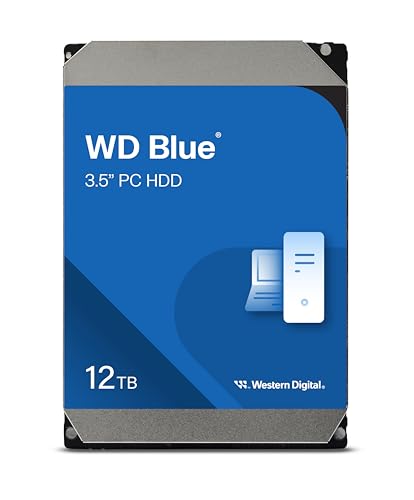
- 12TB capacity for personal and business files
- 7,200 RPM with 512MB cache
- Acronis cloning software included
Best For: General desktop storage and drive upgrades
Best NAS Workhorse

- 8TB capacity with 7,200 RPM performance
- Designed for up to 8-bay multi-user NAS systems
- Includes health monitoring and recovery support
Best For: Multi-user NAS storage and backups
Best Everyday Desktop Value
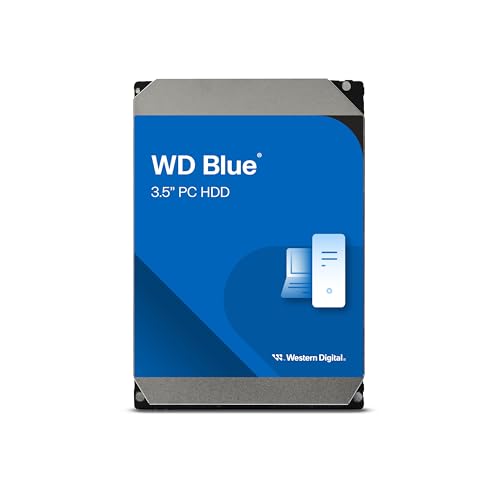
- 4TB capacity for general PC storage
- SATA 6 Gb/s interface and 5,400 RPM speed
- Includes Acronis cloning software
Best For: Everyday desktop storage and backups
Best High-Capacity Enterprise Option

- 10TB capacity for archives and large media libraries
- 7,200 RPM speed with a 512MB cache
- CMR recording and enterprise power features
Best For: Enterprise storage and large archives
Best Desktop Value
- 4TB general-purpose storage
- 190MB/s sustained transfer rate
- Includes free DiscWizard migration software
Best For: Desktop PCs and everyday file storage
Best NAS Monitoring Features
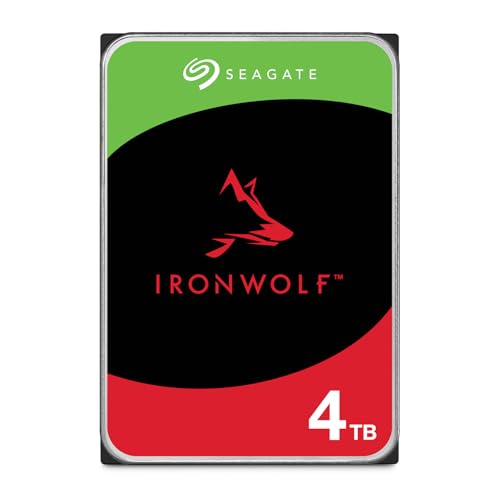
- NAS drive for up to eight bays
- IronWolf Health Management included
- Three years of Rescue Data Recovery Services
Best For: Multi-user RAID and NAS storage
Best High-Capacity Value – Seagate BarraCuda 8TB
For buyers seeking spacious internal hard drives for a desktop, gaming setup, or general media storage, the Seagate BarraCuda 8TB offers a practical balance of capacity and broad SATA compatibility. Its 5,400 RPM design and 256MB cache suit everyday storage, backups, and large personal media libraries.
Best For: Desktop storage, gaming libraries, media collections, and general PC use.
Pros:
- Generous 8TB capacity for documents, photos, video, and games.
- SATA 6Gb/s interface works with compatible desktop systems and enclosures.
- 256MB cache and sustained transfer rates up to 190MB/s.
- Includes data recovery service and a two-year limited warranty.
Cons:
- 5,400 RPM is slower than the 7,200 RPM drives in this roundup.
- Frustration-Free Packaging is an anti-static bag without cables or a retail box.
This BarraCuda is a sensible choice when capacity and everyday versatility matter more than maximum spindle speed. Confirm that your system has a compatible 3.5-inch SATA bay before buying.
Best for NAS – Seagate IronWolf 12TB
Among internal hard drives, the Seagate IronWolf 12TB is tailored to multi-user NAS environments and enclosures with up to eight bays. It combines 12TB of storage with 7,200 RPM performance, NAS-focused features, and health monitoring for shared files and backups.
Best For: Multi-user NAS systems, business file sharing, and high-capacity network storage.
Pros:
- NAS-optimized design for enclosures of up to eight bays.
- 12TB capacity and 256MB cache support large shared storage pools.
- 7,200 RPM spindle speed and up to 240MB/s listed media speed.
- IronWolf Health Management, a three-year warranty, and three years of Rescue Data Recovery Services.
Cons:
- Its NAS-focused features may be unnecessary for a basic desktop upgrade.
- Compatibility depends on a suitable 3.5-inch SATA NAS enclosure.
The IronWolf is the strongest fit here for always-on shared storage and NAS workloads. It is a more specialized purchase than a conventional desktop hard drive, but its monitoring and recovery coverage add useful reassurance for important data.
Best Enterprise-Capacity Pick – Seagate Exos 14TB
The renewed Seagate Exos 14TB is one of the most capacity-focused internal hard drives in this selection. Its 7,200 RPM spindle, 512MB cache, CMR recording, and SATA 6Gb/s interface make it suitable for compatible enterprise-oriented storage, archives, and large file workloads.
Best For: Enterprise storage, high-capacity archives, backups, and large media collections.
Pros:
- Largest listed capacity at 14TB.
- 7,200 RPM performance with sustained transfers up to 190MB/s.
- 512MB cache and CMR recording support repeated large-file write tasks.
- PowerChoice and PowerBalance technologies help manage power use and performance.
Cons:
- It is a renewed drive and comes as a bare drive in bulk packaging.
- Designed for enterprise storage, so system and enclosure compatibility should be checked carefully.
- The listed coverage is a five-year seller warranty rather than a stated manufacturer warranty.
Choose the Exos when maximum capacity and enterprise-oriented specifications outweigh the appeal of a standard retail drive. Before installation, verify support for a 14TB 3.5-inch SATA disk and account for its renewed condition.
Best Everyday 7200 RPM Drive – WD Blue 12TB
The Western Digital WD Blue 12TB is a straightforward option among internal hard drives for everyday desktop and business storage. It pairs a 7,200 RPM spindle with a 512MB cache, SATA 6Gb/s connectivity, and included Acronis True Image WD Edition cloning software.
Best For: General desktop computing, personal files, business storage, and drive cloning.
Pros:
- 12TB capacity for large collections and routine backups.
- 7,200 RPM speed and 512MB cache support responsive everyday access.
- SATA 6Gb/s interface and 3.5-inch form factor suit compatible PCs.
- Includes Acronis True Image WD Edition cloning software.
Cons:
- It is a mechanical hard drive, so it will not match an SSD for responsiveness.
- The two-year limited warranty is shorter than the Exos listing’s seller coverage.
- Compatibility is centered on systems supporting 3.5-inch SATA drives.
This WD Blue is a well-rounded pick for buyers who want high capacity, 7,200 RPM performance, and a useful cloning tool without moving into a NAS-specific model. Check available bay space and SATA support before installation.
Best NAS Workhorse – Seagate IronWolf 8TB
For multi-user storage, this Seagate IronWolf is one of the more purpose-built internal hard drives in the roundup. Its 8TB capacity, 7,200 RPM speed, 256MB cache, and NAS-focused features suit enclosures with up to eight bays.
Best For: Multi-user NAS setups, shared files, backups, and business or personal storage.
Pros:
- NAS-optimized design for up to 8-bay enclosures
- 8TB capacity with 256MB cache and up to 210MB/s read speed
- IronWolf Health Management helps monitor drive health
- Three-year warranty and three years of Rescue Data Recovery Services included
Cons:
- Mechanical 3.5-inch drive rather than a quieter solid-state option
- NAS-oriented features may be unnecessary for a basic desktop upgrade
The IronWolf is a strong choice when your internal hard drives need to handle shared access and continuous NAS workloads. Its warranty and recovery coverage add useful reassurance for important stored data.
Best Everyday Desktop Value – WD Blue 4TB
This WD Blue is a straightforward choice for everyday computing. As internal hard drives go, its 4TB capacity, SATA 6 Gb/s interface, and 5,400 RPM speed make it a practical fit for general PC storage, media, and backups.
Best For: Personal computers, everyday business use, creator files, and general secondary storage.
Pros:
- Useful 4TB capacity for everyday files and media
- Compatible with SATA 6 Gb/s systems and 3.5-inch bays
- Includes free Acronis True Image WD Edition cloning software
- Western Digital reliability with a two-year limited warranty
Cons:
- 5,400 RPM speed is less performance-focused than 7,200 RPM alternatives
- Smaller capacity than the 8TB and 10TB options here
The WD Blue keeps things simple for users who want dependable bulk storage without NAS-specific features. It is a sensible everyday option for a compatible desktop or PC build.
Best High-Capacity Enterprise Option – Seagate Exos 10TB
For large archives and demanding storage workloads, this renewed Seagate Exos drive offers substantial capacity and enterprise-oriented specifications. It combines 10TB of space with 7,200 RPM performance, a 512MB cache, and CMR recording.
Best For: Enterprise storage, extensive archives, high-resolution media, backups, and large file transfers.
Pros:
- Largest listed capacity at 10TB
- 7,200 RPM spindle speed and 512MB cache
- CMR recording supports repeated writes and large transfers
- PowerChoice and PowerBalance features help manage power and performance
Cons:
- Renewed drive may not suit buyers seeking new retail hardware
- Enterprise-focused specifications can be excessive for basic desktop storage
- Compatibility requires a 3.5-inch SATA system supporting 10TB drives
The Exos is the capacity-first pick among these internal hard drives, particularly for users managing large datasets. Confirm system compatibility and consider the renewed condition before purchasing.
Best NAS Capacity Pick – WD Red Plus 8TB
For shoppers comparing internal hard drives for a small or medium-business NAS, the Western Digital WD Red Plus combines 8TB of capacity with NAS-focused features. Its CMR design, NASware firmware, 256MB cache, and support for systems with up to eight bays make it suited to ongoing network storage use.
Best For: Small or medium-business NAS systems operating in a 24/7 environment.
Pros:
- 8TB capacity, with the WD Red Plus range available from 1TB to 14TB.
- Designed for RAID-optimized NAS systems and up to eight bays.
- Supports a stated workload rate of up to 180TB per year.
- Includes NASware firmware and a three-year limited warranty.
Cons:
- Its 3.5-inch mechanical design is intended for compatible desktop or NAS installations.
- NAS-focused features may be unnecessary for a basic single-drive desktop upgrade.
This is a strong capacity-oriented choice when dependable NAS compatibility matters more than using a drive for a simple desktop build. Confirm your enclosure supports 3.5-inch SATA drives before buying.
Best Desktop Value – Seagate BarraCuda 4TB
The Seagate BarraCuda 4TB is a practical internal hard drive for expanding a desktop PC without moving to a more specialized NAS model. Its SATA 6Gb/s interface, 5400 RPM speed, and 256MB cache suit everyday storage, media libraries, editing files, and PC gaming.
Best For: Desktop users who need versatile storage for personal, business, and general PC applications.
Pros:
- 4TB capacity for music, video, photos, games, and general files.
- Compatible with 3.5-inch desktop installations using SATA connectivity.
- Rated for a maximum sustained transfer rate of 190MB/s.
- Seagate offers free DiscWizard software for migrating or cloning data.
Cons:
- It has a 5400 RPM rotational speed rather than a faster spindle speed.
- The two-year warranty is shorter than the three-year coverage listed for the NAS models here.
Choose the BarraCuda when you want straightforward, high-capacity desktop storage and useful migration software. It is a general-purpose option, not a drive specifically presented for multi-bay NAS operation.
Best NAS Monitoring Features – Seagate IronWolf 4TB
The Seagate IronWolf 4TB is one of the more purpose-built internal hard drives for a multi-user NAS. It is designed for enclosures with up to eight bays and adds IronWolf Health Management, CMR recording, and included Rescue Data Recovery Services for extra storage-system support.
Best For: Multi-user NAS environments that need drive health monitoring and RAID-oriented storage.
Pros:
- NAS-optimized 4TB drive designed for up to eight-bay enclosures.
- CMR recording and a 5400 RPM design for compatible NAS systems.
- IronWolf Health Management helps monitor drive health.
- Includes a three-year limited warranty and three years of Rescue Data Recovery Services.
Cons:
- Its 64MB cache is smaller than the cache listed for the BarraCuda and WD Red Plus models.
- NAS-specific capabilities may be more than a basic desktop user needs.
This IronWolf is a sensible fit when the drive will live in a shared NAS rather than a standalone PC. Its health-management and recovery-service features add practical value for users managing important networked files.
How We Picked the Best Internal Hard Drives
We selected these Internal Hard Drives across the main use cases buyers encounter: desktop expansion, bulk file storage, NAS operation, RAID environments, and high-capacity enterprise workloads. We compared advertised capacity, spindle speed, interface, cache, recording technology where specified, intended workload, and overall fit for the product’s target system.
Because hard-drive performance and reliability depend on the surrounding hardware, this list does not treat capacity alone as a sign of quality. A NAS-rated drive, for example, is generally a better fit for multi-drive enclosures than a standard desktop model, while renewed enterprise drives may offer substantial capacity at a lower price but require closer attention to warranty and condition.
Quick Comparison
| Drive Type | Typical Best Use | What to Look For |
|---|---|---|
| Desktop HDD | PC upgrades, documents, media libraries | Capacity, noise, price, and compatibility |
| NAS HDD | Always-on storage and RAID arrays | NAS rating, vibration tolerance, and CMR recording |
| Enterprise HDD | Servers, data-heavy workloads, large archives | Workload rating, warranty, condition, and operating noise |
Key Buying Factors for Internal Hard Drives
Capacity and Expansion Plans
Choose enough space for your current files plus future growth. Video collections, backups, games, and photo libraries can expand quickly, so a larger drive may provide better long-term value than buying several smaller disks.
Speed and Workload
7200 RPM drives typically offer more responsive sequential performance than 5400 RPM models, although they can consume more power and produce more noise. For general storage, a 5400 RPM drive may be perfectly adequate. For frequent transfers or server workloads, prioritize higher performance and an appropriate workload rating.
CMR Versus Other Recording Technologies
CMR is often preferred for NAS, RAID, and sustained write workloads because performance is more predictable. Check the manufacturer’s specifications before buying, particularly when a drive will operate in an array or receive frequent large writes.
Compatibility, Noise, and Reliability
Confirm that your system supports a 3.5-inch SATA drive and has sufficient power, cooling, and mounting space. Also consider acoustics: enterprise and high-speed drives can be noticeably louder than consumer models. For important data, plan a separate backup rather than relying on a single disk.
Who Should Buy Which Internal Hard Drives?
Choose a standard desktop model if you need affordable extra space for a computer, games, documents, or media. Choose an IronWolf or WD Red Plus-class NAS drive for a multi-bay NAS, especially when the drive will run continuously or participate in RAID. Enterprise Exos models suit servers, demanding storage systems, and buyers who prioritize capacity and workload capability, but renewed units deserve extra scrutiny of seller support, warranty, and drive health.
For the safest purchase, match the drive to its environment first, then compare capacity and price among suitable models. Keep at least one independent backup of irreplaceable data, regardless of which internal hard drive you select.