The best field recorders make it easier to capture clean, dependable audio away from a studio. Whether you record interviews, live music, film dialogue, podcasts, or spontaneous sounds, the right model can improve results without adding unnecessary complexity.
This roundup compares 10 field recorders across compact stereo recorders, lavalier systems, multitrack units, and professional location tools. Use the guide below to narrow your options by inputs, recording format, portability, and workflow.
Best 10 Field Recorders Picks for 2026
Best Modular Pick
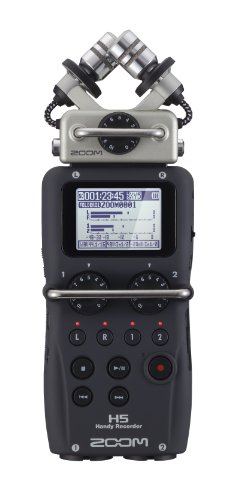
- Interchangeable capsule system
- Four-track simultaneous recording
- Two XLR/TRS inputs with phantom power
Best For: Filmmakers and musicians needing expandable recording options
Best Simple 32-Bit Recorder

- 32-bit float recording
- Built-in microphones handle up to 125 dB SPL
- 2-in/2-out USB-C audio interface
Best For: Portable stereo recording and computer-based audio work
Best Compact XLR Option

- Two locking XLR/TRS inputs
- 32-bit float recording up to 96kHz
- SDXC support up to 1TB
Best For: Mobile recording with microphones, instruments, or external sources
Best Adjustable-Mic Recorder

- Adjustable AB/XY stereo microphones
- 32-bit float recording
- External mic input and USB-C interface
Best For: Flexible stereo recording for music, video, voice, and sound capture
Best Wearable Recorder

- 32-bit float recording avoids manual gain adjustment
- Includes lavalier mic, windscreen, and clip
- Up to 15 hours on two AAA batteries
Best For: Hands-free interviews, weddings, and on-camera content
Best Professional Field Recorder

- 32-bit float recording handles sudden peaks
- Dual locking XLR/TRS inputs for secure connections
- Ultra-low-noise preamps for demanding locations
Best For: Filmmakers, musicians, and professional microphone rigs
Best Simple Stereo Recorder
Zoom H1essential Handy Recorder

- 32-bit float stereo recording simplifies setup
- Built-in X/Y microphones support up to 120 dB SPL
- Functions as a USB microphone for computers and mobile devices
Best For: Portable stereo recording and beginner-friendly setups
Best All-Around Field Recorder

- 32-bit float, four-track recording
- Stereo mics plus two XLR/TRS inputs
- USB-C recording with SD backup
Best For: Versatile music, podcast, interview, and video recording
Best Heavy-Duty Pick
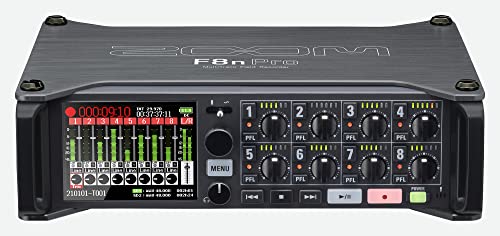
- Eight inputs and 10-track recording
- Accurate 0.2ppm timecode
- Dual SD slots for redundant recording
Best For: Professional film and location sound production
Best Portable Field Recorder

- Three mics with nine recording patterns
- 32-bit float with automatic gain convenience
- USB mic and SD recording simultaneously
Best For: Portable interviews, podcasts, music, and soundscapes
Best Modular Pick – Zoom H5
The Zoom H5 is one of the more flexible field recorders for filmmakers and musicians who may want to change microphone configurations. Its interchangeable capsule system, four-track recording, and two combo inputs make it suitable for both portable recording and more involved setups.
Best For: Filmmakers and musicians who need expandable microphone options and multitrack recording.
Pros:
- Interchangeable input capsules support different recording configurations.
- Records up to four tracks simultaneously.
- Two XLR/TRS combo inputs include selectable phantom power and a -20 dB pad.
- Can also function as a multichannel or stereo USB audio interface.
Cons:
- Records to SD or SDHC cards up to 32GB.
- Runs on two AA batteries, so replacements may be needed for longer sessions.
The H5 stands out when flexibility matters more than having the simplest possible recorder. Its shock-mounted X/Y capsule and audio safety net add useful protection for mobile work.
Best Simple 32-Bit Recorder – TASCAM DR-05XP
The TASCAM DR-05XP is a straightforward choice among field recorders for music, voice, meetings, and audio for video. Its built-in omnidirectional microphones, 32-bit float recording, and USB-C interface provide a practical combination for portable stereo capture and computer-based recording.
Best For: Users who want easy stereo recording with 32-bit float support and USB-C connectivity.
Pros:
- Supports 32-bit float, 24-bit, and 16-bit recording modes.
- Built-in microphones handle sources up to 125 dB SPL.
- Functions as a 2-in/2-out USB-C audio interface.
- Offers up to 17.5 hours of operation with two AA alkaline batteries.
Cons:
- SD card and batteries are not included.
- Uses built-in stereo microphones rather than interchangeable capsules.
For buyers who prioritize uncomplicated operation, the DR-05XP delivers useful recording formats and solid battery life in a compact handheld design. It is especially convenient when USB-C computer connectivity is part of the workflow.
Best Compact XLR Option – Zoom H1 XLR
The Zoom H1 XLR is a compact field recorder for users who need direct connections for microphones, instruments, or other sources. It combines two locking XLR/TRS inputs with 32-bit float recording, a waveform display, and support for SDXC cards up to 1TB.
Best For: Filmmakers, podcasters, and musicians needing two flexible XLR/TRS inputs in a portable recorder.
Pros:
- Records in 32-bit float and up to 96kHz.
- Two locking XLR/TRS combo inputs accommodate microphones and instruments.
- OLED waveform display helps with level monitoring.
- Supports SDXC cards up to 1TB and includes 3.5mm input and headphone output.
Cons:
- Requires two AA batteries, which are not specified as included.
- The display is relatively compact at 0.96 inches.
The H1 XLR is a strong fit when input flexibility and clip-free 32-bit float recording are more important than interchangeable microphones. Its small format also suits mobile interview, podcast, and video setups.
Best Adjustable-Mic Recorder – TASCAM DR-07XP
The TASCAM DR-07XP adds adjustable AB/XY stereo microphones to the portable field recorder format. It supports 32-bit float recording, external microphone input, headphone monitoring, and USB-C operation, making it adaptable for music, voice, video, and general sound capture.
Best For: Users who want adjustable built-in stereo microphones and flexible recording connections.
Pros:
- Adjustable AB/XY condenser microphones support different stereo recording approaches.
- Offers 32-bit float, 24-bit, 16-bit, and MP3 recording modes.
- Includes a 3.5mm mic/ext-in jack with plug-in power and a headphone/line-out jack.
- Works as a 2-in/2-out USB-C audio interface.
Cons:
- Memory card and two AA batteries are sold separately.
- Compatible microSD storage is supported up to 512GB.
The DR-07XP is a versatile option for buyers who want more control over stereo microphone positioning without adding a separate microphone. Its external input and USB-C interface further broaden its usefulness beyond basic handheld recording.
Best Wearable Recorder – Zoom F2 Lavalier Recorder
The Zoom F2 is one of the most practical field recorders for hands-free interviews, wedding coverage, vlogs, and on-camera work. Its 32-bit float recording helps prevent clipping without requiring manual gain adjustments, while the included lavalier microphone is ready for discreet placement.
Best For: Interviewers, wedding videographers, journalists, and content creators who need a compact body-pack recorder.
Pros:
- 32-bit float recording captures audio without manual gain adjustment.
- Includes an omnidirectional lavalier microphone with windscreen and lapel clip.
- Runs for up to 15 hours on two AAA batteries.
- Supports microSD cards up to 512GB and includes a REC Hold switch.
Cons:
- Its mono lavalier-focused design is less suitable for stereo ambient recording.
- Requires separate AAA batteries and a compatible microSD card.
Choose the F2 when portability and dependable spoken-word capture matter more than multiple inputs or built-in stereo microphones. The included lavalier setup makes it especially convenient for fast-moving video work.
Best Professional Field Recorder – Zoom F3 Field Recorder
The Zoom F3 is a strong choice among field recorders for filmmakers and musicians who need professional connections and clean audio in unpredictable conditions. Its 32-bit float workflow handles quiet dialogue and sudden peaks without repeated level adjustments.
Best For: Filmmakers, musicians, and recordists using professional microphones or complex audio rigs.
Pros:
- 32-bit float recording helps capture changing levels without stopping to adjust gain.
- Dual locking XLR/TRS inputs help keep microphone connections secure.
- Ultra-low-noise preamps support clean recordings in uncontrolled environments.
- Offers battery-powered, USB, standalone, and wireless-control workflows.
Cons:
- It is a recorder rather than a complete microphone kit, so microphones are not included in the supplied details.
- Its professional input layout may be more capability than casual users need.
The F3 is the better fit when secure XLR connections and low-noise preamps are priorities. It is particularly well suited to productions where changing sound levels and difficult access make traditional gain management inconvenient.
Best Simple Stereo Recorder – Zoom H1essential Handy Recorder
The Zoom H1essential is a compact option for shoppers seeking straightforward field recorders with built-in stereo capture. Its X/Y microphones, 32-bit float recording, and USB-C microphone mode make it useful for portable recording as well as computer and mobile setups.
Best For: Beginners, students, musicians, and creators who want portable stereo recording with minimal setup.
Pros:
- 32-bit float recording reduces the need to set gain manually.
- Built-in X/Y microphones capture stereo audio up to 120 dB SPL.
- Records up to 96kHz to an SD card.
- Works as a USB microphone with PC, Mac, iOS, and Android devices.
Cons:
- The supplied details list no headphones jack.
- Digital recording time is listed as up to 120 minutes.
- Its built-in microphone design provides less input flexibility than the F3.
The H1essential makes sense for users who value simplicity, stereo sound, and a small footprint. Its accessibility-focused audio guidance function is also a useful distinction for visually impaired users.
Best All-Around Field Recorder – Zoom H4 Essential
The Zoom H4 Essential is a flexible choice for field recorders who need one compact device for music, interviews, podcasts, video audio, and live performances. Its built-in stereo microphones, two XLR/TRS inputs, four-track recording, and 32-bit float capture make it adaptable for varied recording situations.
Best For: Musicians, podcasters, filmmakers, and creators who need built-in microphones plus external input flexibility.
Pros:
- 32-bit float recording helps provide clip-free audio across changing volume levels.
- Built-in stereo microphones and two XLR/TRS inputs support different setups.
- Can record or stream over USB-C while saving a backup to an SD card.
- Spoken menu guidance makes operation more accessible and guided.
Cons:
- Requires two AA batteries.
- Its four-track design offers less input capacity than larger professional field recorders.
The H4 Essential balances portability and connectivity well. It is a practical middle-ground option for creators who want more flexibility than a basic handheld recorder without moving to a larger multi-input production unit.
Best Heavy-Duty Pick – Zoom F8n Pro
The Zoom F8n Pro is built for demanding film and location workflows. With eight inputs, 10-track recording, high-gain low-noise preamps, accurate timecode, dual SD slots, and 32-bit float capture, it gives production teams extensive control and recording redundancy.
Best For: Filmmakers, production sound teams, and professional field recording setups requiring multiple inputs and timecode.
Pros:
- Eight-channel, 10-track recording supports complex production setups.
- 32-bit float and dual AD converters help capture a broad dynamic range without clipping.
- Up to 75dB of gain and -127dBu EIN support quiet dialogue and dynamic scenes.
- Dual SD slots enable redundant recording, while precise timecode supports picture sync.
Cons:
- At 1.8 kg, it is substantially heavier than handheld field recorders.
- Its professional feature set may be more than needed for simple interviews or solo recordings.
- Battery life is listed at 8.5 hours.
The F8n Pro is the strongest choice here for multi-microphone film and field production. Its size and complexity favor organized professional workflows rather than casual grab-and-record use.
Best Portable Field Recorder – Zoom H2 Essential
The Zoom H2 Essential is a highly portable option for field recorders who want broad microphone coverage without carrying external microphones. Three built-in microphones provide nine selectable patterns, while 32-bit float recording, USB microphone mode, and long battery life suit interviews, podcasts, music, and ambient recordings.
Best For: Journalists, podcasters, musicians, and mobile creators who prioritize simple setup, flexible stereo or surround capture, and portability.
Pros:
- Three built-in microphones and nine patterns support varied recording perspectives.
- 32-bit float recording reduces the need for manual gain adjustment.
- Works as a USB microphone while recording simultaneously to an SD card.
- Up to 20 hours of battery life and audible menus support mobile use and accessibility.
Cons:
- It does not list XLR/TRS inputs for connecting external microphones or instruments.
- The 1.3-inch screen is compact for navigating settings.
The H2 Essential is especially appealing when speed and portability matter. Its built-in microphone array delivers more recording-pattern flexibility than a conventional basic handheld design, while USB operation adds useful computer and mobile versatility.
How We Picked These Field Recorders
We selected these models for their usefulness across common recording situations, including filmmaking, music production, podcasting, interviews, weddings, and general field work. We considered microphone configuration, input flexibility, recording resolution, portability, monitoring features, connectivity, and ease of transferring files.
The list includes simple handheld recorders for beginners, compact options for creators who need discreet audio, and expandable multitrack recorders for professional productions. Features such as 32-bit float recording, XLR inputs, USB audio functionality, adjustable microphones, and lavalier compatibility were also weighed according to each model’s intended use.
Quick Comparison
| Best For | Recommended Type | Key Advantage |
|---|---|---|
| Basic stereo recording | Compact handheld recorder | Simple operation and portability |
| Interviews and dialogue | Lavalier or two-channel recorder | Focused voice capture |
| Music and flexible setups | Handheld recorder with external inputs | More microphone and routing options |
| Professional film sound | Multitrack field recorder | Multiple inputs and synchronized tracks |
Key Buying Factors for Field Recorders
Inputs and Microphone Options
Choose a built-in stereo recorder for ambient sound, rehearsals, lectures, and quick notes. XLR or combo inputs are more useful when you need professional microphones, phantom power, or separate tracks. A lavalier-focused recorder is often the better choice for discreet dialogue and on-camera talent.
Recording Format and Headroom
32-bit float recording can provide extra protection against unexpected volume changes, making it valuable for unattended recording and unpredictable locations. It does not replace good microphone placement, but it can reduce the risk of unusable levels. Standard WAV recording remains practical for controlled sessions and compatible editing workflows.
Portability, Power, and Durability
Small handheld units are convenient for travel and run-and-gun work, while larger multitrack recorders require more planning but offer greater control. Check battery type, expected runtime, storage media, mounting options, and whether the controls are easy to use while wearing gloves or working quickly.
Connectivity and Monitoring
Headphone monitoring, USB audio support, low-latency operation, and clear level indicators can significantly improve a recording workflow. If you plan to record directly into a computer, confirm that the recorder supports the required USB interface functions and operating system.
Who Should Buy Which Field Recorders?
Choose a compact handheld model if you want the simplest option for travel, lectures, rehearsals, interviews, or ambient recordings. These recorders are generally the easiest to carry and operate.
Choose a lavalier recorder for weddings, filmmaking, presentations, and creator work where a speaker needs a small, body-worn microphone. It is especially useful when a camera-mounted microphone would be too distant.
Choose a recorder with XLR inputs if you use external microphones, record music, or need more control over gain and channel separation. These models offer a useful middle ground between convenience and expandability.
Choose a professional multitrack recorder for narrative film, location sound, larger music sessions, or productions requiring several microphones at once. The extra inputs, tracks, and routing options are worth the added size and setup time when reliability and flexibility matter most.