The best audio interface with onboard DSP can handle more than basic recording: it can process microphones, manage monitor mixes, and reduce computer strain while you stream, podcast, or produce music.
These 10 picks range from compact USB streaming mixers to full-featured interfaces with real-time effects, multiple inputs, and advanced routing. Use the guide below to match features, connectivity, and workflow to your setup.
Best 10 Audio Interface with Onboard Dsp Picks for 2026
Best for Streamlined Voice Control

- 80dB gain for demanding XLR microphones
- Onboard voice effects and Wave Link integration
- Touch mute with LED level feedback
Best For: Streamers and podcasters using one XLR microphone
Best for DSP-Driven Streaming and Guitar

- Real-time vocal and guitar DSP effects
- Loopback for streaming and system-audio capture
- Dual independent headphone mixes
Best For: Creators needing flexible vocal, guitar, and streaming processing
Best for Advanced Multi-Source Mixing
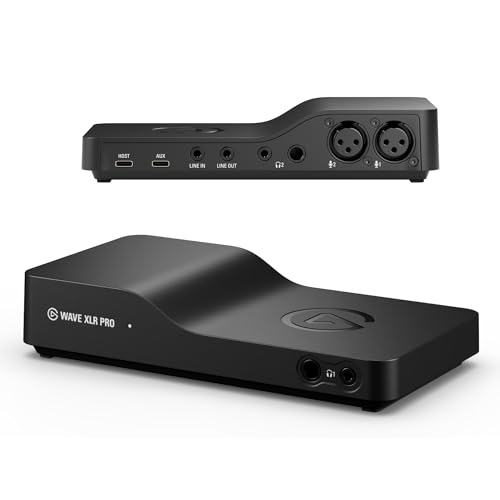
- Dual XLR inputs with 80dB gain each
- Dual USB-C for flexible device connections
- Five hardware mixes with matrix routing
Best For: Advanced streamers managing multiple audio sources
Best for Compact Recording and MIDI

- Two combo inputs with Class-A D-PRE preamps
- Latency-free DSP monitoring with built-in effects
- MIDI I/O and 32-bit/192kHz support
Best For: Home-studio musicians needing two inputs and MIDI
Best Dual-PC Streaming Interface

- Onboard DSP for detailed microphone processing
- Dual-USB connection supports up to eight channels
- Designed for streaming, gaming, and podcasting
Best For: Creators who need flexible voice processing and dual-PC routing
Best High-I/O Interface

- 18x22 interface with extensive analog and digital I/O
- DSP monitor mixing supports six separate mix busses
- Includes reverb, EQ, and dynamics processing
Best For: Studios and performers needing flexible routing and many connections
Best Compact Streaming Mixer

- Three-channel USB mixer with onboard DSP
- Loopback and mute controls suit live streaming
- Includes Cubase AI and WaveLab Cast
Best For: Streamers seeking a compact, simple control surface
Premium Portable Pick

- 37 included DSP/FPGA-powered effects
- Four preamps and two Hi-Z inputs
- Dual USB-C with expandable I/O
Best For: Mobile producers and compact studio setups needing low-latency effects
Budget Mixer Value

- Six channels with four XLR inputs
- Bluetooth, USB, and U-disk playback
- 3-band EQ and 16 DSP effects
Best For: Karaoke, live mixing, and basic multi-source setups
Feature-Rich Desktop Mixer

- Eight channels with four combo inputs
- DSP effects and 3-band EQ per channel
- USB, Bluetooth, MP3, and control-room output
Best For: Home studios and live or streaming setups needing hands-on control
Best for Streamlined Voice Control – Wave XLR MK.2
The Elgato Wave XLR MK.2 is a practical audio interface with onboard DSP for creators who want a simple XLR microphone setup with hands-on controls. Its 80dB of gain, low-latency monitoring, touch mute, and integrated Wave Link workflow make it especially convenient for streaming and voice-focused production.
Best For: Streamers, podcasters, and voice creators using one XLR microphone.
Pros:
- 80dB of gain can accommodate a wide range of XLR microphones.
- Onboard voice enhancer, compressor, EQ, and other effects support real-time processing.
- Touch controls, LED feedback, and Wave Link provide quick level and routing adjustments.
- Ultra-low-latency monitoring and a powerful headphone amplifier improve monitoring.
Cons:
- Its listed audio input is a single XLR connection, limiting multi-microphone setups.
- Wave Link requires Windows 11 or an Apple Silicon Mac for the specified software integration.
Choose the Wave XLR MK.2 if ease of use and voice processing matter more than extensive analog I/O. It is a focused option for a clean, software-assisted streaming desk.
Best for DSP-Driven Streaming and Guitar – Zenith 2
The Antelope Audio Zenith 2 is an audio interface with onboard DSP designed for streaming, podcasting, recording, and mobile setups. It combines real-time vocal processing, loopback, guitar effects, independent headphone mixes, and strong conversion in a compact USB-C unit.
Best For: Streamers, podcasters, guitarists, and creators who need flexible real-time processing.
Pros:
- Onboard DSP enables zero-lag monitoring with vocal, guitar, and studio effects.
- Loopback and a Smart Vocal Chain simplify system-audio capture and streaming mixes.
- Two independent headphone mixes support interviews, collaboration, and recording sessions.
- USB-C, class-compliant operation supports PC, Mac, iOS, and Android setups.
Cons:
- The extensive DSP and software features may be more than a basic recording setup needs.
- Some control features rely on the optional PC or Mac Software Control Panel.
Zenith 2 stands out when onboard processing needs to cover more than vocal enhancement. Its combination of loopback, guitar modeling, independent monitoring, and bundled software makes it a versatile creator-oriented interface.
Best for Advanced Multi-Source Mixing – Wave XLR Pro
The Elgato Wave XLR Pro is an audio interface with onboard DSP for users building a more elaborate streaming or production setup. Dual XLR inputs, dual USB-C connections, five hardware mixes, and Wave Link matrix mixing give it substantially more routing flexibility than a basic single-mic interface.
Best For: Advanced streamers and creators mixing multiple microphones, computers, consoles, or phones.
Pros:
- Two XLR inputs with 80dB of gain each support dual-microphone setups.
- Wave FX Processor combines DSP effects and VST plugins in one signal chain.
- Dual USB-C supports connections to a second computer, console, or phone.
- Five independent hardware mixes and matrix routing offer detailed setup control.
Cons:
- The advanced routing and multiple-mix features may be unnecessary for simple setups.
- The supplied notes do not specify a maximum sample rate or headphone-output details.
If your workflow involves several sources or separate mixes, the Wave XLR Pro is the more capable Elgato choice. Its onboard DSP and matrix-based routing are aimed at users who have outgrown a straightforward USB mixer.
Best for Compact Recording and MIDI – Yamaha URX22C
The Yamaha URX22C is a 2-in/2-out audio interface with onboard DSP for recording, monitoring, and basic effects processing. Its two combo inputs, MIDI I/O, 32-bit/192kHz support, and latency-free DSP monitoring make it a well-rounded choice for a compact music or home-studio rig.
Best For: Home-studio musicians needing two inputs, MIDI, and hardware-assisted monitoring.
Pros:
- Two XLR/TRS combo inputs include Class-A D-PRE preamps and +48V phantom power.
- DSP-powered monitoring includes REV-X reverb, Channel Strip, and Guitar Amp Classics.
- 32-bit integer/192kHz support and 2×2 analog I/O suit detailed recording workflows.
- MIDI I/O and cross-platform Windows, macOS, and iOS compatibility add flexibility.
Cons:
- With two inputs and two outputs, it is intended for smaller recording setups.
- The DSP effects are primarily monitoring and channel-processing tools rather than a broad streaming mixer.
The URX22C is a sensible fit for musicians who want onboard DSP without giving up MIDI or traditional combo inputs. Its rugged metal housing and included Steinberg software further support a compact, durable studio setup.
Best Dual-PC Streaming Interface – BEACN Studio
The BEACN Studio is an audio interface with onboard DSP built for streamers, gamers, and podcasters who want hands-on control over microphone processing and multi-device audio. Its XLR-to-USB-C connection, ultra-low-noise preamp, and built-in EQ, compression, expander/gate, noise suppression, and low-frequency enhancement make it especially practical for voice-focused setups.
Best For: Streamers, podcasters, and creators managing audio across two PCs, consoles, or phones.
Pros:
- Onboard DSP provides a broad microphone-processing chain, including EQ, compression, gating, and noise suppression.
- Proprietary dual-USB technology can send up to eight channels of digital audio between computers, consoles, and phones.
- BEACN App and Link support flexible routing, mixer control, remote app assignments, and personalized sound tuning.
Cons:
- Its feature set is focused on streaming, gaming, podcasting, and voice workflows rather than extensive analog I/O.
- Getting the most from dual-PC routing and app assignments may require time in the BEACN software.
The BEACN Studio is a strong fit when onboard voice processing and routing flexibility matter more than a large collection of physical inputs and outputs.
Best High-I/O Interface – MOTU UltraLite-mk5
MOTU UltraLite-mk5 18x22 USB Audio Interface 3 for Mac, Windows and iOS with mixing and effects
Check Price On AmazonThe MOTU UltraLite-mk5 is an audio interface with onboard DSP for musicians and production setups that need extensive connectivity, monitor mixing, and built-in effects. With 18 inputs, 22 outputs, multiple digital connections, and CueMix 5 control, it can handle complex recording and monitoring workflows while maintaining low-latency performance.
Best For: Home studios, live performers, and producers who need numerous analog and digital I/O options.
Pros:
- Offers 18×22 connectivity with combo mic/line/Hi-Z inputs, analog I/O, headphone output, S/PDIF, and optical I/O.
- DSP-driven monitor mixing supports separate mixes for each output pair and can include computer channels.
- Built-in reverb, four-channel parametric EQ, and dynamics processing add useful monitoring and input effects.
- High-resolution OLED metering and CueMix 5 provide detailed control from Mac, PC, or iOS.
Cons:
- Its broad routing and mixing capabilities may be more than a simple two-channel recording setup requires.
- At 2.9 pounds, it is less compact than smaller streaming-oriented interfaces.
The UltraLite-mk5 is the most capable choice here for users who need substantial I/O and DSP-based monitoring rather than a streamlined creator mixer.
Best Compact Streaming Mixer – Yamaha AG03MK2
The Yamaha AG03MK2 is a compact audio interface with onboard DSP and mixer controls designed for live streaming. Its three-channel layout, loopback function, mute button, and AG Controller software make it a straightforward option for combining live audio with USB playback and managing a simple creator setup.
Best For: Live streamers and content creators who want a compact mixer with software-controlled DSP effects.
Pros:
- Three-channel design keeps the mixer and USB interface compact and approachable.
- Onboard DSP effects, loopback, and a mute button are tailored to live-streaming workflows.
- AG Controller provides control from Windows, Mac, and iOS devices.
- Includes Cubase AI and WaveLab Cast software for music production and streaming audio editing.
Cons:
- Three channels provide less expansion room than larger multichannel interfaces.
- Its feature set is primarily aimed at live streaming rather than complex studio routing.
The AG03MK2 is a practical pick for creators who value a small footprint and streaming-focused controls over extensive input and output options.
Premium Portable Pick – Zen Quadro Synergy Core
The Antelope Audio Zen Quadro is a strong choice if you want an audio interface with onboard DSP for low-latency tracking, portable recording, and flexible creator workflows. Its four preamps, dual USB-C connections, and expandable I/O make it more capable than a basic two-input interface.
Best For: Mobile producers, vocalists, guitarists, streamers, and small studio sessions that need onboard effects and flexible routing.
Pros:
- Includes 37 Synergy Core effects, with additional effects available, running on dedicated DSP and FPGA hardware.
- Four Discrete mic preamps provide up to 75 dB of gain, plus two Hi-Z inputs for guitar and bass.
- Dual USB-C supports computer-plus-mobile or two-computer setups, including loopback for streaming.
- Offers 14-in/10-out connectivity, ADAT expansion, S/PDIF, two headphone outputs, and standalone presets.
Cons:
- Its advanced routing, expansion, and effect features may be more than a simple home setup needs.
- It is bus-powered, so connected devices and workflow requirements should be considered for mobile use.
With high-resolution conversion, 64-bit AFC clocking, and near-zero-latency effects, the Zen Quadro is the most studio-oriented option here. It is particularly appealing when onboard processing and connectivity matter as much as portability.
Budget Mixer Value – 6-Channel DSP Audio Mixer
This 6-channel mixer suits buyers seeking an audio interface with onboard DSP for karaoke, live performance, streaming, or basic recording. It combines four XLR inputs, Bluetooth playback, USB connectivity, 3-band EQ, and built-in reverb-style effects in a traditional corded mixer format.
Best For: Karaoke hosts, small live setups, DJs, and users who want multiple inputs with simple onboard mixing and effects.
Pros:
- Six input channels provide room for microphones, instruments, and stereo sources.
- Four XLR inputs support condenser microphones through switchable +48V phantom power.
- Built-in Bluetooth, USB playback, and U-disk support add convenient music-source options.
- Includes 3-band channel EQ and 16 built-in DSP effects with independent effect control.
Cons:
- The supplied notes describe it as a traditional analog mixer rather than a computer-focused interface.
- It has a 90-day manufacturer warranty.
- At 2.3 kg and with a larger footprint, it is less travel-friendly than a compact bus-powered interface.
This mixer prioritizes hands-on control and source flexibility over advanced computer recording features. It is a practical fit for live and karaoke applications where Bluetooth playback, phantom power, and onboard effects are central requirements.
Feature-Rich Desktop Mixer – Pyle PMX408ST
The Pyle PMX408ST is a desktop mixer for anyone who wants an audio interface with onboard DSP alongside practical playback and monitoring features. Its eight-channel layout, four XLR combo inputs, USB connection, Bluetooth, MP3 player, and control-room output support home studios, live use, and content creation.
Best For: Home studios, podcasters, streamers, small venues, houses of worship, and karaoke users needing more hands-on mixer control.
Pros:
- Eight-channel design offers more input capacity than a basic four-channel mixer.
- Four XLR/mic/line combo inputs include +48V phantom power, Hi-Z switching, and low-cut filters.
- Built-in DSP effects, 3-band EQ on every channel, gain controls, and peak LEDs support detailed shaping.
- Includes USB recording/playback, Bluetooth input, an MP3 player, control-room output, and headphone control.
Cons:
- The unit requires corded power rather than bus power.
- Software update support is listed as unknown.
- Its mixer-based workflow may be less streamlined for users seeking a minimal dedicated recording interface.
The PMX408ST is a versatile choice when input count and physical controls are more important than a compact interface-only design. Its monitoring outputs and playback options make it especially useful for mixed studio, streaming, and live applications.
How We Picked the Best Audio Interface with Onboard Dsp
We evaluated these interfaces according to the features that matter most in real-world recording and streaming setups. Our priorities included the quality and flexibility of onboard processing, input and output counts, connection type, monitor mixing, software support, and ease of use. We also considered whether each model is better suited to solo creators, live streamers, musicians, podcasters, or larger production systems.
DSP can include compression, equalization, reverb, amp modeling, routing, and other effects that run inside the interface rather than relying entirely on your computer. The most useful implementations let you monitor processed sound with minimal latency while preserving a clean recording path when needed.
Quick Comparison
| Best For | What to Prioritize | Good Fit |
|---|---|---|
| Solo streaming | Simple controls, loopback, mic processing | Elgato Wave XLR models, Yamaha AG03MK2 |
| Podcasting and dual-computer setups | Routing, multiple outputs, independent mixes | Antelope Zenith 2, BEACN Studio |
| Music production | Converters, input count, expansion, effects | MOTU UltraLite-mk5, Antelope Zen Quadro |
| Small live or project setups | Channel count, Bluetooth, onboard mixing | Six-channel mixer, Pyle eight-channel mixer |
Key Buying Factors for an Audio Interface with Onboard Dsp
DSP Features and Latency
Check which effects are included and whether they are controlled through hardware, desktop software, or both. A good Audio Interface with Onboard Dsp should provide dependable low-latency monitoring, but not every model offers the same plug-in selection or processing depth.
Inputs, Outputs, and Routing
Count the microphones, instruments, headphones, monitors, and external devices you need to connect now and later. Loopback and independent monitor mixes are particularly valuable for streaming, while line outputs and expansion options matter more in music production.
Connectivity and Compatibility
USB-C is convenient, but verify the actual protocol, included cables, driver support, and compatibility with your computer or iPad. Also check whether the interface requires proprietary software for DSP control or effects installation.
Mic Support and Recording Quality
Look for quality preamps, sufficient gain, phantom power for condenser microphones, and recording resolution appropriate to your work. Higher sample-rate specifications are useful, but clean gain staging and stable drivers generally matter more than headline numbers.
Who Should Buy Which Audio Interface with Onboard Dsp?
Choose an Elgato or Yamaha streaming model if you want fast physical control over one or two microphones, game audio, and live broadcasts. Choose BEACN Studio or Antelope Zenith 2 if advanced routing, dual-PC operation, or detailed voice processing is central to your workflow.
Choose the MOTU UltraLite-mk5 or Antelope Zen Quadro for more serious recording, multiple sources, and expandable studio routing. Choose a compact mixer-style model if you need several channels, Bluetooth, playback, or simple live-event control and can accept less sophisticated computer integration.
Before buying, confirm the included software, operating-system support, connector types, and the number of independent headphone and monitor mixes you actually need. Those details will determine whether the interface remains useful as your setup grows.