The best audio interface with MIDI input gives you more than clean microphone and instrument recording. It also connects keyboards, drum machines, and other MIDI hardware without requiring a separate interface.
We’ve selected 10 models for different studio needs, from compact two-input devices to more flexible interfaces with additional outputs, DSP features, and high-resolution recording support.
Best 10 Audio Interface with Midi Input Picks for 2026
Versatile 4x4 Choice

- 4 inputs, 4 outputs, and MIDI I/O
- 24-bit/192 kHz recording support
- Four MIDAS mic preamps with phantom power
Best For: Multi-mic home studios and MIDI-equipped setups
Studio Hub Pick
Focusrite Scarlett 4i4 4th Gen

- Four-in/four-out design with MIDI I/O
- Two mic pres and two Hi-Z inputs
- Auto Gain, Clip Safe, and Air mode
Best For: Growing studios with synths, instruments, and line-level gear
DSP Monitoring Pick

- Two combo inputs with MIDI I/O
- 32-bit integer/192 kHz support
- DSP-powered latency-free monitoring
Best For: Solo recording with guitar, vocals, or MIDI hardware
Simple Two-Channel Pick
Focusrite Scarlett 2i2 4th Gen

- Two mic pres and two Hi-Z inputs
- MIDI input and output included
- Auto Gain, Clip Safe, and Air mode
Best For: Vocalists, guitarists, and compact home studios
Best Bus-Powered Pick

- 24-bit/192 kHz 2x2 recording with MIDI I/O
- Two Onyx preamps, combo inputs, and 48V phantom power
- Bus-powered USB with zero-latency direct monitoring
Best For: Mobile musicians who need a rugged, simple MIDI-capable interface
Best for Vintage-Style Preamps
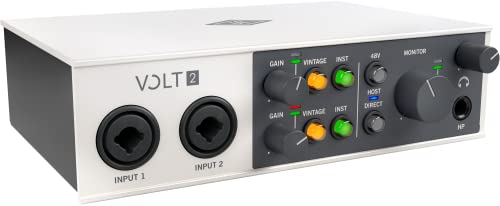
- 2x2 USB-C interface with MIDI
- Up to 24-bit/192 kHz recording and Vintage mode
- Supports Mac, Windows, iPad, and iPhone
Best For: Musicians, podcasters, and streamers seeking UA-style preamp coloration
Vintage-Tone Pick
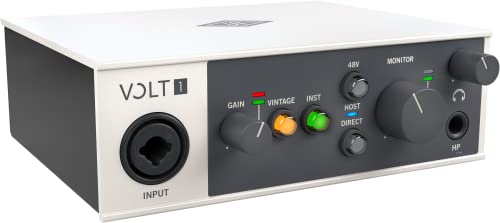
- 610-style Vintage preamp mode
- Up to 24-bit/192 kHz recording
- Compatible with MIDI devices and mobile platforms
Best For: Solo musicians and mobile producers wanting UA-inspired preamp character
Flexible Routing Pick

- 24-bit/192 kHz USB-C interface
- DirectWIRE loopback for internal routing
- Combo, Hi-Z, RCA, and line-input support
Best For: Producers, streamers, and instrumentalists needing flexible routing
Budget MIDI I/O Pick
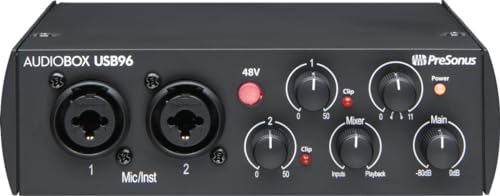
- Dedicated MIDI I/O is included
- Two mic preamps and instrument inputs
- Bus-powered with 24-bit/96 kHz support
Best For: Beginners and mobile musicians building a simple MIDI recording setup
Versatile 4×4 Choice – Behringer U-PHORIA UMC404HD
The Behringer U-PHORIA UMC404HD is a practical audio interface with MIDI input for recording multiple microphones or instruments at once. Its four inputs, four outputs, MIDI I/O, 24-bit/192 kHz support, and four MIDAS-designed mic preamps make it a flexible choice for a home studio or small recording setup.
Best For: Musicians and home studios that need four simultaneous inputs, MIDI connectivity, and a durable metal chassis.
Pros:
- Provides four inputs, four outputs, and one MIDI I/O.
- Supports 24-bit/192 kHz recording.
- Includes four MIDAS-designed mic preamps with +48V phantom power.
- Uses an impact-resistant metal chassis.
Cons:
- Its larger four-input design may be more than a simple two-channel setup requires.
- The supplied compatibility notes reference older Windows versions, so users should verify current system support.
The UMC404HD stands out when expandability matters. It combines four analog inputs with MIDI and high-resolution recording in a rugged package, making it a strong fit for multi-mic sessions, instruments, and MIDI hardware.
Studio Hub Pick – Focusrite Scarlett 4i4 4th Gen
The Focusrite Scarlett 4i4 4th Gen is an audio interface with MIDI input for creators connecting microphones, guitars, synths, and drum machines. It offers two mic preamps, two Hi-Z inputs, four line inputs, four line outputs, and 24-bit/192 kHz recording through USB-C.
Best For: Producers who need flexible line connectivity, MIDI I/O, and modern features for recording and monitoring.
Pros:
- Combines two mic preamps, two Hi-Z inputs, four line inputs, and four line outputs.
- Includes MIDI input and output.
- Offers 120dB dynamic range and 24-bit/192 kHz support.
- Auto Gain, Clip Safe, and Air mode simplify recording and tone shaping.
Cons:
- Its expanded routing may be unnecessary for users who only record one or two sources.
- USB-C power and connectivity accessories are part of a more involved setup than a basic interface.
With its broad I/O and useful recording-assistance tools, the Scarlett 4i4 is well suited to a growing studio. It is especially appealing for producers combining microphones, instruments, line-level hardware, and MIDI gear.
DSP Monitoring Pick – Yamaha URX22C
The Yamaha URX22C is a compact audio interface with MIDI input, two combo inputs, and USB-C connectivity. Its Class-A D-PRE mic preamps, 32-bit integer/192 kHz support, and DSP-powered monitoring effects make it useful for vocal, instrument, and guitar recording.
Best For: Solo musicians and small setups that want MIDI I/O, rugged construction, and latency-free DSP monitoring.
Pros:
- Provides two XLR/TRS combo inputs and MIDI I/O.
- Includes Class-A D-PRE preamps, +48V phantom power, and one Hi-Z input.
- Offers DSP monitoring with REV-X reverb, Channel Strip, and Guitar Amp Classics.
- Supports Windows, macOS, and iOS.
Cons:
- Two analog inputs and two outputs provide less expansion than four-channel interfaces.
- Its feature set may be more specialized than needed for basic recording.
The URX22C is a focused choice for recording two sources while monitoring through onboard effects. Its MIDI connectivity and cross-platform support add flexibility, while the full-metal housing suits portable or frequently handled setups.
Simple Two-Channel Pick – Focusrite Scarlett 2i2 4th Gen
The Focusrite Scarlett 2i2 4th Gen is a straightforward audio interface with MIDI input for recording microphones and instruments. Its two mic preamps, two Hi-Z inputs, 120dB dynamic range, and USB-C connection cover the essentials for a compact home recording setup.
Best For: Vocalists, guitarists, and small home studios that need two inputs, MIDI connectivity, and easy level control.
Pros:
- Provides two mic preamps and two Hi-Z instrument inputs.
- Includes MIDI input and output.
- Supports 24-bit/192 kHz recording with 120dB dynamic range.
- Auto Gain, Clip Safe, and Air mode support easier recording and shaping.
Cons:
- Two inputs and two channels limit simultaneous recording compared with larger interfaces.
- It offers less line-level I/O than the Scarlett 4i4.
The Scarlett 2i2 keeps the setup compact without omitting MIDI or useful recording controls. It is a sensible starting point for artists who mainly track vocals, guitar, or another two-source combination.
Best Bus-Powered Pick – Mackie Onyx Producer 2-2
Mackie Audio Interface, Onyx Producer 2X2 USB Audio Interface with MIDI (Onyx Producer 2-2)
Check Price On AmazonIf you need an audio interface with MIDI input for mobile or desktop recording, the Mackie Onyx Producer 2-2 combines two mic preamps, flexible combo inputs, and bus-powered USB connectivity in a compact 2×2 design.
Best For: Musicians who want straightforward recording, MIDI connectivity, and a rugged interface that does not require a separate power adapter.
Pros:
- Records at up to 24-bit/192 kHz with two Onyx mic preamps.
- Includes MIDI I/O, 48V phantom power, and XLR/TRS combo inputs for microphones, line sources, and Hi-Z instruments.
- Offers zero-latency direct monitoring, dedicated monitor outputs, and a headphone output.
- Bus-powered USB 2.0 design and built-like-a-tank construction suit mobile recording.
Cons:
- Provides two inputs and two outputs, so larger tracking setups may need more I/O.
- The listed warranty is one year and nontransferable.
The Onyx Producer 2-2 is a practical choice when MIDI input, dependable preamps, and portable USB operation matter more than extensive routing or expansion.
Best for Vintage-Style Preamps – Universal Audio Volt 2
The Universal Audio Volt 2 is an audio interface with MIDI input aimed at musicians, podcasters, and streamers who want a compact 2×2 USB-C unit with high-resolution recording and a selectable Vintage preamp mode.
Best For: Creators who value 610-inspired preamp coloration, 24-bit/192 kHz converters, and compatibility with desktop and supported mobile devices.
Pros:
- Offers up to 24-bit/192 kHz recording with crystal-clear converters.
- Vintage mode is designed to provide the sound of UA’s classic 610 preamps.
- Includes MIDI and supports macOS, Windows, iPad, and iPhone with the required accessories.
- Works with LUNA and includes access to listed software and instrument support.
Cons:
- Mobile use may require an external Volt power supply and Apple Lightning adapter, depending on the device.
- Its 2×2 configuration may be limiting for setups requiring several simultaneous inputs or outputs.
Volt 2 is a focused option for users who want MIDI functionality alongside a recognizable preamp character and a workflow that spans computer and compatible mobile recording.
Best Flexible I/O Value – Behringer UMC204HD
For buyers comparing an audio interface with MIDI input, the Behringer UMC204HD stands out with two combination inputs, four outputs, MIDI I/O, inserts, and 24-bit/192 kHz converters for computer-based recording.
Best For: Home studios that need more routing flexibility than a basic 2×2 interface, including connections for MIDI hardware and external effects.
Pros:
- Provides two XLR/TRS combination inputs and up to 24-bit/192 kHz resolution.
- Built-in MIDI I/O supports keyboards, control surfaces, and other MIDI hardware.
- Offers four outputs, RCA and TRS playback options, and two analog inserts for external processors.
- Uses Midas-designed mic preamps and supports listed software including Pro Tools, Ableton Live, and Cubase.
Cons:
- The supplied operating-system details list Windows, so users should verify compatibility for their particular setup.
- Only two microphone/instrument inputs are available for simultaneous recording.
The UMC204HD is a strong fit when MIDI, external-effect inserts, and four-output routing are priorities, especially for a compact home-studio rig.
Vintage-Tone Pick – Universal Audio Volt 1
The Universal Audio Volt 1 is a compact choice if you need an audio interface with MIDI input for a computer or mobile recording setup. It offers up to 24-bit/192 kHz recording, a Vintage preamp mode, and compatibility with MIDI devices, though it provides two channels rather than a dedicated multi-input configuration.
Best For: Solo musicians, vocalists, and mobile producers who want UA-inspired preamp character and MIDI-device compatibility.
Pros:
- Vintage mode is designed to deliver the character of UA’s classic 610 preamps.
- Supports up to 24-bit/192 kHz recording and playback.
- Works with Mac, Windows, iPad, and iPhone, with LUNA and additional software support.
Cons:
- Only two channels are provided.
- Mobile iPad or iPhone use may require an external Volt power supply and Apple Lightning adapter, depending on the device.
- The supplied details identify MIDI-device compatibility but do not specify the physical MIDI connector type.
Choose the Volt 1 when preamp flavor, high-resolution recording, and flexible computer or mobile use matter most. Verify the MIDI connection requirements for your particular controller before buying.
Flexible Routing Pick – ESI Amber i1
The ESI Amber i1 suits buyers seeking an audio interface with MIDI input for guitar, vocal, streaming, or production workflows. It combines 24-bit/192 kHz conversion with an XLR/TRS input, separate line connectivity, USB-C power, and DirectWIRE loopback routing.
Best For: Guitarists, vocalists, streamers, and producers who value loopback routing, broad input support, and bundled software.
Pros:
- Offers up to 24-bit/192 kHz resolution with low-latency performance.
- Includes an XLR/1/4-inch TRS combo input, Hi-Z, RCA, and separate line-input support.
- Provides DirectWIRE loopback, +48V phantom power, a headphone amplifier, and a two-year warranty.
Cons:
- The supplied details identify MIDI-device compatibility for the keyword use case but do not specify physical MIDI I/O connectors.
- It has two channels, which may limit larger simultaneous recording setups.
- Some included software and routing features may be more than a simple recording setup requires.
The Amber i1 is a versatile option for users who need more than basic recording, particularly if loopback, RCA connectivity, and software flexibility are useful. Confirm the MIDI hardware connection method before purchase.
Budget MIDI I/O Pick – PreSonus AudioBox 96
The PreSonus AudioBox 96 is a practical audio interface with MIDI input for personal and portable recording. It includes MIDI I/O, two mic preamps, instrument inputs, zero-latency mixer control, and USB bus power, making it a straightforward option for recording guitar, bass, microphones, and MIDI hardware.
Best For: Home-recording beginners and mobile musicians who want a simple two-channel interface with MIDI I/O.
Pros:
- Includes MIDI I/O alongside two mic preamps and two high-headroom instrument inputs.
- Supports up to 24-bit/96 kHz recording and playback.
- USB bus power, zero-latency mixer control, +48V phantom power, and bundled recording software support a portable setup.
Cons:
- Its maximum sample rate is 96 kHz rather than 192 kHz.
- Two-channel I/O may not suit larger recording sessions.
- It uses USB 2.0 and includes a USB Type-A-to-B cable, so newer devices may require an adapter.
The AudioBox 96 is especially appealing when dedicated MIDI I/O and an uncomplicated recording workflow matter more than maximum sample rate. Its included software and bus-powered design also help keep a starter setup affordable and portable.
How We Picked the Best Audio Interface with Midi Input
We focused on interfaces that combine reliable audio recording with built-in MIDI connectivity. The selection covers USB and USB-C models suited to bedroom studios, mobile production, songwriting, electronic music, and small recording setups.
We considered input and output counts, preamp quality, conversion specifications, monitoring features, software support, construction, and overall value. Because “more” is not always better, the list includes both straightforward two-channel interfaces and models designed for users who need extra routing flexibility.
Quick Comparison
| Best For | What to Prioritize |
|---|---|
| Solo recording | Two quality preamps, direct monitoring, and simple controls |
| Electronic musicians | MIDI I/O, multiple line outputs, and dependable synchronization |
| Small bands | At least four simultaneous inputs and flexible monitoring |
| Guitarists and vocalists | Instrument-ready inputs, low-latency monitoring, and sturdy construction |
| Mobile or compact studios | USB-C connectivity, bus power, and a small footprint |
Key Buying Factors for an Audio Interface with Midi Input
Audio I/O and MIDI Connectivity
Check how many inputs can record simultaneously, not merely how many connectors appear on the front or rear panel. Two inputs suit vocals, guitar, and basic overdubbing; four or more are better for stereo instruments, multiple performers, or external hardware. Standard five-pin MIDI input and output remain useful for keyboards, drum machines, and hardware sequencers.
Sound Quality and Preamps
Look for clean gain, enough input headroom, and support for the microphones or instruments you use. Higher sample-rate and bit-depth specifications can be useful, but practical preamp performance, driver stability, and monitoring quality usually matter more than headline numbers.
Monitoring and Workflow
Direct monitoring helps reduce latency while recording. Separate headphone and monitor controls, MIDI timing stability, loopback options, and multiple line outputs can make a major difference in daily use. DSP-powered effects may also help performers monitor with less computer processing.
Compatibility and Power
Confirm compatibility with your computer, operating system, and recording software. USB-C describes the connector rather than automatically guaranteeing every feature, so check included cables and power requirements. Bus-powered models are convenient, while externally powered units may offer more dependable operation with demanding setups.
Who Should Buy Which Audio Interface with Midi Input?
Choose a compact two-input model if you mainly record one or two sources at a time and want a simple, affordable setup. These interfaces are well suited to singers, guitarists, podcasters, and producers working mostly with software instruments.
Choose a four-input interface if you use several microphones, stereo hardware, or multiple MIDI-connected devices. Extra outputs are especially valuable for external effects, hardware monitoring, and more advanced routing.
Choose a feature-rich model with DSP or bundled software if you want a faster recording workflow, onboard monitoring effects, or a stronger out-of-box production package. Finally, prioritize dependable drivers, suitable connections, and the right number of simultaneous inputs over specifications you will not use.