The best audio interface with loopback makes it easier to combine microphones, instruments, and computer audio for podcasts, livestreams, lessons, and recordings. The right model can simplify routing while still delivering clean sound and dependable monitoring.
Our selection ranges from compact solo interfaces to flexible podcast mixers and proven studio models. Use the guide below to compare connectivity, controls, compatibility, and workflow before choosing.
Best 10 Audio Interface with Loopback Picks for 2026
Versatile Starter

- Two combo inputs for microphones or instruments
- Loopback and zero-latency direct monitoring
- 32-bit/192 kHz USB recording for Mac or PC
Best For: Home recording, podcasting, and simple streaming setups
Podcast Powerhouse

- Two XLR combo inputs with up to 60 dB gain
- Eight customizable sound-effect buttons
- Loopback, phone connectivity, and up to 8-hour battery
Best For: Podcasters, streamers, and co-hosted live content
Portable High-Resolution Pick

- Two combo inputs with 48V phantom power
- 24-bit/192 kHz high-fidelity recording
- USB-C bus power with loopback and monitor mix
Best For: Two-channel home recording and mobile-friendly Mac/PC setups
Compact Creator Choice

- 24-bit/192 kHz recording with 106 dB dynamic range
- 56 dB preamp, 48V phantom power, and instrument input
- ProStudio software adds virtual channels and loopbacks
Best For: Beginners, guitarists, vocalists, and compact streaming setups
Best Budget Loopback Pick

- 24-bit/192kHz recording with two combo inputs
- USB-C bus power and driver-free setup
- Monitor mix, loopback, and direct monitoring
Best For: Affordable home recording and streaming setups
Best for Polished Recording
Focusrite Scarlett 2i2 4th Gen
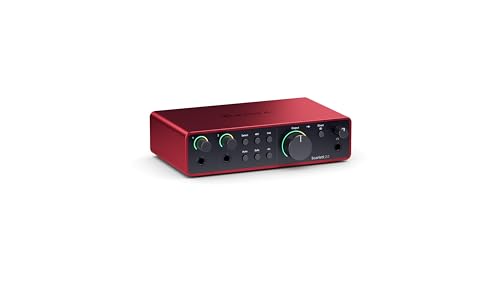
- 24-bit/192kHz conversion and 120dB dynamic range
- Auto Gain, Clip Safe, and Air modes
- Includes extensive recording software and plugins
Best For: Home musicians focused on high-quality recording
Best Versatile Loopback Interface

- Loopback captures voiceovers with app or game audio
- Adds MIDI, USB hub, and multiple analog connections
- Includes creative software and a five-year warranty
Best For: Creators combining recording, streaming, and MIDI gear
Studio-Ready Simplicity

- 120dB dynamic range with 24-bit/192kHz recording
- Air modes enhance vocals and guitars
- Includes a useful recording software bundle
Best For: Solo songwriters and compact Mac, PC, or iPad recording setups
Creator-Centered Routing

- Built-in loopback combines voice, instruments, and desktop audio
- Dual USB supports computer plus phone or iPad
- Dual XLR inputs record at 24-bit/192kHz
Best For: Streamers, podcasters, and mobile creators needing flexible audio routing
Proven Budget Recording

- Air mode adds clarity to acoustic instruments and vocals
- 24-bit/192kHz recording with Gain Halos
- Includes major recording software and plugins
Best For: Beginners and solo musicians recording vocals, guitar, or podcasts
Versatile Starter – BOMGE BMG22 Audio Interface
If you need an audio interface with loopback for basic recording, streaming, or podcasting, the BOMGE BMG22 combines two combo inputs, direct monitoring, and computer-audio routing in a straightforward USB design. Its 32-bit/192 kHz specification and generic Windows/Mac driver support add flexibility for home setups.
Best For: Musicians, vocalists, podcasters, and streamers who want two inputs with loopback and zero-latency monitoring.
Pros:
- Two combo inputs accept microphones or instruments.
- Input 1 includes +48V phantom power for condenser microphones when using the XLR socket.
- Loopback mixes input channels with computer playback for return to the computer.
- Direct monitoring supports delay-free tracking.
Cons:
- DAW software is not included.
- Phantom power is specified for Input 1 rather than both inputs.
- Its basic two-channel layout may be limiting for larger recording sessions.
The BMG22 is a practical choice when loopback, simple two-channel recording, and direct monitoring matter more than extensive routing or bundled software.
Podcast Powerhouse – MAONO E2 Gen2 Podcast Mixer
The MAONO E2 Gen2 is an audio interface with loopback built around podcasting and live content. It pairs two XLR combo inputs with 60 dB preamps, customizable sound pads, phone and computer connections, and a built-in battery for portable sessions.
Best For: Co-hosted podcasts, livestreams, and creators who want sound effects, voice effects, phone connectivity, and loopback in one unit.
Pros:
- Two low-noise XLR combo inputs provide up to 60 dB of gain.
- Eight customizable sound-effect buttons support clips up to 20 seconds each.
- Loopback supports computer-based live streaming with combined input and output.
- Built-in 1500mA battery offers up to eight hours of use.
Cons:
- The feature-rich mixer may be more than needed for straightforward music recording.
- Sound-pad recordings are limited to 20 seconds per button.
- Its emphasis is on podcast and streaming workflows rather than a minimal interface.
Choose the E2 Gen2 if interactive content is your priority. Its loopback, effects, phone I/O, and battery make it especially suited to creators who want hands-on control during live production.
Portable High-Resolution Pick – PIYONE Q2 Alloy Red Interface
For creators seeking an audio interface with loopback and a compact USB-C setup, the PIYONE Q2 offers two combo inputs, 24-bit/192 kHz recording, and class-compliant Mac and PC operation. Its bus-powered design keeps the setup simple, while monitor mix and direct monitoring support tracking and streaming.
Best For: Home musicians and mobile creators recording vocals, guitar, or other two-channel sources.
Pros:
- USB-C carries data and bus power without an external power supply.
- Two combo inputs support microphones and instruments, with 48V phantom power.
- 24-bit/192 kHz converters target high-fidelity recording.
- Loopback, monitor mix, and zero-latency monitoring support flexible workflows.
Cons:
- The supplied notes specify Mac and PC compatibility but do not detail mobile compatibility.
- Two inputs may not suit larger ensembles.
- The USB-C bus-powered design depends on the connected computer or device for power.
The Q2 is a focused, portable option for two-channel recording. It makes the most sense when you value USB-C simplicity, high-resolution capture, and loopback without needing a larger mixer-style feature set.
Compact Creator Choice – MAONO PS22 Lite USB Interface
The MAONO PS22 Lite is an audio interface with loopback aimed at recording enthusiasts, streamers, and beginners. Along with 24-bit/192 kHz recording, it offers microphone and instrument inputs, direct monitoring, and ProStudio Routing Software with virtual channels and loopbacks for more adaptable broadcasts.
Best For: Beginners, guitarists, vocalists, and streamers who want compact hardware with software-based routing options.
Pros:
- 24-bit/192 kHz recording and a stated 106 dB dynamic range support detailed capture.
- Up to 56 dB of preamp gain and 48V phantom power accommodate dynamic and condenser microphones.
- ProStudio Routing Software adds virtual channels and loopbacks for streaming.
- Compact design, direct monitoring, and Mac, Windows, and iPad compatibility improve setup flexibility.
Cons:
- Advanced routing requires the included ProStudio software and selecting the MAONO ASIO driver in compatible software.
- The compact interface is designed for a focused setup rather than extensive I/O.
- Its included software workflow may require more setup than basic plug-and-play recording.
The PS22 Lite balances beginner-friendly hardware with deeper routing potential. It is a strong fit when you want a small interface for guitar or vocals now, with software loopbacks available for future streaming needs.
Best Budget Loopback Pick – PIYONE Q2 Alloy Grey
The PIYONE Q2 is a compact audio interface with loopback functionality, 24-bit/192kHz recording, and two combo inputs. Its USB-C, class-compliant design makes it a practical choice for creators who want a simple PC, Mac, or iOS recording setup without external power.
Best For: Home recording, mobile creators, guitarists, and vocalists seeking an affordable two-input interface with monitor mix and loopback.
Pros:
- Supports 24-bit/192kHz recording with two combo XLR/TRS inputs.
- Includes monitor mix, loopback, direct monitoring, and 48V phantom power.
- USB-C bus power and driver-free operation simplify setup.
- Illuminated gain rings and a 3.5mm headphone output suit compact workspaces.
Cons:
- Limited to two input channels.
- Supplied notes do not specify bundled recording software.
With its portable design and broad device compatibility, the Q2 covers essential recording and streaming needs. It is especially appealing when loopback and straightforward plug-and-play operation matter more than advanced expansion.
Best for Polished Recording – Focusrite Scarlett 2i2 4th Gen
The Focusrite Scarlett 2i2 4th Gen is a two-channel USB-C audio interface built around high-quality mic preamps, 24-bit/192kHz conversion, and a 120dB dynamic range. It is a strong recording-focused option, though the supplied product information does not identify a dedicated loopback feature.
Best For: Musicians and home producers who prioritize polished vocal and instrument recordings, automatic level control, and included software.
Pros:
- Offers two mic preamps, two Hi-Z instrument inputs, and 24-bit/192kHz operation.
- 120dB dynamic range supports detailed studio-quality recording.
- Auto Gain and Clip Safe help manage recording levels.
- Includes Air modes plus a substantial software and plugin bundle.
Cons:
- The supplied notes do not confirm loopback functionality.
- Provides two input channels, limiting larger recording setups.
The Scarlett 2i2 is a dependable choice for recording vocals, guitars, and other instruments, especially for users who value guided level setting and bundled production tools. If loopback is essential, verify the required workflow before choosing it for streaming or system-audio capture.
Best Versatile Loopback Interface – Arturia MiniFuse 2
The Arturia MiniFuse 2 is a flexible audio interface with loopback, USB MIDI, two combo mic/instrument/line inputs, and additional instrument/line connectivity. Its compact format, included software, and five-year warranty make it well suited to creators building a versatile home or mobile setup.
Best For: Content creators, musicians, and producers who need loopback alongside instrument, microphone, MIDI, and software integration.
Pros:
- Loopback supports capturing voiceovers alongside in-app or in-game audio.
- Provides two combo inputs, additional TRS instrument/line inputs, and 48V phantom power.
- Includes MIDI input and output, balanced line outputs, headphone control, and a USB hub.
- Comes with a broad creative software bundle and a five-year warranty.
Cons:
- The multiple connections may be more than a basic two-input recording setup requires.
- Its supplied compatibility details list Windows and macOS, not iOS.
The MiniFuse 2 stands out as a well-rounded audio interface with loopback for creators who combine microphones or instruments with computer audio. MIDI connectivity and the included software also give it room to grow beyond basic recording.
Studio-Ready Simplicity – Scarlett Solo 4th Gen
The Focusrite Scarlett Solo 4th Gen is a straightforward choice if you need an audio interface with loopback for a compact recording setup. It combines one XLR mic preamp, one Hi-Z instrument input, 24-bit/192kHz recording, and Focusrite’s Air modes in a small USB-C interface.
Best For: Songwriters and solo creators recording vocals, guitar, or other single-instrument projects on Mac, Windows, or iPad.
Pros:
- 120dB dynamic range and 24-bit/192kHz support for detailed recordings.
- Air modes add presence and harmonic drive to vocals and guitars.
- Includes Pro Tools Intro+, Ableton Live Lite, Cubase LE, and Hitmaker Expansion.
- Compact 14.4-ounce design with a three-year manufacturer warranty.
Cons:
- Only one XLR mic input is provided.
- The supplied notes do not identify a dedicated loopback feature, so verify loopback requirements before buying.
The Solo 4th Gen is best when sound quality and portability matter more than multiple simultaneous inputs. Its focused input layout suits solo recording, while the included software helps new users start quickly.
Creator-Centered Routing – MAONO P2 Hybrid USB Interface
The MAONO P2 is a strong fit for creators specifically seeking an audio interface with loopback. Its built-in loopback and ProStudio 2 software can combine voice, instruments, backing tracks, and desktop audio, while dual USB connectivity supports a computer and phone or iPad at the same time.
Best For: Podcasters, streamers, musicians, and mobile creators who need flexible routing across computers, phones, tablets, or cameras.
Pros:
- Built-in loopback captures instrument, voice, backing tracks, and desktop audio together.
- Dual USB ports support simultaneous computer and phone or iPad connections.
- Dual XLR inputs offer 56dB gain and 24-bit/192kHz recording.
- Independent mute controls, direct monitoring, and signal indicators aid live production.
Cons:
- Its creator-focused routing and software may be more than a simple recording setup requires.
- Specific operating-system details are not fully listed in the supplied notes.
The P2 stands out among these options for integrated loopback and hybrid mobile connectivity. It is especially practical when your workflow includes streaming, desktop audio, and more than one recording device.
Proven Budget Recording – Scarlett Solo 3rd Gen
The Focusrite Scarlett Solo 3rd Gen is a compact USB option for basic vocal, guitar, and podcast recording. If you are comparing an audio interface with loopback, note that the supplied specifications emphasize its mic and instrument inputs, Air mode, and low-noise outputs rather than a stated loopback function.
Best For: Beginners and solo musicians who want a simple Mac, Windows, or iPad interface with bundled recording software.
Pros:
- High-performance mic preamp with switchable Air mode for added clarity.
- Records and mixes at up to 24-bit/192kHz.
- Gain Halos help capture vocals and instruments without unwanted clipping.
- Includes Pro Tools Intro+, Ableton Live Lite, Cubase LE, and Hitmaker Expansion.
Cons:
- It has one XLR mic preamp and one Hi-Z instrument input.
- The supplied notes do not confirm a dedicated loopback feature.
- Its listed warranty is two years, shorter than the 4th Gen model’s stated three years.
The Solo 3rd Gen remains a sensible entry point for straightforward recording, particularly when you need one microphone and one instrument input. Choose it for its simple workflow and software bundle, but look elsewhere if loopback is essential.
How We Picked the Best Audio Interface with Loopback
We focused on the features that matter most for real-world recording and streaming: loopback availability, microphone preamp quality, phantom power, direct monitoring, input and output flexibility, device compatibility, and ease of use. We also considered whether each interface suits a specific workflow, such as solo vocals, guitar recording, podcast production, livestreaming, or two-person conversations.
USB-C connectivity, high-resolution recording support, and practical controls are useful advantages, but specifications alone do not determine the best choice. A compact interface with straightforward routing may be more useful than a feature-heavy model if you need a fast setup.
Quick Comparison
| Best For | What to Look For | Recommended Type |
|---|---|---|
| Solo vocals or guitar | One strong mic input, instrument support, direct monitoring | Compact 1-in/2-out interface |
| Two microphones | Two XLR inputs, independent gain controls, phantom power | 2×2 interface or podcast mixer |
| Livestreaming and podcasts | Loopback, easy routing, headphone control, mute or mix features | Streaming-focused interface or mixer |
| Music production | Low-latency monitoring, MIDI, reliable drivers, clean preamps | Studio-oriented 2×2 interface |
Key Buying Factors for an Audio Interface with Loopback
Loopback and Routing
Loopback sends computer audio back into your recording or streaming software. Confirm how the feature is implemented: some interfaces provide a dedicated loopback mix, while others rely on software routing. Check that it works with your operating system and preferred applications.
Inputs, Outputs, and Monitoring
Choose enough XLR inputs for your microphones and combo inputs if you also record guitar or line-level equipment. Direct monitoring helps reduce latency, while a separate headphone output and monitor level control make everyday use easier.
Power and Compatibility
Condenser microphones require 48V phantom power. If you plan to use an iPad or phone, verify the required adapters and power arrangement. Windows users should also check driver support, while Mac users may benefit from class-compliant plug-and-play operation.
Recording Resolution
24-bit recording is suitable for most home studios, and 96 or 192 kHz support can be useful for specific production workflows. Do not prioritize sample rate over preamp quality, stable software, and convenient controls.
Who Should Buy Which Audio Interface with Loopback?
Choose a compact Focusrite Scarlett Solo-style interface if you mainly record one microphone or instrument and want a simple studio setup. A 2×2 model such as the Scarlett 2i2 or MiniFuse 2 is a better fit for two microphones, stereo sources, or future expansion.
Podcasters and livestreamers should prioritize the MAONO mixer-style options or another model with accessible loopback controls, multiple microphone inputs, and easy headphone monitoring. Budget shoppers may prefer the BOMGE or entry-level MAONO interfaces, provided their connection and routing needs are modest.
Before buying, confirm the exact loopback workflow, included cables, power requirements, and software compatibility. Those details often matter more than headline resolution when an interface will be used every day.