Choosing an AV receiver with pre-outs gives your home theater room to grow. You can begin with the receiver’s built-in amplification, then add a dedicated power amplifier later for demanding speakers, extra channels, or a more refined listening setup.
This roundup compares 10 receivers across multiple budgets and feature levels, including models with Dolby Atmos, 8K HDMI, room correction, wireless streaming, and multiroom support. Focus on the connections and channel layout you need now, while keeping future upgrades in mind.
Best 10 Av Receiver with Pre Outs Picks for 2026
Best Overall

- Dirac Live room correction included
- 9.2-channel surround with 120W output
- Eight HDMI ports with 8K support
Best For: Tuned home theater systems with multiple sources
Best Stereo Value

- 100W x 2 stereo amplification
- Phono input and Bluetooth streaming
- A/B speaker switching for flexible setups
Best For: Simple vinyl and Bluetooth stereo systems
Best High-Power Upgrade
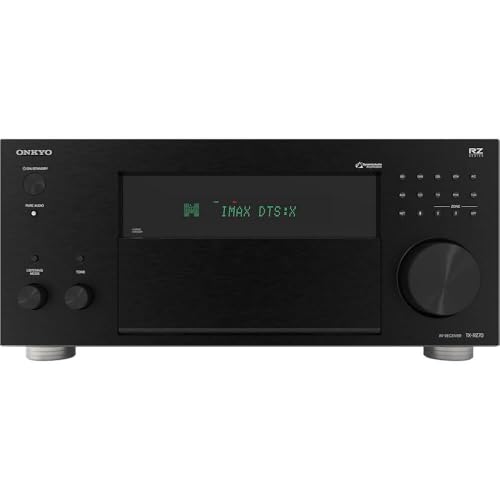
- 11.2 channels at 140W per channel
- Dirac Live Full Bandwidth included
- Ten HDMI ports and multi-subwoofer support
Best For: Large, premium immersive home theaters
Best Compact 8K Option

- 7.2-channel Dolby Atmos and DTS:X support
- Three dedicated 8K HDMI inputs
- Two subwoofer pre-outs and built-in HEOS
Best For: Stream-ready small- to medium-sized home theaters
Premium Versatility

- 7.2-channel Dolby Atmos and DTS:X receiver
- 8K, 4K/120, VRR, and ALLM support
- YPAO multipoint calibration and MusicCast
Best For: Feature-focused home theaters and gaming setups
THX-Certified Power

- THX Select Certified 7.2-channel platform
- Dolby Atmos and DTS:X support
- Three 40Gbps HDMI 2.1 inputs
Best For: Cinema-focused systems with a second zone
Easy 8K Home Theater

- 7.2-channel Dolby Atmos and DTS:X support
- Three dedicated 8K HDMI inputs
- Guided setup and HEOS multi-room streaming
Best For: Small- to medium-room home theaters
Balanced Atmos Upgrade
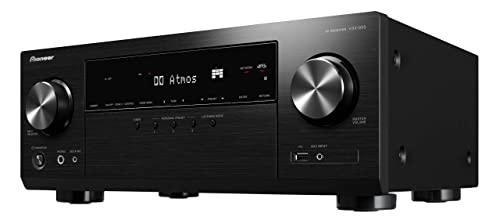
- 7.2-channel surround receiver
- HDMI 2.1 with 8K gaming support
- Dolby Atmos Height Virtualization
Best For: Modern home theaters using virtual height effects
Gaming-Focused Value
Onkyo TX-NR5100 7.2-Channel 8K AV Receiver

- 4K/120Hz, VRR, ALLM, and QFT
- eARC supports immersive audio formats
- Chromecast, AirPlay 2, DTS Play-Fi, and Bluetooth
Best For: Console gaming and connected 7.2-channel systems
Easy-Calibrated Atmos System
Yamaha RX300A 5.2-Channel AV Receiver

- Dolby Atmos and DTS Virtual:X
- 4K/120 and 8K/60 HDMI support
- Automatic room correction with setup microphone
Best For: Simple, calibrated 5.2-channel home theaters
Best Overall – Onkyo TX-RZ50
If you want an AV receiver with pre outs for a serious home theater, the Onkyo TX-RZ50 offers a strong mix of power, connectivity, and room correction. Its 9.2-channel design, eight HDMI ports, 8K support, and included Dirac Live make it well suited to carefully tuned surround systems.
Best For: Home theater enthusiasts who want flexible connectivity and automated room calibration.
Pros:
- Dirac Live room correction is included.
- 9.2-channel surround configuration supports immersive systems.
- Eight HDMI ports and 8K connectivity provide room for multiple sources.
- THX certification and 120-watt output suit demanding movie and gaming setups.
Cons:
- Its 36.1-pound chassis may be cumbersome to install.
- Its extensive feature set may be more than a basic stereo or small-room setup needs.
The TX-RZ50 is a well-rounded choice when preamp connectivity, calibration, and expansion matter as much as built-in amplification. It is especially compelling for users building a full-featured home theater rather than a simple music system.
Best Stereo Value – Sony STRDH190
The Sony STRDH190 is not a multichannel home-theater AVR, but it is a straightforward receiver for two-channel listening. For shoppers comparing an AV receiver with pre outs, its stereo RCA output, phono input, Bluetooth, and 100-watt-per-channel amplification make it a practical choice for a simple music-focused system.
Best For: Stereo listeners who want turntable support, Bluetooth, and flexible speaker connections.
Pros:
- Phono input makes connecting a turntable simple.
- Bluetooth supports wireless streaming from compatible devices.
- 100 watts per channel and A/B speaker switching offer flexible stereo use.
- Low-profile design fits conventional AV cabinets.
Cons:
- It has only two channels and is not designed for surround sound.
- Its listed connections are primarily analog, with no HDMI inputs.
- The product is better suited to stereo systems than pre-out-heavy home theater installations.
The STRDH190 is best viewed as an affordable stereo receiver rather than a conventional AV receiver with pre outs. Choose it when music, vinyl, and simple operation are priorities, not Dolby Atmos or multichannel expansion.
Best High-Power Upgrade – Onkyo TX-RZ70
The Onkyo TX-RZ70 is a premium option for shoppers seeking an AV receiver with pre outs and substantial expansion potential. With 11.2 channels, 140 watts per channel, Dirac Live Full Bandwidth, multiple subwoofer support, and ten HDMI ports, it is designed for large, ambitious home theater systems.
Best For: Large home theaters requiring high power, multiple subwoofers, and advanced calibration.
Pros:
- 11.2-channel processing supports elaborate immersive systems.
- 140 watts per channel provides substantial amplification capacity.
- Dirac Live Full Bandwidth room calibration is built in.
- THX certification, IMAX Enhanced, and ten HDMI ports support premium theater setups.
Cons:
- Its advanced capabilities may be excessive for smaller rooms.
- Dirac Live Bass Control upgrades for subwoofers require firmware availability and additional consideration.
- Its premium feature set is likely more complex than casual users need.
The TX-RZ70 is the strongest fit here for a large-scale installation where power, channel count, and room correction are central requirements. It offers considerable headroom for users planning multiple speakers and subwoofers.
Best Compact 8K Option – Denon AVR-X1700H
The Denon AVR-X1700H is a practical 7.2-channel choice for shoppers looking for an AV receiver with pre outs in a more approachable home theater package. It combines 80 watts per channel with Dolby Atmos, DTS:X, built-in HEOS, three dedicated 8K inputs, and two pre-outs for subwoofers.
Best For: Small- to medium-sized home theaters needing modern video support and straightforward connectivity.
Pros:
- Two pre-outs support connecting subwoofers for added bass.
- Three dedicated 8K HDMI inputs support 8K/60Hz and 4K/120Hz pass-through.
- Dolby Atmos, DTS:X, and Dolby Atmos Height Virtualization provide flexible surround options.
- HEOS, Wi-Fi, Bluetooth, AirPlay 2, and voice control expand streaming options.
Cons:
- Its 80-watt-per-channel output is lower than the Onkyo models in this roundup.
- The seven-channel design offers less expansion than 9.2- and 11.2-channel receivers.
- The listed pre-outs are for subwoofers rather than a full bank of amplifier pre-outs.
The AVR-X1700H makes sense when you want current HDMI features, immersive audio, and network streaming without moving to a larger 9- or 11-channel receiver. Confirm the pre-out configuration meets your intended system design.
Premium Versatility – Yamaha RX-A2A
If you need an AV receiver with pre outs for a polished home theater and broad streaming setup, the Yamaha RX-A2A combines 7.2-channel processing with Dolby Atmos, DTS:X, advanced room calibration, and next-generation gaming support. Its AVENTAGE positioning also emphasizes premium build quality and sound performance.
Best For: Home theater users who want strong room calibration, immersive audio, streaming flexibility, and 8K/4K gaming features.
Pros:
- Supports Dolby Atmos, DTS:X, and Yamaha Surround:AI processing.
- Three HDMI inputs support 8K60B and 4K120AB, with ALLM and VRR for gaming.
- Includes YPAO R.S.C. multipoint calibration and extensive wireless streaming.
- Works with MusicCast, AirPlay 2, Spotify Connect, and Sonos systems with a Sonos Port.
Cons:
- Its 7.2-channel design may be limiting for larger, more elaborate systems.
- Sonos integration requires a separately sold Sonos Port.
The RX-A2A is a feature-rich choice when sound optimization and connectivity matter as much as video compatibility. Its combination of immersive formats, gaming support, and multi-room features makes it a flexible centerpiece for a modern setup.
THX-Certified Power – Onkyo TX-NR6100
For shoppers seeking an AV receiver with pre outs and a cinema-oriented feature set, the Onkyo TX-NR6100 offers THX Select certification, 7.2-channel processing, and support for Dolby Atmos and DTS:X. Its HDMI 2.1 connectivity also suits modern 8K sources and gaming systems.
Best For: Home theater enthusiasts who prioritize THX-certified performance, immersive audio, and dedicated second-zone playback.
Pros:
- THX Select Certified with a specified 210 W/ch Dynamic Audio Amplification system.
- Supports Dolby Atmos and DTS:X in a 5.2.2-channel configuration.
- Three HDMI 2.1 inputs provide 40Gbps bandwidth and 8K support.
- Offers discrete Zone 2 audio and video for compatible secondary-room setups.
Cons:
- The supplied details do not specify room-calibration features or a phono input.
- Its larger listed dimensions may require careful rack or cabinet planning.
The TX-NR6100 stands out for its THX credentials and practical zone flexibility. It is particularly appealing if you want a receiver built around movie playback and newer HDMI sources without moving beyond a seven-channel platform.
Easy 8K Home Theater – Denon AVR-X1800H
The Denon AVR-X1800H is a practical option for anyone comparing an AV receiver with pre outs for a small- to medium-sized room. It delivers 7.2-channel amplification, Dolby Atmos and DTS:X support, 8K video pass-through, and guided setup features designed to simplify installation.
Best For: Small- to medium-room home theaters that need straightforward setup, modern video support, and HEOS streaming.
Pros:
- Supports 7.2 or 5.2.2 Dolby Atmos and DTS:X configurations.
- Three dedicated 8K inputs support 8K/60Hz and 4K/120Hz pass-through.
- Includes an on-screen setup guide, color-coded rear connections, and Audyssey microphone.
- HEOS, Wi-Fi, AirPlay 2, and Bluetooth support multi-room and wireless streaming.
Cons:
- The 80-watt-per-channel output is aimed more at small- to medium-sized rooms than very large spaces.
- The supplied connectivity details list four HDMI ports, fewer than some competing models.
With its guided installation and modern HDR and HDMI support, the AVR-X1800H is a user-friendly foundation for a current home theater. Its virtual height option is also useful when adding physical height speakers is not practical.
Balanced Atmos Upgrade – Pioneer VSX-935
The Pioneer VSX-935 is a practical choice if you want an AV receiver with pre outs for a 7.2-channel home theater. Its HDMI 2.1 support, 8K enhanced gaming features, network connectivity, and Dolby Atmos Height Virtualization make it suited to modern TV, movie, and gaming setups.
Best For: Viewers and gamers wanting 7.2-channel surround sound with virtual height effects and next-generation HDMI features.
Pros:
- Supports HDMI 2.1 and 8K enhanced gaming.
- Provides Dolby Atmos Height Virtualization without additional height speakers.
- Supports streaming music, TV-app audio, and faster Wi-Fi connectivity.
Cons:
- Virtual height effects may not match a system with dedicated height speakers.
- The supplied notes do not specify the full pre-out configuration.
The VSX-935 is a flexible all-around receiver for users who want current video features and immersive sound without expanding to dedicated overhead speakers.
Gaming-Focused Value – Onkyo TX-NR5100 7.2-Channel 8K AV Receiver
The Onkyo TX-NR5100 is a compelling option when shopping for an AV receiver with pre outs and gaming-friendly HDMI features. This 7.2-channel model supports 4K/120Hz HDR pass-through, VRR, ALLM, and QFT, while eARC handles high-bitrate audio from compatible TV apps.
Best For: Gamers and home-theater users who want smooth next-generation video features, 7.2-channel surround sound, and straightforward streaming support.
Pros:
- Includes HDMI 2.1 gaming features such as 4K/120Hz, VRR, ALLM, and QFT.
- eARC supports Dolby Atmos, DTS:X, DTS-HD Master Audio, and Dolby TrueHD formats.
- Offers Chromecast built-in, AirPlay 2, DTS Play-Fi, and Bluetooth.
- Includes Klipsch Optimize Mode and a two-year parts-and-labor warranty.
Cons:
- Provides four HDMI ports, which may limit larger device collections.
- Its listed 80-watt output may be less suited to demanding speaker systems.
- The supplied notes do not specify the full pre-out configuration.
With its broad gaming feature set and useful wireless ecosystem, the TX-NR5100 is a strong fit for a connected entertainment system centered on consoles and streaming devices.
Easy-Calibrated Atmos System – Yamaha RX300A 5.2-Channel AV Receiver
The Yamaha RX300A is a sensible starting point for anyone seeking an AV receiver with pre outs in a compact 5.2-channel theater. It combines Dolby Atmos, DTS Virtual:X, 4K/120 and 8K/60 HDMI, automatic room correction, and Bluetooth Multipoint with guided setup features.
Best For: Users building a straightforward 5.2-channel or 3.1.2-channel system who value easy calibration, modern video support, and flexible Bluetooth streaming.
Pros:
- Supports Dolby Atmos, DTS Virtual:X, and 3.1.2-channel speaker layouts.
- Handles 4K/120, 8K/60, Dolby Vision, HDR10+, ALLM, and VRR.
- Included setup microphone automatically optimizes sound for the room.
- Bluetooth Multipoint allows two source devices to be paired and switched between.
Cons:
- Its 5.2-channel design offers less expansion than 7.2-channel alternatives.
- The listed 70-watt output may be limiting for larger rooms or demanding speakers.
- The supplied notes do not specify the full pre-out configuration.
The RX300A emphasizes easy setup and current connectivity, making it attractive for smaller or mid-sized theaters where room correction and simplified operation matter.
How We Picked the Best Av Receiver with Pre Outs
We focused on receivers that offer meaningful upgrade potential through preamp outputs, while also considering the features most important in a modern home theater. Our comparison criteria included channel count, amplifier power, HDMI capability, support for Dolby Atmos and DTS:X, room correction, network streaming, multiroom compatibility, and overall system flexibility.
Not every receiver is equally suited to every installation. Some are better for compact 5.1.2 or 7.1 systems, while others are designed for larger rooms, more immersive speaker layouts, or external amplification. We also considered whether each model makes sense for a first-time buyer, a gaming-focused setup, or an enthusiast system that may expand over time.
Quick Comparison
- Best for larger, upgradeable systems: Choose a higher-channel model such as the Onkyo TX-RZ70 when you need extensive processing and multiple amplifier options.
- Best balance of features and flexibility: The Onkyo TX-RZ50 and comparable 9.2-channel receivers suit serious home theaters without moving fully into flagship pricing.
- Best mainstream choices: Denon, Yamaha, Pioneer, and Onkyo’s 7.2-channel models provide strong support for everyday surround sound, streaming, and current video formats.
- Best for simpler systems: A 5.2-channel receiver can be a sensible choice for smaller rooms, though it offers less expansion headroom.
Key Buying Factors for an AV Receiver with Pre-Outs
Preamp Output Layout
Check exactly which channels have pre-outs. “Pre-outs” can mean a complete set of outputs for every processed channel, or only dedicated subwoofer, zone, or front-channel outputs. If you plan to add an external amplifier, confirm that the receiver can feed the channels you intend to upgrade.
Channel Count and Room Size
Match processing and amplification to your speaker plan. A 7.2-channel receiver can handle common surround layouts, while 9.2- and 11.2-channel models provide more flexibility for Dolby Atmos height speakers, bi-amping, or additional zones.
HDMI and Gaming Support
For newer televisions and consoles, look for 8K pass-through, 4K at 120Hz, HDR compatibility, eARC, and enough HDMI inputs. Verify the number of ports supporting the specific formats you use rather than relying only on the receiver’s maximum headline resolution.
Room Correction and Streaming
Room-correction software can improve bass balance, speaker integration, and tonal consistency. Network features such as Wi-Fi, Bluetooth, AirPlay, proprietary multiroom platforms, and services such as Works with Sonos can also affect daily usability.
Who Should Buy Which Av Receiver with Pre Outs?
Buy a higher-channel receiver if you expect to add height speakers, a second listening zone, or external amplification. Choose a well-equipped 7.2-channel model if you want a capable living-room theater with manageable cost and complexity. A compact 5.2-channel option works best for smaller spaces and straightforward layouts.
Before buying, count your sources, speakers, and display connections, then reserve capacity for future additions. The best AV receiver with pre-outs is not necessarily the most powerful model; it is the one whose preamp connections, processing channels, HDMI features, and room-correction tools match your upgrade plan.