Dante makes it easier to route high-quality audio across studios, stages, broadcast facilities, and installed systems using standard network infrastructure. The right interface can simplify expansion while preserving dependable, low-latency signal flow.
We’ve selected 10 leading options, from compact USB and analog adapters to stage boxes, headphone interfaces, and high-channel-count PCIe systems. Use the guide below to match features, connectivity, and scale to your setup.
Best 10 Audio Interface with Dante Picks for 2026
Flexible Dante Rack Processing

- 16x16 Dante and USB audio
- Includes VST Rack Pro and 30-plus plug-ins
- Mac/Windows support with up to 96 kHz audio
Best For: Live sound and software-based Dante processing
High-Channel Dante Connectivity
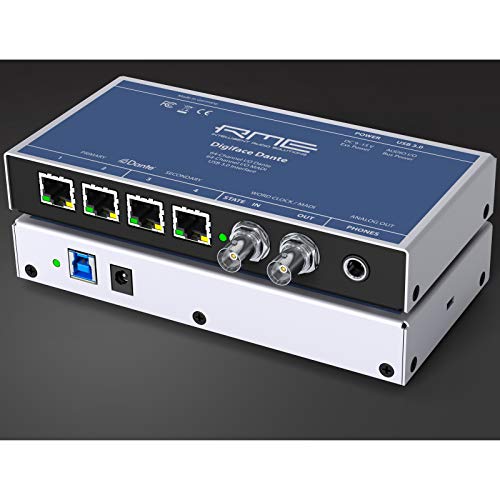
- 128-in/128-out Dante and MADI capability
- USB 3.0 with bus power
- Up to 192 kHz plus word-clock I/O
Best For: Professional high-channel Dante and MADI systems
Installed-System Mic Networking
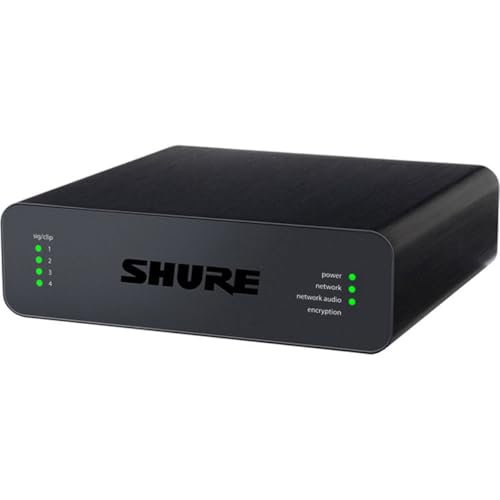
- Four mic/line XLR inputs
- Dante interface for professional AV systems
- Supports up to 192 kHz audio
Best For: Conference rooms and installed microphone systems
Compact USB-C Dante Bridge

- 2x2 bidirectional USB-C audio
- No drivers or extra software required
- PoE or USB powered; Mac/Windows compatible
Best For: Simple computer connections to Dante networks
Reference Dante Interface

- Dante networking with 24-bit/96kHz converters
- Works with Windows, macOS, and major DAWs
- Compact four-channel interface with two-year warranty
Best For: Recording, live sound, and audio measurement setups
Analog Dante Adapter
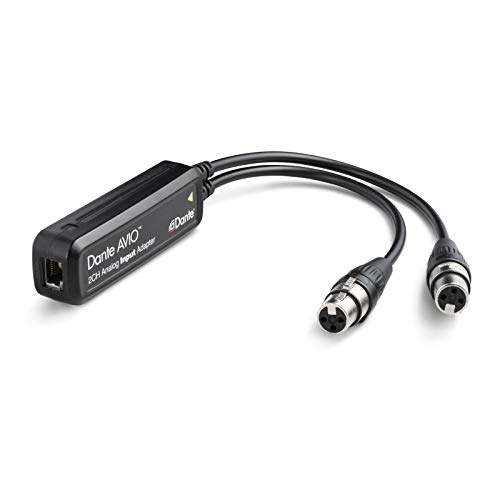
- Converts two analog inputs to Dante
- Connects through an RJ45 port
- Supports mixers, DI boxes, processors, and wireless mic receivers
Best For: Adding analog source devices to a Dante network
Stagebox Dante I/O

- 16 inputs and 8 outputs at up to 96kHz
- 3U stage box with Dante Ethernet connectivity
- Supports Yamaha TF systems and QUICK CONFIG Mode
Best For: Yamaha TF-based live-sound and stage setups
Compact Dante Expansion

- Two Dante input channels
- XLR connectivity and up to 96 kHz
- Includes power supply; two-year warranty
Best For: Small Dante systems and AHM or mixer installations
High-Capacity Dante Computer Interface

- 128x128 channels at 24-bit/192 kHz
- Dual Ethernet for switched or redundant modes
- Windows and Mac compatible with AES67 support
Best For: Large computer-based Dante production and broadcast systems
Dante Monitoring Station

- Headphone amplifier and line output
- Independent levels plus integrated mute
- PoE or included power-supply operation
Best For: Dante-network headphone and on-stage monitoring
Flexible Dante Rack Processing – Yamaha RUio16-D
The Yamaha RUio16-D is a practical audio interface with Dante for Mac or Windows setups that need 16-channel networked audio alongside USB connectivity. It also includes VST Rack Pro with more than 30 plug-ins, making it useful for software-based processing.
Best For: Live sound, installed systems, and computer-based Dante processing with moderate I/O needs.
Pros:
- Provides 16×16 Dante and USB audio channels.
- Includes VST Rack Pro software with 30-plus plug-ins.
- Supports sample rates up to 96 kHz and works with macOS and Windows.
- Offers two mic inputs and two line-level outputs.
Cons:
- Has fewer network channels than some larger Dante interfaces.
- Only two mic inputs are provided.
Choose the RUio16-D when integrated plug-in processing and straightforward 16-channel Dante/USB operation matter more than extensive analog I/O.
High-Channel Dante Connectivity – RME Digiface Dante
The RME Digiface Dante is a high-capacity audio interface with Dante, MADI, and USB 3.0 connectivity. Its 128-in/128-out Dante/MADI capability and TotalMix FX support make it suited to demanding computer-based routing and recording workflows.
Best For: Professional Mac or PC systems requiring extensive Dante and MADI channel capacity.
Pros:
- Provides 128 inputs and 128 outputs across Dante and MADI.
- Supports USB 3.0 connectivity and bus power.
- Offers sample rates up to 192 kHz and includes word-clock I/O.
- Includes a headphone output and TotalMix FX support.
Cons:
- Its feature set may be more than needed for small systems.
- Requires a computer-centered workflow for its USB connection.
The Digiface Dante is the strongest fit here for large-scale routing, especially when high channel counts, MADI integration, and detailed computer control are priorities.
Installed-System Mic Networking – Shure ANI4IN-XLR
The Shure ANI4IN-XLR is a focused audio interface with Dante for bringing four microphone or line-level XLR sources onto a Dante network. Its compact professional-audio design also supports control environments involving Crestron and AMX systems.
Best For: Conference rooms, installed AV systems, and Dante-connected microphone inputs.
Pros:
- Provides four mic/line XLR inputs.
- Supports sample rates up to 192 kHz.
- Works with professional audio devices, Crestron, and AMX systems.
- Includes a two-year warranty.
Cons:
- Offers four channels rather than a larger multichannel interface.
- Focuses on XLR input connectivity instead of USB computer I/O.
The ANI4IN-XLR makes sense when the main goal is reliable integration of four analog microphone or line sources into a Dante-enabled installation.
Compact USB-C Dante Bridge – Audinate Dante AVIO 2×2
The Audinate Dante AVIO 2×2 is a compact audio interface with Dante that connects a Mac or Windows computer to a Dante network over USB-C. It provides two inputs and two outputs, requires no drivers or additional software, and can draw power from PoE or USB.
Best For: Portable or simple two-channel computer connections to Dante networks.
Pros:
- Provides 2×2 bidirectional audio over USB-C.
- Needs no drivers or additional software.
- Supports PoE or USB power and uses a rugged ABS enclosure.
- Works with Dante Audio over IP and AES67 RTP.
Cons:
- Limited to two inputs and two outputs.
- Maximum resolution is 24-bit/48 kHz.
- Does not provide XLR microphone inputs.
The AVIO 2×2 is a convenient choice for basic computer-to-Dante connectivity, particularly when portability, simple setup, and flexible power options are more important than high channel counts.
Reference Dante Interface – ESI planet 22c
The ESI planet 22c is a compact audio interface with Dante connectivity for recording, live sound, and audio measurement. Its 24-bit/96kHz converters and support for Windows, macOS, and major DAWs make it a flexible choice for studio and networked-audio setups.
Best For: Musicians, engineers, and small production environments that need a Dante-connected interface with high-resolution conversion.
Pros:
- Dante IP audio networking with 24-bit/96kHz converters
- Supports Windows, macOS, and all major DAWs
- Compact 0.5 kg design
- Includes a comprehensive two-year warranty and US- and Germany-based support
Cons:
- Limited to four channels
- TRS audio input connectivity may not suit XLR-based setups
The planet 22c is a practical pick when you want reference-quality Dante audio in a small interface. Its four-channel layout is best suited to focused recording or measurement applications rather than large-scale stage I/O.
Analog Dante Adapter – Audinate Dante AVIO 2-Channel
The Audinate Dante AVIO 2-Channel Analog Input Adapter adds two-channel Dante connectivity to analog audio equipment. With an RJ45 network connection, it can link mixers, processors, DI boxes, keyboards, wireless microphone receivers, and other non-networked sources to a Dante system.
Best For: Integrating existing analog audio devices into a Dante network without replacing the source equipment.
Pros:
- Provides two-channel Dante analog input
- Works with mixers, consoles, processors, DI boxes, and other analog sources
- Uses an RJ45 connector for Dante networking
- Useful for wireless microphone receivers and other non-networked equipment
Cons:
- Offers inputs only, not analog outputs
- Requires compatible analog equipment and a Dante network
- No power plug is included
The Dante AVIO is a focused solution for expanding a Dante system with analog sources. It is better viewed as a network adapter than a full audio interface, making it especially useful for upgrading an existing installation.
Stagebox Dante I/O – Yamaha Tio1608-D2
The Yamaha Tio1608-D2 is a Dante-enabled stage box with 16 inputs and 8 outputs in a 3U rack-size chassis. Its 96kHz operation, XLR inputs, and compatibility with Yamaha TF mixers with Dante cards make it suited to larger live-sound and installed-audio systems.
Best For: Yamaha TF-based live-sound rigs needing substantial Dante-connected stage I/O and recallable D-PRE preamplifiers.
Pros:
- Provides 16 inputs and 8 outputs, for 24 total channels
- Supports Dante Ethernet connectivity and 96kHz operation
- Includes recallable D-PRE preamplifiers
- Supports QUICK CONFIG Mode for DM3 and TF series systems
Cons:
- Designed specifically for Yamaha TF mixers with Dante cards
- Large 3U rack-size chassis and 12.6-pound weight reduce portability
- One-year manufacturer warranty
The Tio1608-D2 is the strongest fit here for high-channel-count stage connectivity. Its Yamaha ecosystem compatibility is a key consideration, but for supported TF-based systems it provides a substantial and organized Dante I/O solution.
Compact Dante Expansion – 2-Channel XLR Input
The Allen & Heath DT20-X is a practical audio interface with Dante for adding two XLR inputs to compatible Dante systems, mixers, or AHM systems. Its included power supply and support for up to 96 kHz make it a straightforward choice for smaller installations.
Best For: Small Dante systems, AHM setups, and mixer-based installations needing two XLR inputs.
Pros:
- Provides two Dante input channels.
- Uses XLR connectivity for audio input.
- Supports sample rates up to 96 kHz.
- Includes a power supply and a two-year warranty.
Cons:
- Limited to two channels.
- Designed for Allen & Heath and compatible Dante applications rather than broad standalone use.
The DT20-X makes sense when you need a compact, focused way to bring two XLR sources into a Dante network. Larger systems will need a higher-channel-count interface.
High-Capacity Dante Computer Interface – RedNet PCIeNX
The Focusrite RedNet PCIeNX is a high-capacity audio interface with Dante built for Windows or Mac computers through PCI Express x4. It offers 128×128 channels at 24-bit/192 kHz, ultra-low round-trip latency, dual Ethernet, and support for AES67 and SMPTE ST 2110 workflows.
Best For: Large computer-based recording, broadcast, immersive-audio, and networked production systems.
Pros:
- Provides 128×128 Dante channels at 24-bit/192 kHz.
- Offers dual RJ-45 connections for switched or redundant operation.
- Supports Windows and Mac computers, including Apple Silicon systems.
- Includes AES67 and SMPTE ST 2110 support, with a three-year warranty.
Cons:
- Requires a compatible PCI Express x4 computer setup.
- The optional upgrade to 256×256 channels is paid.
- Its high channel count may be unnecessary for smaller systems.
Choose the RedNet PCIeNX when channel capacity and computer integration matter more than a compact desktop format. Dual network connectivity also gives it useful flexibility for demanding installations.
Dante Monitoring Station – RedNet AM2 Headphone Amp
The Focusrite RedNet AM2 is an audio interface with Dante focused on monitoring rather than multichannel input. It combines a headphone amplifier and line output, with independent level controls, a mute switch, and PoE or included-power-supply operation.
Best For: Dante-network monitoring at a performer, engineer, drum, or on-stage headphone station.
Pros:
- Provides monitor-quality digital conversion for Dante networks.
- Can drive high-impedance headphones at substantial levels.
- Offers independent headphone and line-out level controls.
- Supports PoE or the included power supply and includes a three-year warranty.
Cons:
- It is primarily a headphone and line-out monitoring unit, not a general-purpose multichannel interface.
- The supplied specifications identify one channel and a maximum sample-rate entry of 1 samples_per_second, so buyers should verify their required format.
The RedNet AM2 is a sensible Dante endpoint when convenient, powerful headphone monitoring is the priority. Its mute control and separate output levels are especially useful for live or stage-based monitoring positions.
How We Picked the Best Audio Interface with Dante
We evaluated each Audio Interface with Dante by looking at its primary use case, I/O format, channel capacity, connection method, power requirements, and integration with common production systems. The selection includes USB and PCIe interfaces for computers, analog and XLR network adapters, stage boxes, headphone monitoring hardware, and expandable rack-based I/O.
We also considered practical installation details, including PoE support, redundant or network-ready operation where applicable, clocking and routing capabilities, portability, and whether a product is better suited to recording, live sound, broadcast, conferencing, or permanent installation.
Quick Comparison
| Best For | Look For | Featured Options |
|---|---|---|
| Computer recording and playback | USB or PCIe connectivity, driver support, and channel count | Yamaha RUio16-D, RME Digiface Dante, Focusrite RedNet PCIeNX |
| Stage and installed I/O | Analog input/output count, rack format, and network control | Yamaha Tio1608-D2, Shure ANI4IN-XLR |
| Small-format expansion | Compact design, bus or PoE power, and simple routing | Dante AVIO adapters, Allen & Heath DT20-X |
| Monitoring and personal listening | Headphone output, line output, and PoE compatibility | Focusrite RedNet AM2 |
Key Buying Factors for an Audio Interface with Dante
Channel Count and I/O Type
Start with the number and type of signals you need to place on the Dante network. Two-channel adapters work well for simple playback, stereo sources, or a pair of analog inputs, while stage boxes and PCIe interfaces are better for larger systems. Confirm whether you need microphone preamps, line-level connections, instrument inputs, or digital expansion.
Computer Connection and Compatibility
USB interfaces are convenient for laptops and mobile rigs, while PCIe solutions are designed for high-channel-count studio, broadcast, and post-production workflows. Check operating-system support, required drivers, sample-rate limits, and compatibility with your DAW or recording software before purchasing.
Power, Cabling, and Network Design
Some compact Dante devices use USB bus power, while others can use Power over Ethernet. Confirm the switch supports the required PoE standard and that your network infrastructure is suitable for real-time audio. For critical systems, also consider managed-switch features, redundant networking, and clocking requirements.
Latency, Routing, and Expansion
Dante Controller provides flexible routing, but the overall system still depends on network configuration and device settings. Compare supported sample rates, latency options, synchronization features, and whether the interface can grow with future channel requirements.
Who Should Buy Which Audio Interface with Dante?
Choose the Yamaha RUio16-D or RME Digiface Dante when you need a practical computer-centered interface for recording, playback, or system routing. The Focusrite RedNet PCIeNX is the stronger fit for demanding, high-channel-count studio and broadcast environments.
For stage racks and permanent installations, the Yamaha Tio1608-D2 and Shure ANI4IN-XLR offer purpose-built networked analog I/O. Choose the Dante AVIO adapters, ESI planet 22c, or Allen & Heath DT20-X for compact expansion and straightforward point-to-network connections. If your priority is personal monitoring or a network-fed stereo output, the Focusrite RedNet AM2 is the most specialized choice.