Large-format 3D printers make it possible to produce bigger prototypes, functional parts, cosplay pieces, fixtures, and multi-part designs with fewer seams and less assembly. The right model depends on more than build volume: speed, temperature control, material compatibility, automation, and multi-color capability can matter just as much.
We’ve selected 10 compelling options for 2026, ranging from fast enclosed machines and high-temperature systems to multi-toolhead and multi-material printers. Use the guide below to narrow the list by your workspace, materials, budget, and typical projects.
Best 10 Large Format 3d Printers Picks for 2026
Best for Print Farms

- 400 × 400 × 400 mm build volume
- Up to 700 mm/s CoreXY printing
- WLAN multi-printer management
Best For: Large prototypes, batch production, and print farms
Best for Engineering Materials
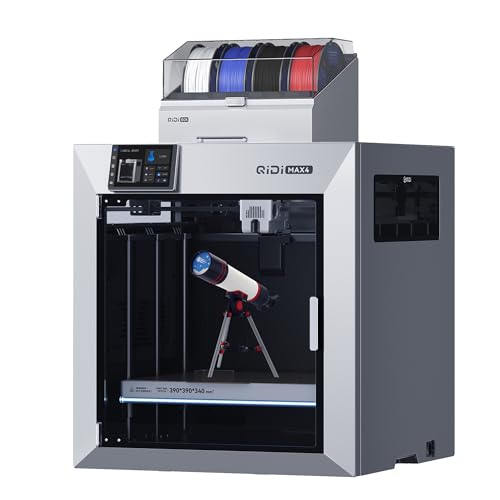
- 390 × 390 × 340 mm build volume
- 65°C active heated chamber
- Supports abrasive and high-temperature materials
Best For: Industrial prototypes and advanced material printing
Best for Multi-Material Printing

- Four independent toolheads
- Five-second tool changes with less waste
- Up to 500 mm/s CoreXY printing
Best For: Colorful models and mixed-material functional parts
Best All-Rounder with Color
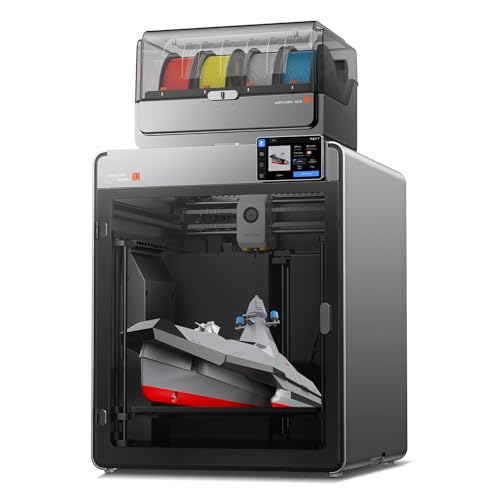
- 350 × 350 × 350 mm build volume
- Up to 600 mm/s printing
- Bundled four-color system expandable to 16
Best For: Large colorful models and advanced materials
Industrial Multi-Color Pick

- Four independent toolheads reduce purge waste
- 65°C heated chamber supports engineering filaments
- 600mm/s CoreXY printing with filtration and monitoring
Best For: Industrial multi-material and multi-color production
Large-Volume Engineering Pick

- 320×320×300mm build volume for large models
- 65°C chamber and 370°C extrusion for advanced materials
- Optional QIDI BOX supports up to 16 colors
Best For: Large prototypes, batch production, and engineering parts
Streamlined Multi-Color Pick

- 600mm/s printing with active flow compensation
- AMS 2 Pro adds multi-color printing and 65°C drying
- AI detection and automatic calibration simplify setup
Best For: Convenient multi-color printing for makers and beginners
Best All-Around Multicolor Pick

- Up to 16-color printing with expandable CFS
- Pre-assembled with automatic leveling and AI monitoring
- 600 mm/s speed with a 260 mm cubed build volume
Best For: Makers seeking convenient multicolor printing for everyday projects
Best Beginner-Friendly Enclosed Option
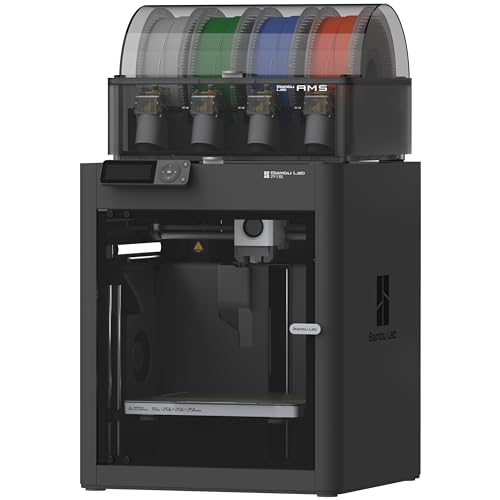
- Enclosed printer with AMS multicolor capability
- 500 mm/s speed and automatic bed leveling
- Stated 15-minute setup with broad filament support
Best For: Users wanting a streamlined enclosed printer and multicolor workflow
Best for Truly Large Builds

- 350 mm cubed build volume for large models and batches
- 600 mm/s speed with 30,000 mm/s² acceleration
- 60°C chamber and 350°C nozzle for engineering materials
Best For: Advanced users printing large parts or high-strength engineering models
Best for Print Farms – Creality Ender 5 Max
For buyers comparing large format 3d printers for oversized prototypes or repeat production, the Creality Ender 5 Max combines a 400 × 400 × 400 mm build volume with fast CoreXY printing. Its automated calibration, rigid frame, and WLAN controls make it especially practical for demanding workflows.
Best For: Print farms, studios, and users producing large or multiple parts.
Pros:
- Large 400 × 400 × 400 mm build volume supports oversized models and batch production.
- CoreXY system offers printing speeds up to 700 mm/s.
- 64-point auto-leveling and automatic Z-offset reduce setup work.
- WLAN multi-printer control helps organize scaled production.
Cons:
- Its 70.4-pound weight and large footprint require substantial workspace.
- The extensive capabilities may be more than casual users need.
The Ender 5 Max is a strong choice when build capacity and throughput matter most. Its production-oriented controls and durable construction make it well suited to continuous operation.
Best for Engineering Materials – QIDI Max4 Combo
The QIDI Max4 Combo is one of the more capable large format 3d printers for industrial-style parts and high-temperature materials. Its 390 × 390 × 340 mm build area, active heated chamber, and hardened-steel-nozzle hotend support demanding applications.
Best For: Engineers and advanced makers printing large prototypes, molds, and engineering components.
Pros:
- Large build volume can handle substantial parts without splitting.
- 65°C active heated chamber supports materials such as ABS-CF, PC, and PPS-CF.
- Closed-loop X/Y motors and anti-backlash Z hardware promote precise results.
- AI monitoring can detect failures and pause printing.
Cons:
- The Polar Cooler is not included and must be purchased separately.
- At 120 pounds, it needs a sturdy, dedicated location.
- Multi-color expansion requires the separately connected QIDI BOX system.
Choose the Max4 Combo if material capability and environmental control are more important than a compact setup. It offers a strong platform for advanced fabrication, provided you account for its size and optional accessories.
Best for Multi-Material Printing – Snapmaker U1
The Snapmaker U1 stands out among large format 3d printers for efficient multi-color and multi-material work. Its four independent toolheads switch in about five seconds, reducing purge waste while supporting materials ranging from PLA and PETG to TPU, PVA, PA, and PC.
Best For: Makers, workshops, and professionals creating colorful or mixed-material functional parts.
Pros:
- Four toolheads enable true multi-color and mixed-material printing.
- Five-second tool changes can reduce time and filament waste.
- Automatic calibration, AI monitoring, and remote control simplify operation.
- CoreXY motion system supports speeds up to 500 mm/s.
Cons:
- The 270 × 270 × 270 mm build volume is smaller than the other large-format options here.
- Its multi-toolhead system may be unnecessary for single-material projects.
The U1 is best viewed as a productivity-focused multi-material printer rather than a maximum-capacity machine. It is particularly appealing when color changes, soluble supports, or mixed flexible and rigid materials are central to your projects.
Best All-Rounder with Color – Anycubic Kobra S1 Max Combo
The Anycubic Kobra S1 Max Combo balances a substantial 350 × 350 × 350 mm workspace with high-speed printing, a heated chamber, and bundled four-color capability. It is a versatile pick among large format 3d printers for makers who want both large single-piece models and hands-free color printing.
Best For: Makers and engineers needing large parts, advanced materials, and multi-color output.
Pros:
- 350 × 350 × 350 mm build volume accommodates large prototypes and enclosures.
- Up to 600 mm/s printing and 20,000 mm/s² acceleration support fast production.
- 65°C heated chamber and 350°C hotend expand material options.
- ACE 2 Pro provides four-color printing out of the box and can expand to 16 colors.
Cons:
- The 77.8-pound printer requires considerable installation space.
- Expanding to 16 colors requires four ACE 2 Pro boxes.
The Kobra S1 Max Combo is a well-rounded option for users who do not want to choose between capacity, speed, material flexibility, and color. Its bundled color system adds value, while the heated chamber supports more demanding prints.
Industrial Multi-Color Pick – Creator 5 Pro
For buyers comparing large format 3d printers for demanding multi-material work, the FLASHFORGE Creator 5 Pro combines four independent toolheads, a 65°C heated chamber, and CoreXY motion in a fully enclosed design. Its 600mm/s maximum speed and near-zero-waste tool changes make it especially suited to frequent color or material swaps.
Best For: Industrial users printing engineering parts, multi-color models, and advanced filaments such as ABS, PC, and PA.
Pros:
- Four independent toolheads and a 7-second changer reduce purge waste and speed up multi-color printing.
- Active chamber heating supports demanding materials and helps reduce warping.
- HEPA 13 and activated-carbon filtration helps manage particles and fumes.
- Automated calibration, camera monitoring, and remote control simplify operation.
Cons:
- Its industrial feature set may be more than casual makers need.
- The 39-pound enclosed printer requires a dedicated, stable workspace.
The Creator 5 Pro stands out when material efficiency, enclosed high-temperature printing, and multi-toolhead flexibility matter more than a compact footprint. It is a strong choice for production-oriented workflows.
Large-Volume Engineering Pick – QIDI Plus5 Combo
The QIDI Plus5 Combo is a compelling large format 3d printer for users who need a 320×320×300mm build volume without splitting large prototypes or models. Its 65°C actively heated chamber, 370°C extrusion temperature, and CoreXY platform are designed for high-performance materials and extended production runs.
Best For: Engineers, production users, and makers printing oversized prototypes, batches of parts, or models with engineering-grade filaments.
Pros:
- Large build volume supports full-scale prototypes and multiple parts per run.
- Handles materials including PPS-CF, PPA-CF, PC, nylon, and other composites.
- Automatic leveling, AI camera monitoring, and remote control support unattended workflows.
- Optional QIDI BOX enables up to 16-color multi-material printing with active filament drying.
Cons:
- At 96.8 pounds and 22×22×24 inches, it needs substantial workspace and support.
- Some multi-color functionality depends on the optional QIDI BOX.
Choose the Plus5 Combo when build capacity and engineering-material compatibility are the priorities. Its heated chamber and production-oriented monitoring make it better suited to serious, longer-duration jobs than basic desktop printing.
Streamlined Multi-Color Pick – Bambu Lab P2S Combo
For shoppers seeking large format 3d printers with a simpler setup, the Bambu Lab P2S Combo pairs a high-speed P2S printer with the AMS 2 Pro multi-color system. Automatic calibration, AI failure detection, filament drying, and adaptive airflow help make fast, consistent printing more approachable.
Best For: Beginners and experienced makers who want convenient multi-color printing, quick setup, and automated monitoring.
Pros:
- Prints up to 600mm/s with active flowrate compensation for consistent detail.
- AMS 2 Pro provides multi-color and multi-material printing with drying up to 65°C.
- Automatic calibration, quick-swap nozzles, and AI failure detection reduce hands-on work.
- Adaptive airflow can cool overhangs or maintain a 50°C chamber for engineering materials.
Cons:
- The P2S itself does not support multi-color printing; the Combo configuration is required.
- Its supplied notes do not specify a build volume, so large-object capacity is less clear.
The P2S Combo is a practical choice for users who value an integrated workflow over maximum stated build size. It offers fast setup and smart automation, while the AMS 2 Pro adds convenient color changes and filament conditioning.
Best All-Around Multicolor Pick – Creality K2 Combo
For shoppers comparing large format 3d printers for everyday prototyping, models, and multicolor projects, the Creality K2 Combo offers a practical balance of speed, automation, and manageable footprint. Its 260 × 260 × 260 mm build volume covers many common projects, while the included CFS supports multicolor printing.
Best For: Makers who want an out-of-the-box printer with multicolor capability, automatic leveling, and broad everyday material support.
Pros:
- Included CFS supports up to four connected units and as many as 16 colors.
- Pre-assembled design supports a quick plug-and-play setup.
- 600 mm/s printing, automatic target-area leveling, and AI monitoring streamline operation.
- Supports materials including PLA, PETG, ABS, PLA-CF, and PET.
Cons:
- The 260 mm cubed build volume is smaller than the K2 Plus Combo’s.
- The advertised 16-color capability requires connecting up to four CFS units; one is included.
- At 65.9 pounds, it is not especially easy to move.
The K2 Combo is a strong choice when convenience matters as much as print speed. It is not the largest machine in this roundup, but its pre-assembled design, quiet mode, multicolor expansion, and automated monitoring make it a versatile option for many home workshops.
Best Beginner-Friendly Enclosed Option – Bambu Lab P1S Combo
The Bambu Lab P1S Combo is a compact, enclosed option for buyers exploring large format 3d printers without wanting a complicated setup. It combines the P1S printer with an AMS system for multicolor or multimaterial printing and reaches speeds up to 500 mm/s.
Best For: Newer users and makers who prioritize fast setup, enclosed printing, automatic bed leveling, and multicolor capability.
Pros:
- AMS-based system supports multicolor or multimaterial printing up to 16 colors.
- Enclosed design helps support printing with advanced filaments.
- Automatic bed leveling and a stated 15-minute setup simplify operation.
- Supports materials including PLA, PETG, TPU, PVA, PET, ABS, and ASA.
Cons:
- The 16-color feature requires connecting a Bambu Lab AMS.
- Carbon- or glass-fiber-reinforced polymers are not recommended.
- Its supplied notes do not specify a build volume, making direct size comparisons harder.
The P1S Combo stands out for accessibility rather than maximum scale. Its enclosed body, quick setup, and automatic leveling make it appealing to users who want to start printing quickly, while the AMS adds room for colorful and multimaterial projects.
Best for Truly Large Builds – Creality K2 Plus Combo
Among these large format 3d printers, the Creality K2 Plus Combo is the clear choice for substantially larger models and batch production. Its 350 × 350 × 350 mm build volume reduces the need to split large parts, while a heated chamber and 350°C hardened-steel-tip nozzle expand its material range.
Best For: Experienced makers, engineers, and production-minded users who need large parts, engineering materials, and automated monitoring.
Pros:
- 350 mm cubed build volume accommodates larger models and batches.
- Expandable CFS system supports up to 16 colors with automatic filament selection and relay.
- 600 mm/s printing with 30,000 mm/s² acceleration and a 40 mm³/s high-flow system.
- Up to 60°C chamber temperature and a 350°C nozzle support materials such as ASA and PPA.
Cons:
- At 70.4 pounds, it is the heaviest printer in this selection.
- The larger machine requires more workspace than the smaller-format alternatives.
- The expanded 16-color capability requires up to four CFS units; the product notes do not state that all four are included.
The K2 Plus Combo is the strongest fit when build volume and material capability take priority. Its rigid Matrix frame, dual Z-axis adjustment, heated chamber, and dual AI cameras are aimed at maintaining accuracy and reliability on demanding, larger prints.
How We Picked the Best Large Format 3d Printers
We compared these Large Format 3d Printers by usable build volume, advertised print speed, enclosure and chamber temperature capabilities, toolhead or material-switching systems, automation, and overall suitability for demanding projects. We also considered how each printer fits a different buyer, from first-time users who want a mostly automated workflow to experienced makers who need engineering-material support or multi-color production.
Specifications can vary by firmware, slicer settings, material, and print geometry. Treat maximum speed and temperature figures as capability indicators rather than guaranteed everyday performance.
Quick Comparison
| Priority | Best fit among these models | What to look for |
|---|---|---|
| Maximum scale | Creality Ender 5 Max or K2 Plus Combo | Large build volume and a rigid frame |
| Multi-color printing | Snapmaker U1, Bambu Lab, QIDI, or Creality Combo models | Toolhead or material-management system |
| Engineering materials | QIDI Max4 or FLASHFORGE Creator 5 Pro | Heated chamber, enclosure, and high-temperature hardware |
| Fast automated printing | Creality K2 models or Bambu Lab P2S | Auto-leveling, monitoring, and calibrated motion systems |
| Balanced home-workshop use | Bambu Lab P1S Combo or Anycubic Kobra S1 Max | Reliable workflow, manageable footprint, and useful automation |
Key Buying Factors for Large Format 3d Printers
Build Volume and Machine Footprint
A larger build area is useful only if you have room for the printer, ventilation, spool storage, and maintenance access. Check the external dimensions—not just the stated print volume—before buying. Also consider whether the printer can produce your intended parts in one piece or whether splitting remains practical.
Materials and Temperature Control
PLA and PETG are relatively forgiving, while ABS, ASA, nylon, and fiber-filled materials benefit from an enclosed build space and stable temperatures. A heated chamber is especially valuable for reducing warping on large engineering parts. Confirm nozzle, bed, and chamber ratings, along with the manufacturer’s approved material guidance.
Speed, Reliability, and Automation
High advertised speeds do not eliminate the need for good cooling, acceleration control, and a rigid frame. Features such as automatic leveling, input shaping, flow calibration, camera monitoring, and filament detection can reduce setup time and failed prints—important advantages when a large model runs for many hours.
Multi-Color and Multi-Material Workflows
Multi-color systems can simplify decorative parts, labels, and prototypes, but color changes may add purge waste and increase print time. Tool-changing printers can reduce waste, while AMS- or CFS-style systems may offer a simpler automated experience. Check compatibility with abrasive filaments and whether the system supports the number of materials you actually use.
Who Should Buy Which Large Format 3d Printers?
Choose the Ender 5 Max or K2 Plus Combo if maximum scale is your priority. Pick the QIDI Max4 or FLASHFORGE Creator 5 Pro for enclosed, temperature-sensitive engineering work. The Snapmaker U1 and Creator 5 Pro are strong choices for users focused on tool changing and multi-material color workflows.
For convenient multi-color printing, consider the Bambu Lab P2S Combo, P1S Combo, Creality K2 Combo, QIDI Plus5 Combo, or Anycubic Kobra S1 Max Combo, depending on the required build size and material range. Buyers who value a mature, streamlined ecosystem may prefer Bambu Lab, while users prioritizing larger dimensions or higher-temperature capabilities should compare QIDI and Creality more closely.