Engineering prototypes demand more than attractive prints. Dimensional consistency, material compatibility, thermal control, and dependable repeatability all matter when parts must fit, function, and survive testing.
We selected 10 capable machines for different prototype workflows, including fast enclosed printers, large-format platforms, multi-toolhead systems, and high-resolution resin options. Use the guide below to match build volume, materials, automation, and operating cost to your projects.
Best 10 3d Printers for Engineering Prototypes Picks for 2026
Multi-Material Engineering Pick

- Four independent toolheads speed up material changes
- 65°C heated chamber and 320°C hardened nozzle
- Supports numerous reinforced and technical filaments
Best For: Multi-material engineering prototypes and technical parts
Large-Format Speed Pick
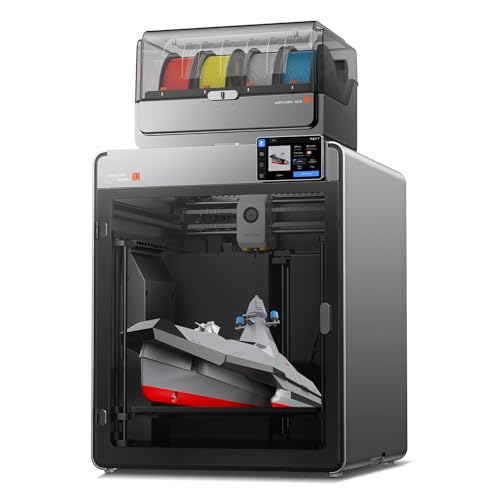
- 350 mm cubed build volume for large one-piece prototypes
- Up to 600 mm/s printing with CoreXY stability
- 65°C chamber and 350°C hotend for engineering materials
Best For: Large enclosures and full-scale prototype components
Hands-On Professional Pick

- DIY solder-free assembly with detailed guidance
- 55°C controlled chamber for technical materials
- Offline-capable operation supports local design security
Best For: Technical users and businesses wanting a hands-on, offline-capable printer
Maximum Build-Volume Pick
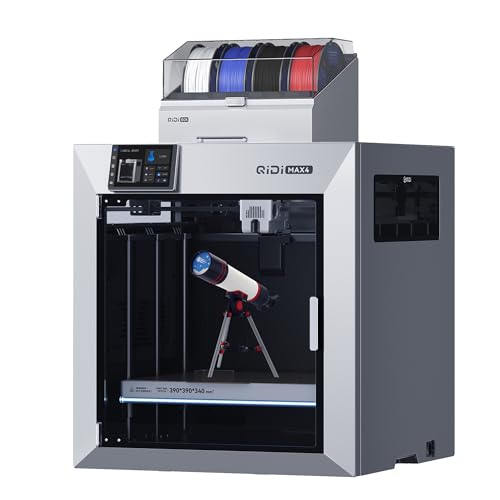
- 390 x 390 x 340 mm volume for oversized prototypes
- 65°C chamber and hardened nozzle support technical materials
- AI monitoring can pause detected print failures
Best For: Large industrial parts, molds, and high-temperature prototypes
Large-Format Multi-Material Pick
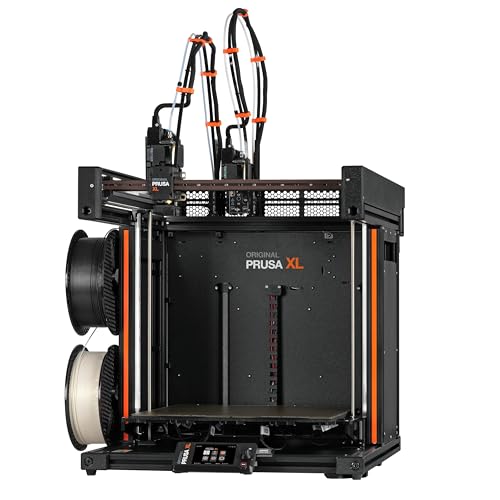
- Large 14.17-inch cubed build volume
- Two-toolhead material flexibility
- Segmented heated bed for large prints
Best For: Large, complex engineering prototypes and soluble-support workflows
Engineering-Material Production Pick

- 65°C active heated chamber
- Four independent extruders
- HEPA13 filtration and 600mm/s printing
Best For: Fast, enclosed printing with engineering-grade filaments
Accessible Multicolor Prototype Pick
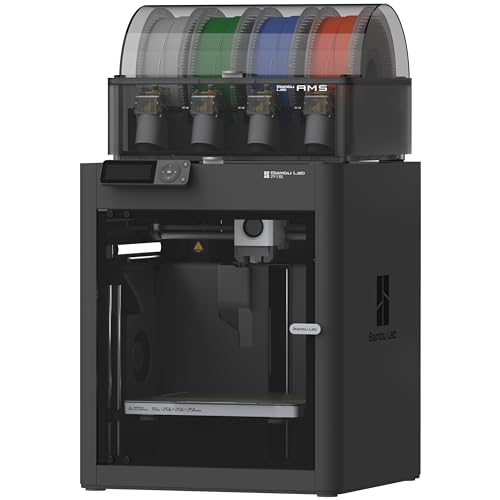
- Up to 16 colors with AMS
- 500mm/s high-speed printing
- Enclosed design with automatic leveling
Best For: Quick, general-purpose prototypes and multicolor concept models
Large-Format Precision
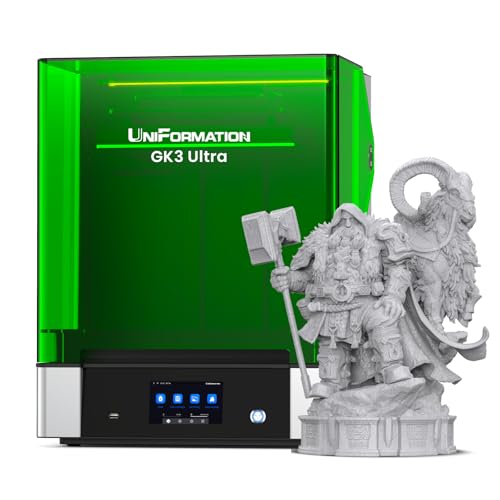
- 300 × 160 × 300 mm build volume
- 16K resin detail with stable Z-axis motion
- Heating and automatic resin refill for longer prints
Best For: Large, detailed resin prototypes and batch production
Fast Engineering FDM

- Prints up to 600 mm/s with flowrate compensation
- AMS 2 Pro supports multi-color and material drying
- Adaptive airflow supports cooler or 50 °C chamber printing
Best For: Fast, automated FDM prototypes with multi-material options
Multi-Material Productivity

- Four toolheads switch in about five seconds
- Supports engineering, flexible, and soluble-support materials
- 270 mm cube build volume with 500 mm/s CoreXY printing
Best For: Complex multi-material engineering prototypes and functional parts
Multi-Material Engineering Pick – FlashForge Creator 5 Pro
For 3d printers for engineering prototypes, the FlashForge Creator 5 Pro stands out when material flexibility and controlled thermal conditions matter. Its four-toolhead system reduces filament-change downtime, while the enclosed CoreXY design, 65°C heated chamber, and hardened 320°C nozzle support demanding prototype materials.
Best For: Engineers developing multi-material prototypes and larger parts from technical filaments.
Pros:
- Four preloaded toolheads enable rapid material changes without repeated filament purging.
- Supports a broad range of materials, including PA-CF, PET-CF, PPA-CF, PPS-CF, TPU, and PVA.
- Actively heated chamber and hardened nozzle help reduce warping and handle abrasive engineering filaments.
- Flow Dynamics Calibration compensates for changing extrusion conditions.
Cons:
- The printer’s 17.36 x 16.18 x 18.11-inch footprint requires substantial workspace.
- Its 30.8-pound weight may make repositioning inconvenient.
The Creator 5 Pro is a strong choice when engineering work involves frequent material changes or reinforced filaments. Its toolchanger and thermal controls prioritize a flexible, repeatable workflow over a compact setup.
Large-Format Speed Pick – Anycubic Kobra S1 Max Combo
The Anycubic Kobra S1 Max Combo is designed for 3d printers for engineering prototypes that need substantial build space and fast turnaround. Its 350 x 350 x 350 mm volume can accommodate large enclosures and full-scale prototype components, while the enclosed CoreXY frame and heated chamber support stable printing.
Best For: Teams printing large prototype parts or enclosures in one piece.
Pros:
- 350 x 350 x 350 mm build volume reduces the need to split and join large parts.
- Up to 600 mm/s speed and 20,000 mm/s² acceleration can shorten print times.
- 65°C heated chamber and 350°C hotend support materials such as ABS, ASA, TPU, and PVA.
- 49-point auto-leveling and flow calibration simplify setup and first-layer preparation.
Cons:
- The 21 x 23 x 19-inch dimensions demand considerable bench space.
- At 77.8 pounds, it is not easy to move between work areas.
Choose the Kobra S1 Max Combo when part size is a primary constraint. Its large enclosed workspace and automated leveling make it practical for producing sizable prototype pieces without assembly seams.
Hands-On Professional Pick – Original Prusa CORE One+
The Original Prusa CORE One+ is a DIY enclosed CoreXY option for buyers comparing 3d printers for engineering prototypes and wanting a deeper understanding of the machine itself. Its steel exoskeleton, 55°C actively controlled chamber, offline capability, and support for carbon fiber, nylon, ASA, and PC-Blend make it suitable for technical workshop use.
Best For: Technical users, schools, and businesses that value hands-on assembly and offline operation.
Pros:
- Step-by-step, solder-free assembly provides detailed knowledge of the printer’s construction.
- All-steel CoreXY frame is designed for stable high-speed printing.
- 55°C active chamber control supports materials such as carbon fiber, nylon, ASA, and PC-Blend.
- Offline-capable operation helps keep design files on the local machine.
Cons:
- DIY assembly typically takes 15–20 hours, depending on experience.
- The kit’s 16.3 x 17.5 x 21.8-inch size and 53.9-pound weight require a permanent workspace.
The CORE One+ is a compelling fit for users who see printer maintenance and configuration as part of the engineering process. It trades out-of-box immediacy for a rewarding build, controlled chamber, and stronger local-data workflow.
Maximum Build-Volume Pick – QIDI Max4 Combo
For large-scale 3d printers for engineering prototypes, the QIDI Max4 Combo combines a 390 x 390 x 340 mm build area with a 65°C active chamber. Closed-loop X/Y motors, a high-flow hardened nozzle, and support for carbon-fiber materials position it for sizable industrial parts, molds, and custom prototypes.
Best For: Professionals printing oversized industrial parts and high-temperature material prototypes.
Pros:
- 390 x 390 x 340 mm build volume accommodates large parts without splitting.
- Closed-loop motors, anti-backlash Z hardware, and high acceleration support precise, fast printing.
- 65°C heated chamber and hardened nozzle support materials including ABS-CF, PC, and PPS-CF.
- AI camera can detect abnormalities and pause a failed print to reduce material waste.
Cons:
- The 28 x 28 x 30-inch footprint and 120-pound weight require substantial dedicated space.
- The Polar Cooler is not included and must be purchased separately.
- Multi-color and multi-material printing requires a separate QIDI BOX connection.
The Max4 Combo is best suited to production-minded users who need the largest workspace in this group and want monitoring features for long jobs. Plan for its significant physical footprint and budget separately for the optional Polar Cooler if required.
Large-Format Multi-Material Pick – Prusa XL 2-Toolhead
For engineering teams searching for 3d printers for engineering prototypes, the Original Prusa XL combines a large 14.17-inch cubed build volume with a two-toolhead system. It is suited to functional prototypes, soluble supports, and sizable parts that benefit from CoreXY precision.
Best For: Engineering teams and advanced makers producing large, complex, multi-material prototypes.
Pros:
- Two-toolhead system supports multiple materials and soluble support structures.
- Large 14.17 × 14.17 × 14.17-inch build volume accommodates substantial prototypes.
- Segmented heated bed helps improve energy efficiency and reduce warping.
- Includes a satin print sheet, 1kg of Prusament PLA, and lifetime technical assistance.
Cons:
- Its 35.43-inch-wide body and 63.4-pound weight require substantial workspace.
- Some components, including the LCD and extruder assembly, require transport assembly.
The Prusa XL is the strongest fit here when prototype size, material flexibility, and a professional workflow matter more than a compact footprint. Its integrated PrusaSlicer ecosystem further supports repeatable multi-material work.
Engineering-Material Production Pick – Creator 5 Pro
The FLASHFORGE Creator 5 Pro is a practical choice among 3d printers for engineering prototypes when you need an enclosed, temperature-controlled environment for materials such as ABS, ASA, PC, and Nylon. Its active chamber, independent extruders, and high-speed CoreXY architecture target demanding workflows.
Best For: Professional prototype teams printing engineering-grade materials in office, educational, or workshop environments.
Pros:
- Active chamber heating maintains temperatures up to 65°C to help limit warping.
- Four independent extruders support multi-color and multi-material printing without shared-nozzle purging.
- HEPA13 filtration and a sealed enclosure support a cleaner printing environment.
- 600mm/s speed, automatic leveling, and toolhead offset calibration support efficient production.
Cons:
- The 18.9 × 16.06 × 17.17-inch dimensions still require dedicated space.
- Its feature set may be more than needed for basic PLA prototype work.
Choose the Creator 5 Pro if material performance and throughput are priorities. The heated chamber is particularly relevant for more demanding filaments, while independent extruders can make multi-material prototypes more efficient.
Accessible Multicolor Prototype Pick – Bambu Lab P1S Combo
For users who want 3d printers for engineering prototypes without a lengthy setup, the Bambu Lab P1S Combo offers an enclosed design, automatic bed leveling, and a stated 15-minute setup. With the included AMS, it supports multi-color and multi-material work at speeds up to 500mm/s.
Best For: Makers and small teams needing quick, enclosed prototype printing with convenient multi-color capability.
Pros:
- AMS enables multi-color or multi-material printing with support for up to 16 colors.
- 500mm/s printing and 20,000mm/s² acceleration shorten iteration times.
- Enclosed body supports advanced filaments, while automatic bed leveling simplifies setup.
- Supports PLA, PETG, TPU, PVA, PET, ABS, and ASA, with capability for PA and PC.
Cons:
- AMS connection is required for the advertised multi-color capability.
- Carbon- and glass-fiber-reinforced polymers are not recommended.
- Its material range is less suited to fiber-reinforced engineering parts.
The P1S Combo is a convenient iteration-focused option for teams that value speed and straightforward operation. It is especially appealing for general-purpose prototypes, though users working with reinforced polymers should consider a different machine.
Large-Format Precision – UniFormation GK3 Ultra
For engineering prototypes that need fine detail and substantial scale, the UniFormation GK3 Ultra combines a 300 × 160 × 300 mm build volume with a 16K resin screen. Its stable Z-axis, resin heating, and automatic refill features are geared toward repeatable production of large models or multiple parts.
Best For: Industrial prototypes, large models, and high-volume resin printing in professional studios or small businesses.
Pros:
- Large build volume supports multiple parts or oversized prototypes.
- 16K resolution and 20 × 26 μm pixels provide detailed prints.
- Heating system, automatic resin feeding, and quick-release vat support a more consistent workflow.
- KK60 Z-axis module offers claimed repeat positioning accuracy of ±0.003 mm.
Cons:
- At 85.8 pounds, it is a substantial printer to position.
- Resin printing requires a workflow suited to vat-based materials and cleanup.
The GK3 Ultra is a strong fit when prototype size, fine surface detail, and production consistency matter more than compactness. Its automatic resin and heating features are particularly useful for longer prints and cooler environments.
Fast Engineering FDM – Bambu Lab P2S Combo
The Bambu Lab P2S Combo is among the more versatile 3d printers for engineering prototypes when speed, automation, and material flexibility are priorities. It reaches up to 600 mm/s, includes automatic calibration and AI failure detection, and pairs with the AMS 2 Pro for multi-color or multi-material printing.
Best For: Fast functional prototypes, multi-material concepts, and users who want a guided FDM workflow.
Pros:
- High-speed printing with active flowrate compensation for consistent layers.
- AMS 2 Pro enables multi-color and multi-material printing with filament drying up to 65 °C.
- Adaptive airflow can cool overhangs or maintain a 50 °C chamber for engineering materials.
- Automatic calibration, quick-swap nozzles, and AI failure detection simplify setup and operation.
Cons:
- The standard P2S does not support multi-color printing; the Combo configuration is required.
- The supplied notes do not specify the printer’s build volume or full material compatibility list.
Choose the P2S Combo for a streamlined, high-throughput FDM setup with useful environmental control. The AMS 2 Pro adds meaningful value for prototypes that combine colors or materials, while the automated features reduce routine intervention.
Multi-Material Productivity – Snapmaker U1
The Snapmaker U1 is designed for engineering prototypes that combine different materials, colors, or support types in one build. Its four independent toolheads switch in about five seconds, while automatic calibration and a 270 × 270 × 270 mm build volume support functional parts and repeatable CoreXY printing.
Best For: Multi-material prototypes, functional parts with soluble supports, and small workshops seeking less filament waste.
Pros:
- Four toolheads enable true multi-color and mixed-material printing without repeated purging.
- Fast tool changes can reduce material waste and improve multi-material productivity.
- Supports materials including PLA, PETG, ABS, ASA, PA, PC, TPU, and PVA.
- Automatic calibration, AI monitoring, and remote app control make operation more accessible.
Cons:
- The 59-pound printer requires dedicated space.
- Using four materials effectively may involve more setup and planning than single-material printing.
For prototype teams that need rigid, flexible, or soluble-support materials together, the U1 offers capabilities that conventional filament-changing systems may not. Its large cubic build area and 500 mm/s CoreXY platform further support productive functional-part printing.
How We Picked the Best 3d Printers for Engineering Prototypes
We evaluated these machines around the requirements that matter most in engineering work: dimensional repeatability, build volume, enclosure and chamber control, material range, tool-changing or multi-material capability, print speed, maintenance demands, and workflow reliability. We also considered whether each printer suits functional prototypes, fit checks, jigs, fixtures, presentation models, or small-batch validation parts.
Specifications such as maximum temperature and advertised speed are useful starting points, but real-world results depend on calibration, material profiles, cooling, geometry, and operator experience. A printer with fewer headline features may be the better choice if it offers a more predictable workflow for your materials and part sizes.
Quick Comparison
- Best for multi-material experimentation: Flashforge Creator 5 Pro or Snapmaker U1.
- Best for large functional parts: Anycubic Kobra S1 Max, QIDI Max4 Combo, or Prusa XL.
- Best for controlled high-temperature printing: QIDI Max4 Combo or Flashforge Creator 5 Pro Industrial.
- Best compact enclosed option: Prusa CORE One+ or Bambu Lab P1S Combo.
- Best for detailed resin prototypes: UniFormation GK3 Ultra.
- Best for an integrated color-and-material workflow: Bambu Lab P2S Combo.
Key Buying Factors for 3d Printers for Engineering Prototypes
Materials and Thermal Control
PLA and PETG are adequate for many form and fit models, while ABS, ASA, nylon, polycarbonate, and reinforced composites may require an enclosure, heated chamber, hardened nozzle, or stronger build surface. Check the complete thermal system rather than relying on nozzle temperature alone.
Build Volume and Part Orientation
Choose a build area that accommodates your largest likely prototype with room for supports and sensible orientation. Large-format printers reduce splitting and assembly, but smaller machines can be easier to heat evenly and maintain.
Accuracy, Repeatability, and Speed
Fast motion is valuable for iteration, but stable calibration and consistent extrusion are more important than peak speed. Look for features such as automatic bed leveling, input shaping, flow calibration, rigid CoreXY mechanics, and dependable first-layer detection.
Multi-Material Systems
Tool changers and material-management systems can simplify soluble supports, color coding, flexible components, and mixed-material prototypes. They also add calibration, waste, and maintenance considerations, so buy them for a clear workflow need.
Ownership and Safety
Consider spare parts, nozzle availability, software support, filtration, noise, power use, and the time required for cleaning and calibration. Enclosures and filtration are especially important when printing engineering plastics in shared or poorly ventilated spaces.
Who Should Buy Which 3d Printers for Engineering Prototypes?
Choose a compact enclosed model such as the Prusa CORE One+ or Bambu Lab P1S Combo if you need reliable day-to-day prototyping without a large installation. Select a large-format machine when your parts regularly exceed standard desktop dimensions. For demanding polymers and thermal stability, prioritize an actively heated chamber, such as those offered by the QIDI and industrial Flashforge models.
Buy a multi-toolhead printer when you genuinely need multiple materials, soluble supports, or frequent color changes. If surface detail and small complex features matter more than mechanical strength, the UniFormation resin printer is the more appropriate category. For design teams producing many iterations, prioritize automation, repeatability, material availability, and service support over maximum advertised speed.