The best audio interface with low latency helps you monitor vocals, instruments, and software effects without distracting delay. The right model can also improve recording quality, simplify your setup, and give you room to expand.
We selected 10 options ranging from compact two-input interfaces to flexible four-channel models, covering home studios, mobile recording, streaming, and MIDI-based production.
Best 10 Audio Interface with Low Latency Picks for 2026
Reliable Starter
Focusrite Scarlett Solo 3rd Gen

- 24-bit/192kHz recording
- Air mode and Hi-Z instrument input
- Compact solo recording setup
Best For: Solo vocalists, guitarists, and home studios
Budget Zero-Latency Pick

- Zero-latency direct monitoring
- Two combo XLR/TRS inputs
- USB-C bus-powered design
Best For: Affordable home and mobile recording
Flexible Multitrack Choice

- Four inputs and four outputs
- Low-latency hardware monitoring
- Loopback, MIDI I/O, and LCD screen
Best For: Multitrack recording, podcasting, and streaming
Character-Focused Pick
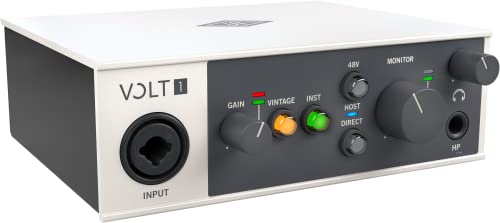
- Vintage 610-style preamp mode
- 24-bit/192kHz recording
- Mac, Windows, iPad, and iPhone support
Best For: Solo musicians wanting portable, characterful recording
Best Overall

- Hardware monitoring for low-latency listening
- 24-bit/192kHz 2-in/2-out recording
- Compatible with macOS, Windows, and iOS
Best For: Solo musicians and home studios
Best for Preamps

- Two Class-A microphone preamps
- Monitor mix and panning controls
- Two headphone outputs and metal housing
Best For: Vocal, podcast, and desktop recording
Best for Expandability

- Four inputs and four outputs
- Four preamps with +48V phantom power
- MIDI input and output included
Best For: Small bands and multi-source recording
Versatile Starter Pick

- Two combo inputs with phantom power
- USB/Direct zero-latency monitoring
- Compact 48 kHz interface with MPC Beats
Best For: Beginner recording, podcasting, and livestreaming
High-Resolution Workhorse

- Up to 24-bit/192 kHz recording
- Midas preamps with phantom power
- Direct monitoring and metal chassis
Best For: Two-channel home recording at high resolution
Budget Plug-and-Play Choice

- Ultra-low-latency USB operation
- 48V phantom power for condenser mics
- Compact, bus-powered two-channel design
Best For: Beginner home recording, karaoke, and streaming
Reliable Starter – Focusrite Scarlett Solo 3rd Gen
The Focusrite Scarlett Solo 3rd Gen is a practical audio interface with low latency for solo vocalists, guitarists, and home recordists. Its one mic preamp, Hi-Z instrument input, Air mode, and direct software support cover the essentials for recording and monitoring.
Best For: Solo singers, guitarists, podcasters, and beginner home studios.
Pros:
- 24-bit/192kHz recording with high-performance converters
- Air mode adds clarity to acoustic instrument recordings
- Separate mic and instrument inputs with Gain Halos
- Includes recording software and Hitmaker Expansion content
Cons:
- Only one XLR microphone preamp
- Limited to two channels for larger recording setups
The Solo is a straightforward choice when you need dependable low-latency monitoring and quality recording without extra inputs. Choose it for compact solo setups rather than multi-microphone sessions.
Budget Zero-Latency Pick – PIYONE Q2 USB-C Interface
The PIYONE Q2 is an audio interface with low latency designed for accessible home and mobile recording. Its USB-C connection, two combo inputs, direct monitoring, and 3.5mm headphone output make it easy to track vocals or instruments without noticeable monitoring delay.
Best For: Budget-conscious creators recording vocals, guitar, podcasts, or mobile projects.
Pros:
- Direct monitoring provides zero-latency tracking
- Two XLR/TRS combo inputs support microphones and instruments
- 24-bit/192kHz recording resolution
- USB-C supplies data and bus power without an external supply
Cons:
- Supplied operating-system details list Windows compatibility only
- Less established feature and software ecosystem than major brands
The Q2 emphasizes simple plug-and-play operation and direct monitoring. It is a sensible fit for creators who want two inputs and low-latency tracking at a compact, portable price point.
Flexible Multitrack Choice – MOTU M4 4×4 USB-C
The MOTU M4 is an audio interface with low latency for recording, mixing, podcasting, and more involved home setups. With four inputs and four outputs, two microphone preamps, USB-C connectivity, hardware monitoring, loopback, and MIDI I/O, it offers room to expand beyond basic solo recording.
Best For: Multitrack home studios, podcasters, musicians, and creators needing flexible routing.
Pros:
- 4-in/4-out connectivity supports broader recording setups
- Low-latency hardware monitoring and loopback
- Two microphone preamps plus MIDI I/O
- Compatible with Mac, PC, and iOS
Cons:
- Larger and more capable than necessary for simple solo recording
- Supplied software compatibility details are limited
The M4 stands out when low-latency monitoring is only one part of the requirement. Its extra I/O and loopback make it particularly useful for simultaneous sources, streaming, and podcast production.
Character-Focused Pick – Universal Audio Volt 1
The Universal Audio Volt 1 is an audio interface with low latency for musicians who want a compact recording setup with added preamp character. Its Vintage mode emulates the sound of UA’s classic 610 preamps, while 24-bit/192kHz conversion and broad computer and mobile compatibility support flexible recording.
Best For: Solo musicians and mobile creators seeking Vintage preamp character and portable recording.
Pros:
- Vintage mode provides classic 610-style preamp character
- Records at up to 24-bit/192kHz
- Supports macOS, Windows, iPad, and iPhone
- Includes access to LUNA and listed production tools
Cons:
- Single-input design limits simultaneous recording
- Mobile use may require an external power supply and Apple adapter
- Listed warranty is one year
The Volt 1 is appealing when sound character and portability matter as much as basic low-latency recording. Its single-input layout suits focused vocal or instrument sessions better than multichannel work.
Best Overall – MOTU M2
The MOTU M2 is a strong choice if you need an audio interface with low latency for computer-based recording, monitoring, and music production. It provides two microphone preamps, hardware monitoring, USB-C connectivity, and support for up to 24-bit/192kHz audio.
Best For: Home recordists and musicians who need a compact 2-in/2-out interface with high-resolution recording and hardware monitoring.
Pros:
- Hardware monitoring supports low-latency listening while recording.
- Two inputs and two outputs suit basic vocal and instrument setups.
- Supports up to 24-bit/192kHz audio and works with macOS, Windows, and iOS.
- Includes more than 6GB of free content and a two-year warranty.
Cons:
- Two input channels may be limiting for larger recording sessions.
- USB-C connectivity may require an adapter with some older computers or cables.
With its compact design, hardware monitoring, and broad device compatibility, the M2 offers a practical balance for solo recording and small project studios.
Best for Preamps – Audient iD14 MKII
The Audient iD14 MKII is a refined audio interface with low latency for creators who prioritize microphone preamp quality and flexible monitoring. Its two Class-A preamps, USB-C connection, monitor mix and panning functions, and two headphone outputs make it well suited to desktop recording.
Best For: Vocalists, podcasters, and home-recording users who want Class-A preamps and more adaptable headphone monitoring.
Pros:
- Two Class-A microphone preamps are designed for high-quality recording.
- Monitor mix and monitor panning functions support flexible listening setups.
- Two headphone outputs are useful for recording with another listener or performer.
- All-metal housing is designed for stability and durability, with a three-year warranty.
Cons:
- Its maximum sample rate is 96kHz, lower than some 192kHz alternatives.
- The interface provides two microphone preamps, which may not suit larger sessions.
- Its listed software and operating-system support is more limited than some competing models.
The iD14 MKII emphasizes preamp quality and monitoring control in a durable desktop format, making it a compelling fit for focused recording setups.
Best for Expandability – Behringer UMC404HD
The Behringer UMC404HD is a practical audio interface with low latency for recording several microphones or instruments at once. It offers four inputs, four outputs, MIDI I/O, four MIDAS-designed preamps with phantom power, and up to 24-bit/192kHz resolution.
Best For: Small bands, multi-microphone recording, and producers who need four simultaneous inputs plus MIDI connectivity.
Pros:
- Four inputs and four outputs provide more routing capacity than basic 2-in/2-out interfaces.
- Four microphone preamps include +48V phantom power for compatible microphones.
- Includes one MIDI input and output for compatible instruments and controllers.
- Supports up to 24-bit/192kHz audio and works with popular recording software.
Cons:
- The larger chassis is less compact than smaller two-channel interfaces.
- Its supplied operating-system details list Windows XP or higher and Mac OS Xp, so current-system compatibility should be confirmed.
- The warranty information requires consulting the manufacturer’s warranty page.
For users who need multiple simultaneous inputs, the UMC404HD prioritizes channel count, MIDI, and sturdy construction while retaining high-resolution recording support.
Versatile Starter Pick – M-Audio M-Track Duo
The M-AUDIO M-Track Duo is a practical audio interface with low latency for podcasting, recording, and live streaming. Its two combo inputs, direct-monitoring switch, and compact design make it suitable for straightforward home setups.
Best For: Beginners recording vocals, guitar, podcasts, or livestreams on Mac or PC.
Pros:
- Two combo XLR/line/instrument inputs with phantom power
- USB/Direct switch supports zero-latency monitoring
- Includes MPC Beats and supports 48 kHz audio
- Compact, lightweight design with headphone and stereo outputs
Cons:
- Maximum sample rate is limited to 48 kHz
- Only two input channels are provided
Choose the M-Track Duo if simple monitoring flexibility and broad beginner-friendly use matter more than high-resolution recording. It covers common recording and streaming tasks without adding much equipment to your desk.
High-Resolution Workhorse – Behringer UMC202HD
The Behringer UMC202HD is an audio interface with low latency designed for two-channel microphone and instrument recording. It combines Midas microphone preamplifiers, direct monitoring, and up to 24-bit/192 kHz operation in a metal chassis.
Best For: Home-recording users who want high-resolution capture and compatibility with major recording software.
Pros:
- Supports up to 24-bit/192 kHz recording
- Midas microphone preamplifiers and phantom power
- Direct Monitor select and level-controlled headphone output
- Impact-resistant metal chassis
Cons:
- Provides two channels rather than a larger multichannel setup
- Compatibility details supplied are limited to Windows and macOS computers and tablets
The UMC202HD is a strong choice when recording resolution and durable construction are priorities. Its direct-monitor controls also make it practical for tracking two sources while managing headphone levels.
Budget Plug-and-Play Choice – XTUGA Q-12 USB Interface
The XTUGA Q-12 is a budget audio interface with low latency for beginners creating music, karaoke, or streams on a computer. It offers dual inputs, switchable 48V phantom power, USB bus power, and plug-and-play setup.
Best For: Students and beginners building a basic two-channel home studio or streaming setup.
Pros:
- Advertised ultra-low-latency operation for vocal tracking
- Switchable 48V phantom power for condenser microphones
- USB-powered plug-and-play design requires no external adapter
- Compact construction with XLR and 3.5mm microphone inputs
Cons:
- Limited to 16-bit/48 kHz resolution
- Designed for computer use rather than a broad range of devices
- Input configuration may be less flexible than dual combo-input interfaces
The Q-12 makes the most sense for cost-conscious users who value easy setup and low-latency monitoring. Its 48V power and two-channel layout cover basic microphone recording, karaoke, and streaming needs.
How We Picked the Best Audio Interface with Low Latency
We focused on interfaces that offer dependable driver performance, practical monitoring options, useful input and output configurations, and recording resolutions suitable for modern home studios. We also considered connection type, portability, MIDI support, preamp quality, and how easily each model fits different workflows.
Low latency depends on more than the interface itself. Computer hardware, operating-system drivers, buffer size, sample rate, and plug-in processing all affect monitoring delay. Models with direct monitoring or efficient software mixers generally make it easier to achieve comfortable real-time performance.
Quick Comparison
| Best For | What to Look For |
|---|---|
| Solo recording | One or two microphone inputs, simple controls, and headphone monitoring |
| Singer-songwriters | Quality mic preamps, an instrument input, and direct monitoring |
| Small bands or podcasts | Four inputs, independent gain controls, and multiple headphone or monitor options |
| Mobile production | USB-C connectivity, compact construction, and broad device compatibility |
| MIDI-based studios | Dedicated MIDI input and output alongside audio I/O |
Key Buying Factors for an Audio Interface with Low Latency
Inputs and Outputs
Choose the number of simultaneous sources you expect to record. Two inputs suit a vocalist and guitar, while four inputs are more practical for stereo keyboards, multiple microphones, interviews, or small ensembles. Check whether the outputs support balanced monitor connections and whether you need MIDI.
Monitoring and Driver Performance
Direct monitoring can provide effectively delay-free listening by routing the input straight to the headphones or speakers. If you need to hear software effects while recording, prioritize stable drivers, efficient control software, and enough computer performance to run a small buffer reliably.
Resolution, Preamps, and Compatibility
24-bit recording is standard for serious production, while sample rates up to 192 kHz are available on many models. More important than headline specifications are clean preamps, sufficient gain for your microphone, and compatibility with your computer, tablet, recording software, and operating system.
Controls and Expansion
Large gain knobs, clear metering, and an easy monitor mix make setup faster. Consider phantom power for condenser microphones, pad or high-impedance instrument inputs, loopback features for streaming, and whether the interface leaves enough room for future equipment.
Who Should Buy Which Audio Interface with Low Latency?
Choose a compact two-input model if you mainly record one or two sources and want a straightforward home-studio setup. Singer-songwriters should prioritize a dedicated instrument input, dependable preamps, and direct monitoring. Podcasters and small recording teams may benefit from four-input interfaces with flexible routing and MIDI.
For mobile creators, look for USB-C connectivity and confirmed support for your tablet or phone, including any required adapters or external power. If you use demanding virtual instruments or real-time plug-ins, prioritize driver stability and low-buffer performance over maximum sample-rate figures. Beginners should favor clear controls and simple software, while growing studios should spend more on inputs, outputs, and expansion rather than features they will not use.