Choosing the right field recorder with ambisonic microphone support depends on more than channel count. Immersive audio projects demand reliable recording, clean preamps, practical monitoring, and a workflow that fits your camera, microphone, and post-production setup.
We’ve gathered 10 recorders and recording solutions suited to everything from 360-degree film and location sound to interviews, music, and portable production. Use the guide below to narrow the list by recording format, inputs, portability, and budget.
Best 10 Field Recorder with Ambisonic Microphone Picks for 2026
Best Ambisonic Recorder
Zoom H3-VR 360° Audio Recorder

- Four-capsule ambisonic capture
- Ambisonics, binaural, and stereo modes
- Over 11 hours on two AA batteries
Best For: VR, 360° video, and spatial-audio creators
Best Dedicated Ambisonic Mic
RØDE NT-SF1 SoundField Microphone

- Four-capsule tetrahedral array
- Four-channel XLR breakout connection
- Includes shockmount and wind protection
Best For: Professional multichannel spatial-audio rigs
Best External-Mic Field Recorder

- 32-bit float recording
- Two locking XLR/TRS inputs
- Ultra-low-noise preamps
Best For: External-microphone and location-recording setups
Best Flexible 4-Channel Recorder
TASCAM DR-40XP Portable Field Recorder
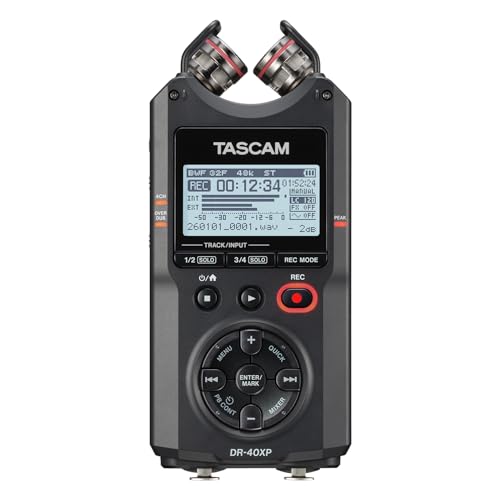
- Adjustable A-B/X-Y microphones
- Four-channel recording capability
- 32-bit float and USB-C interface
Best For: Music, interviews, video, and expandable recording setups
Professional Production Pick

- 32-bit float recording helps prevent clipping
- Six XLR inputs and up to 14 tracks
- Timecode I/O for video synchronization
Best For: Filmmakers and advanced multi-microphone recording
Personal Audio Specialist

- Includes a matched TM-10L lavalier mic
- 32-bit float recording for difficult levels
- LTC Jam Sync and 512GB microSDXC support
Best For: Discreet dialogue and personal video audio
Accessible Handheld Choice

- 32-bit float recording for flexible levels
- Built-in stereo mics plus two XLR/TRS inputs
- USB-C recording and streaming support
Best For: Portable stereo recording, podcasts, and music
Best with Extra Features
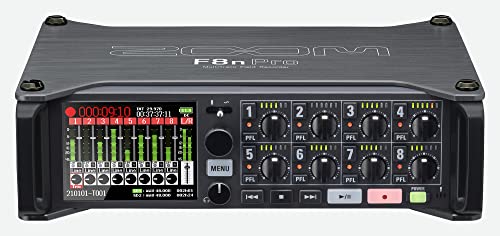
- Eight inputs and 10 tracks for complex setups
- 32-bit float recording and high-gain preamps
- Ambisonics mode, timecode, and dual SD slots
Best For: Film crews and multichannel location recording
Flexible Handheld Option
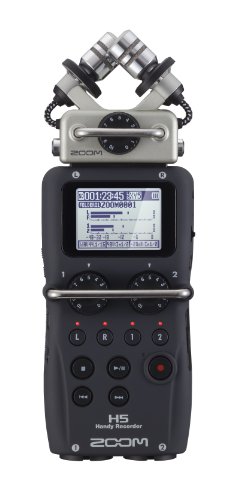
- Interchangeable capsule system supports varied setups
- Two XLR/TRS inputs with phantom power and pads
- Four-track recording and USB audio interface modes
Best For: Mobile recording with adaptable microphone options
Simple Two-Input Pick

- Two locking XLR/TRS inputs for external sources
- 32-bit/96kHz recording with waveform display
- Supports SDXC cards up to 1TB
Best For: Solo creators and straightforward mobile recording
Best Ambisonic Recorder – Zoom H3-VR 360° Audio Recorder
The Zoom H3-VR is a practical field recorder with ambisonic microphone capability for filmmakers, VR creators, podcasters, and spatial-audio projects. Its four built-in ambisonic capsules support Ambisonics, binaural, and stereo recording up to 24-bit/96kHz, while onboard A-to-B conversion can simplify production workflows.
Best For: VR video, 360° filmmaking, spatial audio, and portable immersive recording.
Pros:
- Records Ambisonics, binaural, and stereo audio in one compact device.
- Built-in A-to-B conversion reduces the need for computer-based processing.
- Motion sensing adjusts for recorder orientation during recording.
- Runs for more than 11 hours on two AA batteries.
Cons:
- Its built-in microphone design is specialized for spatial audio rather than general-purpose external-mic setups.
- Maximum recording resolution is 24-bit/96kHz rather than 32-bit float.
The H3-VR stands out when immersive capture is the priority. It offers a relatively straightforward path from field recording to usable spatial audio, especially for creators who want to avoid a complicated setup.
Best Dedicated Ambisonic Mic – RØDE NT-SF1 SoundField Microphone
The RØDE NT-SF1 is a dedicated field recorder with ambisonic microphone solution for users who already have a compatible multichannel recording setup. Its tetrahedral array uses four subcardioid condenser capsules and connects through the included 10-pin XLR to four 3-pin XLR breakout cable.
Best For: Professional VR, immersive audio, and multichannel location recording.
Pros:
- Uses four matched subcardioid capsules in a tetrahedral array.
- Provides four-channel output through the included XLR breakout cable.
- Includes a custom suspension shockmount and wind-protection accessories.
- Covers a 20Hz–20kHz frequency range.
Cons:
- Requires a separate multichannel recorder or audio interface.
- The XLR-based setup is less convenient than an all-in-one handheld recorder.
- Its specialized design may be more equipment than a simple stereo project requires.
The NT-SF1 is best viewed as the microphone centerpiece of a professional ambisonic rig rather than a standalone recorder. Choose it when interchangeable recording hardware, four-channel connectivity, and dedicated spatial capture matter most.
Best External-Mic Field Recorder – Zoom F3 Professional Recorder
The Zoom F3 is a compact field recorder with ambisonic microphone compatibility through its dual locking XLR/TRS inputs. It does not include an ambisonic microphone, but its 32-bit float recording, dual A/D converters, and ultra-low-noise preamps make it a strong recording hub for compatible external microphones and complex location rigs.
Best For: Filmmakers and recordists using external microphones, including ambisonic setups with suitable multichannel hardware.
Pros:
- 32-bit float recording helps handle quiet sounds and sudden peaks without constant level adjustments.
- Dual locking XLR/TRS inputs help secure connections in field and mounted setups.
- Ultra-low-noise preamps support clean recordings in demanding environments.
- Offers standalone, USB, and flexible battery-powered workflows.
Cons:
- Does not include an ambisonic microphone.
- Only two inputs are supplied, so full four-channel ambisonic capture requires additional hardware or a different recorder.
- Records mono and stereo modes rather than providing built-in ambisonic operation.
The F3 is a compelling choice when your priority is clean, forgiving recording from external microphones. It is more of a dependable recorder for an ambisonic workflow than an all-in-one field recorder with ambisonic microphone built in.
Best Flexible 4-Channel Recorder – TASCAM DR-40XP Portable Field Recorder
The TASCAM DR-40XP is a versatile field recorder with ambisonic microphone flexibility for creators who need multiple recording options. Its adjustable built-in microphones support A-B or X-Y stereo capture, while two XLR/TRS inputs enable four-channel recording with external microphones and 32-bit float WAV support.
Best For: Music, interviews, video production, and mixed built-in/external microphone workflows.
Pros:
- Combines adjustable A-B/X-Y microphones with two external XLR/TRS inputs.
- Supports four-channel recording from built-in and external microphones simultaneously.
- Offers 32-bit float, 24-bit, and 16-bit WAV recording up to 96kHz.
- Works as a 2-in/2-out USB-C audio interface.
Cons:
- Its built-in microphones are stereo rather than an integrated ambisonic array.
- A separate compatible ambisonic microphone and suitable channel setup are needed for ambisonic recording.
- microSD card and batteries are not included.
The DR-40XP is a flexible choice for users who want one recorder for stereo, four-channel, and computer-connected work. It can support a broader ambisonic setup, but it is not as immediately specialized for spatial capture as the Zoom H3-VR.
Professional Production Pick – Zoom F6 Field Recorder
The Zoom F6 is a strong choice when you need a field recorder with ambisonic microphone support for demanding location work. Its 32-bit float recording, six XLR inputs, and timecode I/O provide flexibility for filmmaking, broadcast, music, and multi-microphone setups.
Best For: Filmmakers, sound crews, musicians, and advanced field-recording workflows.
Pros:
- 32-bit float recording with dual A/D converters helps capture quiet and loud sources without clipping.
- Six XLR inputs support multiple microphones, with up to 14 tracks for larger productions.
- Timecode I/O enables frame-accurate synchronization with video equipment.
- Can function as a standalone recorder or USB audio interface.
Cons:
- Its professional feature set may be more than casual users need.
- At 2.4 pounds, it is less lightweight than a compact handheld recorder.
- The supplied notes identify ambisonics operation but do not specify an included ambisonic microphone.
The F6 is the most production-oriented option here, especially if you need several external microphones, timecode, and robust dynamic-range protection. Confirm your microphone and mounting requirements separately if you specifically need an included ambisonic mic.
Personal Audio Specialist – TASCAM DR-10L Pro Recorder
The TASCAM DR-10L Pro is designed for discreet personal audio rather than broad ambisonic capture. While it is not presented as a field recorder with ambisonic microphone support, its included lavalier microphone, 32-bit float recording, high-capacity card support, and timecode options make it practical for video subjects and mobile production.
Best For: Filmmakers, wedding videographers, and creators recording individual speakers or performers.
Pros:
- Included TM-10L lavalier microphone provides a complete personal-recording setup.
- 32-bit float recording helps handle sources ranging from whispers to loud speech.
- Supports microSDXC cards up to 512GB for extended recording capacity.
- LTC Jam Sync supports synchronized multi-device workflows after the firmware update.
Cons:
- Its lavalier-focused design is not intended for ambisonic or multi-channel environmental capture.
- The AK-BT1 Bluetooth adapter is sold separately for compatible wireless timecode features.
- It is optimized for personal audio rather than connecting multiple external microphones.
Choose the DR-10L Pro when small, body-worn recording matters more than spatial sound. For an ambisonic setup, you will likely need a different recorder and microphone configuration.
Accessible Handheld Choice – Zoom H4 Essential Recorder
The Zoom H4 Essential is a convenient handheld option for creators who want built-in stereo microphones and external input flexibility. It is not a field recorder with ambisonic microphone capability in the supplied specifications, but its 32-bit float recording, two XLR/TRS inputs, and USB-C connectivity suit interviews, podcasts, music, and general field recording.
Best For: Musicians, podcasters, filmmakers, and first-time handheld recorder users.
Pros:
- 32-bit float recording helps protect takes from distortion across changing volume levels.
- Built-in stereo microphones support quick recording without extra microphone equipment.
- Two XLR/TRS inputs allow connection of external microphones, instruments, mixers, or soundboards.
- USB-C supports recording or streaming to a phone, tablet, or computer while saving to an SD card.
Cons:
- The supplied specifications list stereo microphone operation, not ambisonic recording.
- Four-track recording offers less expansion than the Zoom F6’s 14-track capacity.
- It requires two AA batteries, which may be less convenient for extended sessions.
The H4 Essential is an approachable all-purpose recorder, especially when portability and simple operation matter. Consider it for stereo field work and external microphones, but look elsewhere if spatial ambisonic capture is the primary requirement.
Best with Extra Features – Zoom F8n Pro Field Recorder
The Zoom F8n Pro is the strongest choice here for professional crews seeking a field recorder with ambisonic microphone support. Its Ambisonics mode, eight inputs, 10 tracks, 32-bit float recording, and dual SD slots are designed for demanding film and location workflows.
Best For: Film crews, location recordists, and multichannel production setups.
Pros:
- 32-bit float recording with dual AD converters helps capture a wide dynamic range without clipping.
- Eight inputs and 10-track recording support complex production setups.
- Ambisonics mode, accurate timecode, and dual SD recording suit professional workflows.
- Can operate as an 8-in/4-out USB audio interface while recording to SD.
Cons:
- At 1.8 kg, it is substantially less portable than a handheld recorder.
- Its professional feature set may be more than casual users need.
- Battery life is listed at 8.5 hours.
The F8n Pro is the most capable option for synchronized, multichannel field work. Choose it when input count, timecode, redundancy, and ambisonic workflow support matter more than compact size.
Flexible Handheld Option – Zoom H5 4-Track Recorder
The Zoom H5 is a compact option for users who need a field recorder with ambisonic microphone potential through Zoom’s interchangeable capsule system. It includes a detachable X/Y capsule, two XLR/TRS inputs, and four-track simultaneous recording for straightforward film, music, and interview setups.
Best For: Musicians, filmmakers, and mobile recordists who want interchangeable microphone options.
Pros:
- Interchangeable input capsules allow the microphone configuration to be adapted to different recording needs.
- Two XLR/TRS inputs include selectable phantom power and -20 dB pads.
- Supports four-track simultaneous recording and multichannel USB audio.
- Runs on two AA batteries and records to SD or SDHC cards up to 32GB.
Cons:
- The supplied notes do not specify an included ambisonic capsule.
- It records up to four tracks, fewer than the F8n Pro.
- Storage support is limited to SD/SDHC cards up to 32GB.
The H5 offers a useful balance of portability and expandability. It makes sense when interchangeable capsules and external inputs are more important than high track counts or dual-card redundancy.
Simple Two-Input Pick – Zoom H1 XLR Recorder
The Zoom H1 XLR is a compact two-channel recorder for simple field setups. While it is not presented with an included ambisonic microphone, its two locking XLR/TRS inputs and 32-bit/96kHz recording make it a practical choice for connecting compatible external microphones and recording clean dialogue, podcasts, or music.
Best For: Solo creators, interviewers, podcasters, and users who need a small two-input recorder.
Pros:
- 32-bit/96kHz recording supports detailed audio capture.
- Two locking XLR/TRS combo inputs accommodate microphones and instruments.
- SDXC support up to 1TB provides substantial recording capacity.
- Compact design, two AA batteries, and a waveform display support mobile operation.
Cons:
- Only two recording channels are available.
- The supplied notes do not list an ambisonic mode or included ambisonic microphone.
- Its 0.96-inch display is smaller than the displays listed for the other recorders.
The H1 XLR is best treated as an accessible external-microphone recorder rather than a dedicated ambisonic production system. It is a good fit when portability, simple setup, and two-input recording are the priorities.
How We Picked the Best Field Recorder with Ambisonic Microphone
We evaluated each model for the needs of filmmakers, musicians, podcasters, and location-recording teams. Key considerations included support for ambisonic or multichannel workflows, input flexibility, preamp quality, recording format, portability, power options, monitoring, and file-management features.
Some selections are purpose-built for immersive capture, while others are versatile recorders that can serve as the front end for an external ambisonic microphone. This distinction matters: an ambisonic microphone may use a multichannel breakout or connector system that requires compatible inputs, adapters, and sufficient tracks.
Quick Comparison
| Best For | What to Prioritize |
|---|---|
| 360-degree video and VR | Dedicated ambisonic support, four synchronized channels, and straightforward decoding workflows |
| Professional location sound | Multiple inputs, timecode or LTC compatibility, strong preamps, and dependable power |
| Compact filmmaking | Small size, 32-bit float recording, low-noise inputs, and simple camera integration |
| Music and general field work | Flexible microphone inputs, overdub or multitrack capability, and easy monitoring |
| Dialogue and interviews | Lavalier support, discreet operation, long battery life, and quick file transfer |
Key Buying Factors for a Field Recorder with Ambisonic Microphone
Channel Count and Compatibility
Confirm how many synchronized channels your microphone requires. A first-order ambisonic microphone commonly needs four channels, but connector layouts vary. Check whether the recorder accepts the microphone directly, needs a breakout cable, or requires an external preamp or interface.
Recording Format and Headroom
32-bit float recording can make field work more forgiving when sound levels change unexpectedly, but it does not replace good microphone placement or monitoring. For professional projects, also check sample-rate options, file formats, track linking, and whether the recorder preserves isolated channels for later decoding.
Inputs, Preamps, and Noise
Look for balanced XLR inputs, phantom power, and preamps quiet enough for ambience and soft sources. More inputs are useful for combining an ambisonic microphone with dialogue, effects, or reference tracks, but they usually add size, cost, and power demand.
Monitoring, Timecode, and Power
Headphone monitoring, limiters, low-cut filters, and dependable meters help prevent unusable takes. For multicamera productions, timecode or LTC support can reduce synchronization work. Also consider battery type, USB power, mounting options, and weather protection for long shoots.
Who Should Buy Which Field Recorder with Ambisonic Microphone?
Choose a dedicated ambisonic recorder when your main goal is 360-degree video, VR, spatial sound, or rapid capture with minimal setup. A compact two- or four-input recorder is a better fit for solo filmmakers and musicians who want portability and occasional immersive recording. Professional location crews should favor models with more inputs, stronger routing, timecode options, and expansion room.
For interviews or discreet dialogue, a lavalier-focused recorder is often more practical than a multichannel ambisonic system. If you are still building your kit, prioritize a recorder with 32-bit float, quality XLR inputs, and flexible USB connectivity; it can support conventional microphones now and an external ambisonic microphone later.