Clear, balanced sound helps every sermon, song, and announcement reach the congregation without distracting hum, feedback, or harsh frequencies. The right equalizer can give a church sound team more precise control over vocals, instruments, and room acoustics.
This roundup compares 10 audio equalizers for church sound systems, including compact digital models, rack-mount graphic EQs, and options with balanced connections, spectrum displays, or multiple adjustment bands.
Best 10 Audio Equalizers for Church Sound Systems Picks for 2026
Rack-Ready Church EQ
15-Band Stereo Graphic Equalizer
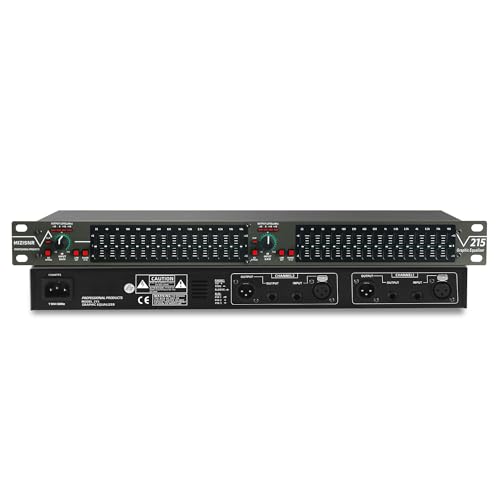
- Dual-channel 15-band control
- Low-cut reduces rumble and hum
- 1U rack design with flexible I/O
Best For: Churches and live installations needing hands-on rack EQ control
Compact Voice EQ

- Seven bands with ±12 dB control
- Compact aluminum-alloy construction
- 3.5mm headset-oriented connectivity
Best For: Small streaming, podcast, and auxiliary audio setups
Feature-Rich Digital EQ
31-Band Equalizer with Spectrum Analyzer

- 31-band detailed frequency tuning
- Real-time spectrum monitoring
- Bluetooth, optical, coaxial, and USB inputs
Best For: Churches needing visual EQ feedback and flexible digital connectivity
Headset-Focused EQ
EQ-7 Seven-Band Signal Amplifier

- Seven bands with ±12 dB adjustment
- Headphone drive for 16–600 ohms
- Compact 3.5mm and RCA-style connectivity
Best For: Personal monitoring and compact headset-based audio systems
Stage-Ready Control
EQ8100 20-Band Graphic Equalizer
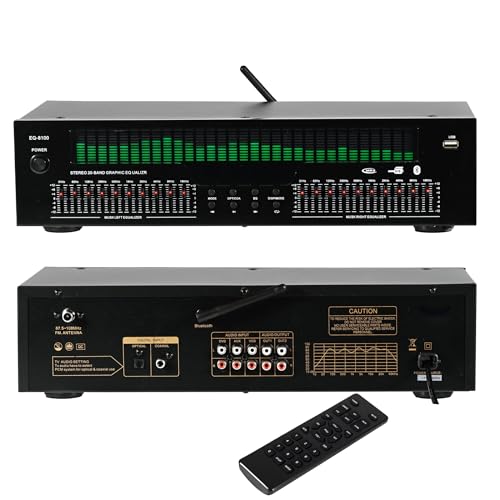
- 20-band EQ with 31-band spectrum display
- Optical, coaxial, USB, Bluetooth, and RCA inputs
- 1U aluminum chassis with auto-save presets
Best For: Churches and live stages needing detailed EQ and flexible connectivity
Simple Digital Tuning

- 20-band adjustment with 31-band spectrum display
- Bluetooth 6.0, USB, optical, and coaxial support
- Noise gate, 12 modes, and auto-memory presets
Best For: Smaller church systems and livestream setups with volunteer operators
Balanced Signal Path
Douk Audio T7 7-Band Equalizer

- Seven adjustable bands from 64Hz to 8kHz
- Balanced XLR and RCA inputs and outputs
- Compact aluminum design with high stated SNR
Best For: Compact church systems with XLR-based signal chains
Versatile Rack EQ

- Dual-channel 15-band graphic control
- Low-cut filter for unwanted rumble and hum
- XLR and 1/4-inch TRS connectivity
Best For: Hands-on church sound-system tuning
Digital Control Pick

- 31-band dual-channel DSP control
- PC tuning with presets and bypass
- Spectrum display and flexible pro I/O
Best For: Detailed, repeatable church audio adjustments
Subwoofer-Ready Choice

- Dual-channel 15-band graphic EQ
- Dedicated adjustable-frequency bass output
- Low-cut control and included cables
Best For: Church systems using dedicated subwoofer output
Rack-Ready Church EQ – 15-Band Stereo Graphic Equalizer
For church sound systems that need practical control over vocals, music, and low-frequency rumble, this dual-channel 15-band graphic equalizer offers flexible signal shaping in a standard 1U rack format. Its balanced XLR and unbalanced 1/4-inch connections can suit a range of live or installed audio setups.
Best For: Churches, live applications, audio installations, and studios needing rack-mount EQ control.
Pros:
- Dual stereo channels with 15 adjustable bands per channel.
- Up to ±12 dB of adjustment for detailed frequency shaping.
- Low-cut switch helps reduce wind noise, floor rumble, and electrical hum.
- Bypass switch and XLR/1/4-inch connectivity simplify setup and troubleshooting.
Cons:
- Provides graphic EQ control rather than automatic room correction.
- Its 1U rack-mount design may be more than needed for small portable systems.
This is the strongest church-oriented option in the group for users who want conventional, hands-on EQ control and straightforward rack integration. The low-cut and bypass functions are especially useful when refining a live worship system.
Compact Voice EQ – 7-Band Dual-Channel Equalizer
This compact seven-band equalizer is designed around 3.5mm connections and low-voltage DC power, making it more suitable for small audio chains than a full church mixing-console installation. It provides basic bass, midrange, and treble adjustment for recording, streaming, and voice-focused setups.
Best For: Small recording, streaming, podcasting, or auxiliary audio setups that use 3.5mm connections.
Pros:
- Seven frequency bands offer ±12 dB of adjustment.
- Dual-channel design with a compact aluminum-alloy housing.
- Supports 5V to 12V DC power.
- 3.5mm input supports headset use, including microphones with compatible plugs.
Cons:
- Its 3.5mm interface is less suited to typical church systems using balanced XLR or TRS lines.
- It is freestanding rather than a standard rack-mount processor.
- The supplied notes do not indicate dedicated live-sound installation features.
For a church sound system, this is best considered a compact accessory or specialty processor rather than the main system equalizer. Confirm connector, power, and signal-flow compatibility before choosing it for a worship-space installation.
Feature-Rich Digital EQ – 31-Band Equalizer with Spectrum Analyzer
For church audio teams seeking extensive tonal control and visual feedback, this digital equalizer combines 31-band adjustment with real-time frequency monitoring. Bluetooth, optical, coaxial, and USB connectivity expands its usefulness, although compatibility with the church’s existing mixer and signal path should be checked carefully.
Best For: Larger or mixed-use audio environments that need detailed EQ, visual monitoring, and multiple digital inputs.
Pros:
- 31-band tuning covers detailed adjustments from bass through treble.
- Real-time spectrum analyzer helps visualize frequency activity.
- Offers 12 customizable modes with auto-save presets.
- Supports Bluetooth, optical, coaxial, and USB connectivity.
Cons:
- The supplied notes do not specify balanced XLR or TRS inputs and outputs.
- Its broad feature set may be unnecessary for a simple analog church signal chain.
- Exact connection compatibility should be verified before rack or mixer integration.
This model is appealing when a church needs more than basic sliders, particularly for monitoring frequency behavior or switching between saved sound profiles. Its digital connectivity is versatile, but the system designer should confirm that it fits the venue’s professional audio interfaces.
Headset-Focused EQ – EQ-7 Seven-Band Signal Amplifier
This seven-band EQ and headset amplifier is built for low-power, compact audio use rather than conventional church rack processing. It offers ±12 dB adjustment, 3.5mm input/output, an additional RCA-style terminal, and headphone drive capability for monitoring or personal listening applications.
Best For: Personal monitoring, headset-based audio, gaming, music listening, and compact auxiliary signal chains.
Pros:
- Seven adjustable frequency bands with ±12 dB control.
- Supports 5V to 12V DC power with approximately 1.8W consumption.
- Headphone circuit is designed to drive headphones from 16 to 600 ohms.
- 3.5mm connections support compatible three- or four-pole plugs.
Cons:
- 3.5mm-oriented connections are not a direct substitute for balanced church audio I/O.
- It is not described as a rack-mount or live-installation equalizer.
- Its headset amplifier focus may limit usefulness as the main system processor.
This unit can serve a niche monitoring role, but it is not the most practical choice for equalizing a full church sound system. Consider it when headphone or headset connectivity is central and the signal path matches its compact interfaces.
Stage-Ready Control – EQ8100 20-Band Graphic Equalizer
For churches looking for audio equalizers for church sound systems, the EQ8100 offers detailed 20-band adjustment plus a 31-band spectrum analyzer. Its optical, coaxial, USB, Bluetooth, and RCA connectivity can accommodate varied playback and sound-system setups, while the visual display helps operators monitor frequency changes.
Best For: Churches, live stages, and rack-mounted systems that need detailed EQ control, spectrum monitoring, and multiple input options.
Pros:
- 20-band graphic EQ with a real-time 31-band spectrum display.
- Optical, coaxial, USB, Bluetooth, and RCA connectivity.
- Rugged 1U aluminum chassis with dust-sealed knobs and auto-save presets.
Cons:
- The listed dimensions are unusually large for a 1U rack device, so verify fit before installation.
- Its broad feature set may be more than a simple church audio setup requires.
The EQ8100 is the most feature-rich option here for hands-on sound shaping and visual feedback. It is a practical choice when a church needs flexible connections and frequent adjustments for vocals, music, or stage monitors.
Simple Digital Tuning – 20-Band Home Audio Equalizer
This 20-band model is a versatile option for audio equalizers for church sound systems when straightforward controls and digital connectivity matter. Its 31-band spectrum display provides visual feedback, while the noise-gate feature is designed to reduce ambient noise, current noise, and microphone howling.
Best For: Smaller church systems, livestreaming setups, and operators who want preset-based control with Bluetooth, USB, optical, and coaxial support.
Pros:
- 20 independent bands with a 31-band dynamic spectrum display.
- Bluetooth 6.0, USB, optical, and coaxial connectivity.
- Includes noise-gate processing, 12 customizable modes, and auto-memory presets.
Cons:
- The supplied details specify RCA connectivity but do not describe balanced XLR connections.
- Its 16.9 x 7.5 x 4.3-inch dimensions may require more installation space than a standard rack unit.
The combination of visual monitoring, saved presets, and noise-gate processing makes this equalizer approachable for volunteer operators. Confirm the available connections and mounting space before adding it to a permanent church audio rack.
Balanced Signal Path – Douk Audio T7 7-Band Equalizer
The Douk Audio T7 is a compact choice among audio equalizers for church sound systems, especially where balanced cabling is already part of the signal chain. Its seven fixed frequency bands offer focused tonal adjustment, and simultaneous XLR and RCA outputs support different amplifier or speaker connections.
Best For: Compact church audio setups that use XLR connections and need basic, direct EQ control rather than extensive digital processing.
Pros:
- Seven bands spanning 64Hz to 8kHz with ±6dB adjustment.
- XLR and RCA inputs and outputs provide flexible system integration.
- Reported signal-to-noise ratio above 104dB and distortion as low as 0.003%.
Cons:
- Seven bands provide less detailed control than the 20-band alternatives.
- It has no volume control knob and outputs at the rated level.
- The supplied notes do not mention presets, spectrum analysis, or noise-gate processing.
The T7 favors a clean, uncomplicated signal path and a small footprint. Its balanced XLR connectivity is useful for compatible church equipment, but choose a more advanced equalizer if you need feedback analysis, presets, or fine-grained frequency control.
Versatile Rack EQ – 15-Band Stereo Equalizer
For church sound systems that need straightforward, hands-on tone shaping, this dual-channel 15-band graphic equalizer provides separate control over each channel. Its low-cut filter can help reduce wind noise, electrical hum, and floor rumble, while balanced and unbalanced connections support flexible system integration.
Best For: Churches seeking an affordable 1U rack-mount EQ for live sound, installations, or general system tuning.
Pros:
- 15 adjustable bands per channel with up to ±12 dB control.
- Low-cut switch helps attenuate rumble, hum, and wind noise.
- XLR balanced and 1/4-inch TRS unbalanced inputs and outputs.
- Bypass switch and standard 1U rack-mount design simplify setup.
Cons:
- Manual graphic controls offer less automation than a digital EQ.
- The supplied notes specify a US plug, which may require consideration for other regions.
The EQ215 is a practical choice when operators prefer physical sliders and uncomplicated operation. It offers useful noise-control and connectivity features without requiring PC software.
Digital Control Pick – 31-Band DSP Equalizer
For church sound systems that benefit from detailed digital adjustment, this dual-channel 31-band equalizer adds PC tuning, presets, and a spectrum analyzer display. It is designed for precise control of vocal, speech, music, and stage-system frequencies, with selectable noise suppression and multiple professional input and output options.
Best For: Churches with operators who want extensive EQ control, repeatable presets, and PC-based setup.
Pros:
- 31 adjustable bands per channel provide detailed frequency shaping.
- PC software supports convenient tuning and parameter adjustment.
- Ten EQ presets and bypass mode support quick comparisons and common applications.
- Noise suppression, spectrum display, XLR inputs, and XLR/TRS outputs add flexibility.
Cons:
- Digital controls and PC tuning may require more setup than a basic analog EQ.
- At 6.88 inches deep, it may need more rack clearance than some compact units.
The T102-FX stands out when a church needs granular control and repeatable settings for speech and music. Its digital workflow can be especially useful for teams managing multiple service configurations.
Subwoofer-Ready Choice – 15-Band EQ with Bass Output
Church sound systems with dedicated low-frequency reinforcement may benefit from this dual-channel 15-band graphic equalizer, which includes a subwoofer output with adjustable frequency. Its low-cut control targets unwanted low-end noise, while the 1U rack format and XLR/1/4-inch connections support integration into live or installed audio setups.
Best For: Churches that want physical EQ controls plus dedicated management of subwoofer or bass output.
Pros:
- 15-band control per channel with up to ±12 dB adjustment.
- Dedicated bass output with adjustable frequency for low-end management.
- Low-cut frequency control helps reduce unwanted low-frequency noise.
- Includes XLR and 1/4-inch TRS cables and offers a stated two-year warranty.
Cons:
- It provides fewer EQ bands than a 31-band digital model.
- Its supplied voltage specification is 110V, so system compatibility should be checked.
The EQX-215S is a strong fit when bass routing is an important part of the church system. Its dedicated output and adjustable low-cut control offer more low-end flexibility than a basic stereo graphic EQ.
How We Picked the Best Audio Equalizers for Church Sound Systems
We focused on the features that matter most in worship venues: usable frequency control, connection flexibility, noise reduction, channel count, visual feedback, and installation practicality. Models with more bands can provide finer room correction, while simpler units may be easier for volunteers to operate. We also considered whether an equalizer is better suited to a mixer, amplifier, powered speaker system, recording setup, or dedicated rack.
Quick Comparison
Fifteen-band rack units are a practical middle ground for many churches, offering meaningful tonal shaping without an overly complex interface. Seven-band models are useful when the system needs basic bass, midrange, and treble adjustment or when rack space is limited. Twenty- and 31-band equalizers provide more precise control for larger sanctuaries, difficult rooms, stage monitors, or systems that require detailed feedback management.
Models with XLR or other balanced inputs and outputs are generally preferable for longer cable runs because they can help reduce interference. Bluetooth, USB, or PC-tuning features may be convenient, but they should not replace dependable wired connections in a primary live sound path.
Key Buying Factors
Number of Bands and Control Range
More bands allow narrower frequency adjustments, which is valuable for taming room resonances and feedback. However, a highly detailed EQ requires someone who understands gain structure and frequency control. Look for clearly labeled sliders, a useful adjustment range, and separate left and right control when channel matching matters.
Inputs, Outputs, and System Compatibility
Check connector types before buying. XLR and quarter-inch balanced connections are often the best fit for mixers, amplifiers, and professional stage racks. RCA or 3.5mm connections may work for auxiliary sources but are less suitable for long professional cable runs. Confirm whether the unit is stereo, dual-channel, or intended for a specific signal path.
Noise, Headroom, and Installation
Choose an equalizer with clean operation, adequate output level, and enough headroom to avoid distortion. Rack-mount hardware is useful for permanent installations, while a compact unit may suit a portable worship setup. A spectrum analyzer can help identify problem frequencies, but it does not replace careful listening and correct microphone and speaker placement.
Who Should Buy Which Audio Equalizers for Church Sound Systems?
Choose a 7-band model for a small church, simple PA, classroom, or volunteer-operated system that needs straightforward tonal adjustment. Choose a 15-band rack EQ for a balanced combination of flexibility, affordability, and manageable operation in a typical worship sound rack.
Choose a 20- or 31-band unit for larger sanctuaries, complex stage setups, monitor systems, or rooms with persistent feedback and resonance problems. Choose a model with balanced XLR connectivity when it will connect to professional mixers, amplifiers, or speakers over longer distances. Features such as Bluetooth and PC tuning are best treated as useful extras rather than essential requirements.