The right equalizer can help a home studio control harsh frequencies, improve monitor balance, and make mixes translate more reliably beyond the room. The challenge is choosing the correct band count, connection type, and control layout for your setup.
We compared 10 audio equalizers for home studios across flexible graphic designs, rack-mount processors, stereo systems, and compact units with modern inputs. Use the guide below to match features with your workflow and budget.
Best 10 Audio Equalizers for Home Studios Picks for 2026
Flexible Rack Control
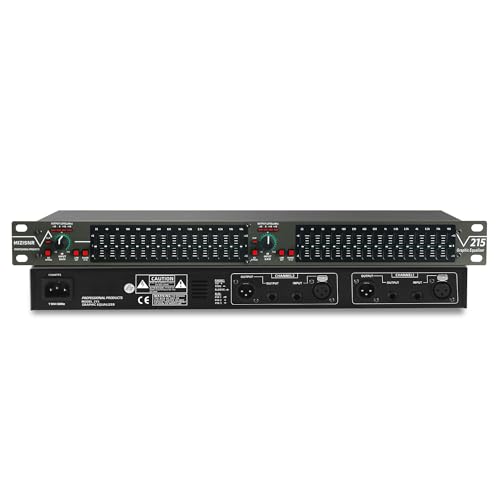
- 15 bands per channel with selectable boost/cut range
- Low-cut filter helps reduce rumble and hum
- XLR and TRS connections in a 1U rack format
Best For: Hands-on stereo EQ in home studios and rack systems
Detailed Studio Shaping

- Dual 31-band, 1/3-octave constant-Q control
- Selectable ±6dB or ±12dB boost/cut ranges
- LED output monitoring and balanced I/O
Best For: Detailed rack-based EQ work and level monitoring
EQ With Peak Management
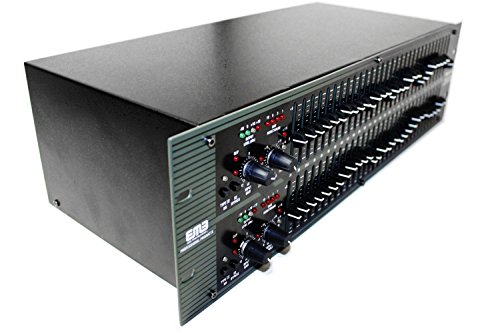
- Combines graphic EQ with limiter processing
- Type 3 noise reduction supports cleaner signal chains
- Rackmount design for studio and live systems
Best For: Systems needing EQ, peak control, and noise reduction
Compact Home Stereo Tuning

- Seven bands with ±6dB adjustment
- XLR and RCA inputs and outputs
- Compact design with no volume control
Best For: Simple EQ control in compact home stereo setups
Versatile Rack-Ready Choice
Rockville REQ42-S 42-Band Equalizer
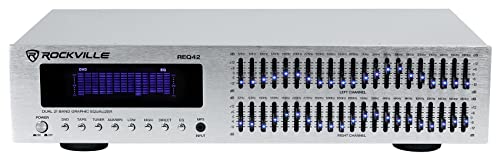
- Dual 21-band channels provide 42 total bands
- Spectrum analyzer, VU meters, and LED monitoring
- RCA and front-panel 3.5mm connectivity
Best For: RCA-based home studios and home-theater setups
Feature-Packed Visualizer
Decibelvibe TNZ SGE6 15-Band EQ

- 15-band dual-channel EQ with 31-band spectrum display
- Bluetooth 5.0, USB, RCA, and 3.5mm connections
- Built-in microphone and adjustable 16-color display
Best For: Connected home audio and compact DJ or HiFi setups
Professional Control Option
EQ-231 31-Band Stereo Equalizer

- Dual 31-band channels for detailed tonal shaping
- Low-cut switch helps reduce rumble, hum, and wind noise
- XLR balanced and 1/4-inch TRS connections
Best For: Studios, live applications, and audio installations
Feature-Rich Control

- 31-band EQ with real-time four-color spectrum display
- 10 presets, bypass, noise reduction, and bass controls
- Bluetooth 5.2, USB, XLR, and 1/4-inch TRS connectivity
Best For: Home studios and mixed audio setups needing visual EQ feedback
Precision Stereo Tuning

- 15 bands per channel with ±12 dB adjustment
- Low-cut control targets unwanted low-end noise
- Rack-mount chassis with XLR and 1/4-inch TRS I/O
Best For: Stereo studio and live systems needing focused dual-channel control
Visual Studio Shaping

- 31-band DSP control with real-time LED spectrum monitoring
- 10 presets, noise reduction, and bypass switching
- Bluetooth, USB, XLR, TRS, and adjustable subwoofer output
Best For: Studios and home theaters wanting detailed EQ plus flexible playback
Flexible Rack Control – 15-Band Stereo Graphic EQ
For home studios needing hands-on control, this 15-band stereo graphic equalizer offers adjustable shaping across each channel, plus connectivity suited to varied audio systems. Its low-cut and bypass switches add practical control for cleanup and troubleshooting.
Best For: Home studios, live applications, and rack-based audio installations that need detailed stereo EQ adjustment.
Pros:
- 15 adjustable bands per channel with a selectable ±6dB to ±12dB range.
- Low-cut switch helps attenuate wind noise, floor rumble, and electrical hum.
- XLR balanced and 1/4-inch TRS unbalanced inputs and outputs support flexible setups.
- Standard 1U rack-mount format and front-panel bypass simplify installation and debugging.
Cons:
- Its rack-mount design may be less convenient for compact desktop systems.
- It provides manual graphic EQ control rather than automated room correction.
The EQ-215 is a practical choice when you want extensive, visible frequency control and broad connection compatibility in a conventional rack unit.
Detailed Studio Shaping – dbx 231s 31-Band Equalizer
The dbx 231s is a dual-channel, 31-band equalizer for audio equalizers for home studios buyers who want fine-grained, 1/3-octave adjustment. Its monitoring LEDs, bypass control, and balanced connection options support a more deliberate rack-based workflow.
Best For: Home studio users and audio operators who need detailed dual-channel frequency shaping with level monitoring.
Pros:
- Dual 31-band, 1/3-octave constant-Q controls provide detailed adjustment.
- Switchable ±6dB or ±12dB boost/cut ranges accommodate different correction needs.
- Four-segment LED ladders help monitor output levels.
- Front-panel bypass and XLR/TRS inputs and outputs aid system setup.
Cons:
- Its 7.9-pound, rack-oriented design is relatively substantial for a small desktop setup.
- The many bands may require more setup time than a simpler equalizer.
Choose the 231s when precision and visual level monitoring matter more than minimal controls or a compact footprint.
EQ With Peak Management – EMB EB831EQ EQ/Limiter
The EMB EB831EQ combines graphic equalization with limiter processing and Type 3 noise reduction. For home studios and broader audio systems, that combination can help tailor tonal balance, reduce background noise in compatible signal chains, and control excessive peaks.
Best For: Studios, DJ systems, home sound setups, and live applications that need EQ plus limiting and noise-reduction processing.
Pros:
- Combines graphic EQ, limiter functionality, and Type 3 noise reduction.
- Limiter helps manage excessive peaks before they reach downstream equipment.
- Rackmount format integrates with mixers, amplifiers, and other processors.
- Designed for use across home, studio, club, stage, and live sound systems.
Cons:
- At 13.67 pounds, it is heavier than the other listed units.
- Its broader processing feature set may be more than a basic EQ-only setup requires.
The EB831EQ suits buyers looking for a multifunction rack processor rather than a standalone tone-shaping unit.
Compact Home Stereo Tuning – Douk Audio T7 7-Band EQ
The Douk Audio T7 is a compact seven-band equalizer and preamp for home stereo systems, amplifiers, and computer speakers. Its ±6dB controls provide straightforward tone shaping, while simultaneous XLR and RCA output keeps connection options flexible.
Best For: Compact home studios and stereo setups that need simple EQ adjustment with XLR and RCA connectivity.
Pros:
- Seven frequency bands cover key low, mid, and high ranges from 64Hz to 8kHz.
- Offers XLR and RCA inputs and outputs, with simultaneous output through both connections.
- Specified signal-to-noise ratio exceeds 104dB and distortion is as low as 0.003%.
- Compact aluminum-alloy enclosure is designed for easy plug-and-play operation.
Cons:
- It has no volume control knob and outputs at the rated level.
- Seven bands offer less detailed adjustment than 15- or 31-band rack equalizers.
The T7 is a sensible pick for smaller systems where clean, uncomplicated EQ and flexible home-audio connections are the priority.
Versatile Rack-Ready Choice – Rockville REQ42-S 42-Band Equalizer
Rockville REQ42-S 2 x 21 Band Home Theater Equalizer w/Audio Spectrum Analyzer
Check Price On AmazonThe Rockville REQ42-S is a practical option for home studios and listening setups that need hands-on control across two channels. Its 42 total graphic bands, spectrum analyzer, and multiple RCA connections make it a flexible pick among audio equalizers for home studios.
Best For: Home studios and home-theater systems using RCA-based sources and needing visual level monitoring.
Pros:
- Dual-channel 21-band design provides 42 total adjustment bands.
- Includes a multi-color LED display, spectrum analyzer, dual VU meters, and individual LED indicators.
- Offers RCA stereo inputs, a front-panel 3.5mm input, and RCA record outputs.
- Removable rack-mount brackets support flexible installation.
Cons:
- Its listed connections are RCA and 3.5mm rather than balanced studio inputs.
- The 19-inch rack-style form factor may be larger than necessary for compact desks.
The REQ42-S stands out when you want extensive graphic control, visible monitoring, and convenient consumer-audio connectivity in one rack-oriented unit.
Feature-Packed Visualizer – Decibelvibe TNZ SGE6 15-Band EQ
The Decibelvibe TNZ SGE6 combines equalization, visual feedback, and several modern input options in a slim component. For audio equalizers for home studios, it is especially useful when Bluetooth, USB, microphone input, and 3.5mm connectivity are priorities.
Best For: Home audio, DJ, HiFi, and compact studio-style setups that benefit from wireless inputs and a built-in spectrum display.
Pros:
- Provides 15-band EQ control across two channels and a 31-band music spectrum display.
- Supports rear RCA and 3.5mm inputs and outputs for broad system compatibility.
- Adds USB, Bluetooth 5.0, DSP processing, and a built-in microphone.
- Offers 16 display colors plus brightness, speed, and gain adjustments.
Cons:
- Its 15-band EQ provides fewer adjustment bands than the other listed equalizers.
- The product requires a CR2 battery according to the supplied details.
The TNZ SGE6 is a strong fit for users who want an equalizer with wireless and USB playback options, visual customization, and preamp or amplifier functionality.
Professional Control Option – EQ-231 31-Band Stereo Equalizer
The EQ-231 is designed for detailed tonal shaping in more demanding audio systems. With dual 31-band channels, selectable gain ranges, low-cut filtering, and multiple connector formats, it is a compelling choice among audio equalizers for home studios.
Best For: Studio, live, and installation setups that need fine-grained EQ control and balanced XLR connectivity.
Pros:
- Dual 31-band design provides detailed control on both stereo channels.
- Adjustable band range supports ±6dB to ±12dB settings and up to ±12dB adjustment per band.
- Low-cut filtering helps attenuate wind noise, floor rumble, and electrical hum.
- XLR balanced and 1/4-inch TRS unbalanced inputs and outputs support varied setups.
Cons:
- At 6.69 pounds, it is heavier than the other listed models.
- Its professional feature set may be more than needed for simple home listening systems.
Choose the EQ-231 when precision, noise reduction, and connection flexibility matter more than wireless playback or compact consumer-audio features.
Feature-Rich Control – 31-Band Digital Equalizer
For home studios needing visual feedback and flexible connections, this 31-band unit is one of the more feature-packed audio equalizers for home studios. Its real-time LED spectrum display, presets, bypass switch, and wireless playback options make it practical for both detailed adjustments and everyday listening.
Best For: Home studios, home theaters, DJs, and users who want spectrum visualization, presets, Bluetooth, and USB playback.
Pros:
- 31-band control with real-time, four-color LED spectrum indication.
- Includes 10 presets, independent high/mid/bass adjustment, and intelligent noise reduction.
- Offers Bluetooth 5.2, USB playback, XLR balanced, and 1/4-inch TRS connections.
- Rack-mount design, bypass switch, and independent adjustable bass output support flexible setups.
Cons:
- Its broad feature set may be more than a simple stereo system requires.
- The corded rack-mount design is less convenient for portable use.
This model stands out when you want hands-on EQ control plus a visual display and modern playback features. It is a strong choice for a studio or entertainment system where connection flexibility matters.
Precision Stereo Tuning – 15-Band Dual-Channel EQ
This dual-channel model offers focused control for audio equalizers for home studios without the added playback features of a digital multimedia unit. With 15 adjustable bands per channel, low-cut control, bypass operation, and balanced or unbalanced I/O, it is suited to systems that prioritize straightforward signal shaping.
Best For: Home studios, stereo systems, live setups, and rack installations requiring dual-channel EQ and low-frequency control.
Pros:
- Provides 15-band adjustment on each stereo channel with a ±12 dB range.
- Low-cut control helps reduce unwanted low-end noise.
- Includes XLR balanced and 1/4-inch TRS unbalanced connections.
- 1U rack-mount design, bypass operation, adjustable bass output, included cables, and a two-year warranty add installation value.
Cons:
- Offers fewer frequency bands than the 31-band alternatives.
- It does not list Bluetooth, USB playback, or a spectrum display.
Choose this equalizer when dependable dual-channel control is more important than wireless playback or visual analysis. Its low-cut feature and rack-ready format make it a practical fit for conventional studio and live-audio signal chains.
Visual Studio Shaping – 31-Band Graphic EQ
For buyers comparing audio equalizers for home studios, this 31-band graphic EQ combines detailed adjustment with a spectrum analyzer-style LED display. It also adds 10 custom presets, intelligent noise reduction, Bluetooth 5.2, USB playback, and a dedicated subwoofer output for more versatile studio and home-audio integration.
Best For: Studios, DJ booths, home theaters, and users who need detailed EQ, presets, visual monitoring, and adjustable subwoofer integration.
Pros:
- 31-band DSP equalizer provides detailed frequency shaping with real-time monitoring.
- Four-color LED display is designed for clear, non-glare viewing in low-light environments.
- Stores up to 10 custom presets and includes independent high, mid, and low adjustment.
- Bluetooth 5.2, USB playback, bypass, XLR, 1/4-inch TRS, and a 50–250 Hz adjustable subwoofer output expand compatibility.
Cons:
- The feature-rich design may be unnecessary for basic two-channel setups.
- Its rack-mount form factor requires suitable installation space.
This is a versatile pick for users who want both precise EQ work and convenient source options. The display and preset system support repeatable adjustments, while the adjustable subwoofer output helps tailor larger home studio or entertainment systems.
How We Picked the Best Audio Equalizers for Home Studios
We evaluated these models by focusing on the features that have the greatest effect on practical studio use: frequency-band resolution, stereo control, input and output connections, noise-reduction features, rack compatibility, and ease of adjustment. We also considered whether each unit is better suited to mixing, monitoring, home theater, DJ use, or general stereo listening.
Because home studios vary widely, this list includes both traditional rack-mount graphic equalizers and more compact preamp-style options. A useful equalizer should fit naturally between the source, interface, mixer, amplifier, or monitor chain without creating unnecessary gain-staging or connectivity problems.
Quick Comparison
- 15-band models: A practical balance of control and simplicity for stereo systems, DJ setups, and basic monitor correction.
- 21-band models: Offer more detailed shaping while remaining relatively straightforward to operate.
- 31-band models: Best for precise room, monitor, and live-sound adjustments when narrow frequency control matters.
- Compact preamp-style units: Useful where RCA, XLR, Bluetooth, USB, or auxiliary connectivity is more important than rack integration.
- Analyzer-equipped designs: Helpful for visual feedback, but the display should support—not replace—careful listening and measurement.
Key Buying Factors for Audio Equalizers for Home Studios
Band Count and Control Precision
More bands provide finer adjustments, but they can also make setup slower and encourage overcorrection. A 15-band equalizer is often enough for broad tonal shaping, while 31-band models are more appropriate for detailed room or monitor work.
Connections and System Compatibility
Check whether your equipment uses balanced XLR or TRS connections, unbalanced RCA, or 3.5 mm inputs. Balanced connections are generally preferable for longer runs and electrically noisy environments. Also verify that the unit has the required stereo inputs and outputs, plus a subwoofer or auxiliary connection if your system needs one.
Noise, Headroom, and Gain Staging
Noise-reduction circuitry can be useful, but it does not correct poor gain staging. Keep source levels healthy, avoid excessive boosts, and leave enough headroom to prevent clipping. Cutting problem frequencies is usually safer than making large boosts.
Form Factor and Workflow
Rack-mount units work well in permanent studio or equipment-rack installations. Front-panel sliders offer immediate control, whereas digital or analyzer-based interfaces may provide more visual information. Choose the layout you are most likely to use accurately and consistently.
Who Should Buy Which Audio Equalizers for Home Studios?
Choose a 15-band unit if you want accessible tone shaping for a home stereo, small studio, or DJ system. Choose a 21-band model when you want additional control without the complexity of a full 31-band layout. Choose a 31-band equalizer for precise monitor tuning, room correction, or advanced mixing workflows.
Choose a balanced preamp-style equalizer when your setup depends on XLR connectivity or you need a compact component between source and amplifier. Choose a model with Bluetooth, USB, or auxiliary inputs if the equalizer will also serve as a flexible home listening hub. Finally, an analyzer-equipped unit is worth considering when visual feedback helps you make repeatable adjustments, provided you still confirm changes by ear and with reliable room measurements.