The best graphic audio equalizers give you more control over tonal balance, room response, and listening preferences than a basic bass-and-treble circuit. This roundup compares 10 options for home stereo systems, home theater, DJ setups, and small performance rigs.
Before buying, check band count, connection types, rack compatibility, display features, and whether the equalizer matches the rest of your audio chain. The right model should improve control without adding unnecessary complexity or compatibility problems.
Best 10 Graphic Audio Equalizers Picks for 2026
Best Rack-Mount Value

- Dual 15-band control for two channels
- LOW-CUT and BYPASS switches
- XLR and 1/4-inch connectivity
Best For: Rack-based home audio, DJ, studio, and live systems
Best for Home Theater
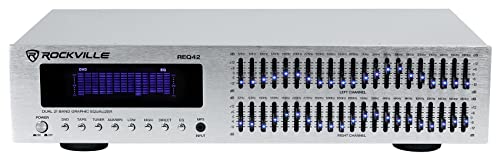
- Two 21-band equalizer channels
- Spectrum analyzer and multicolor display
- RCA and front 3.5mm inputs
Best For: RCA-based home theater and stereo systems
Best All-in-One Features

- 15-band dual-channel EQ
- Bluetooth, USB, RCA, and 3.5mm support
- Built-in microphone and 16-color display
Best For: Flexible home audio, HiFi, DJ, and visualizer setups
Best Fine-Tuning Control

- 31 bands on each stereo channel
- LOW-CUT and BYPASS switches
- 4-segment LED level monitoring
Best For: Detailed studio, live, and installed-audio tuning
Feature-Rich Pick
EQ8100 20-Band Graphic Equalizer
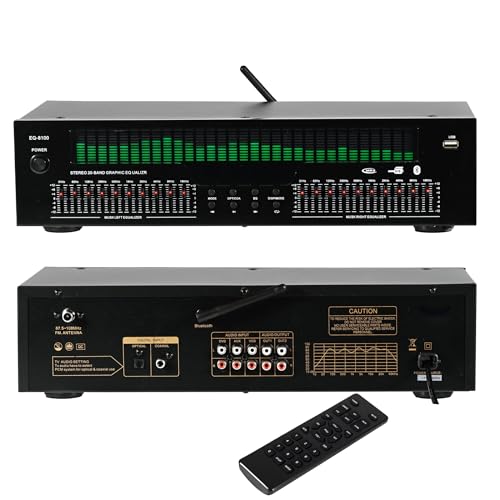
- 20-band EQ with 31-band spectrum display
- Bluetooth, USB, optical, coaxial, and RCA inputs
- 12 modes with auto-save presets
Best For: Flexible home, studio, DJ, and live audio systems
Professional Rack Pick
EQX-215S 15-Band Stereo Equalizer

- 15 bands per channel with ±12 dB adjustment
- XLR and 1/4-inch TRS connectivity
- Low-cut control and dedicated bass output
Best For: Rack-mounted DJ, studio, live-event, and installation systems
Visual Display Pick
785034166532 Digital Equalizer

- Dual-channel 15-band digital EQ
- Colorful 31-band real-time LED display
- Six effects and 10 savable presets
Best For: Compact home, KTV, studio, and DJ setups with visual monitoring
Best Professional 15-Band Pick

- Dual 15-band control with up to ±12 dB adjustment
- Low-cut filter helps reduce rumble, hum, and wind noise
- XLR and 1/4-inch TRS I/O with 1U rack mounting
Best For: Hands-on stereo tuning in home, studio, DJ, and installation systems
Best Feature-Rich Digital Option
31-Band EQ with Spectrum Analyzer

- 31-band control with real-time four-color LED display
- 10 presets plus independent high, mid, and bass controls
- Bluetooth 5.2, USB playback, and adjustable bass output
Best For: Home theaters, KTV, studios, and DJ systems needing visual feedback
Best Subwoofer-Control Pick
31-Band EQ with Adjustable Bass Output

- 31-band DSP control with real-time spectrum display
- Dedicated subwoofer output adjustable from 50Hz to 250Hz
- Bluetooth 5.2, USB playback, and 10 custom presets
Best For: Home theater, DJ, KTV, studio, and live systems needing bass control
Best Rack-Mount Value – 15-Band Stereo EQ
For buyers comparing graphic audio equalizers for a live rig, studio, or installed system, the EQ-215 offers practical two-channel control in a standard 1U rack format. Its 15 bands per channel provide useful tone-shaping flexibility without making setup unnecessarily complex.
Best For: Home audio users, DJs, studios, and live setups needing balanced or unbalanced connectivity and low-frequency filtering.
Pros:
- Dual 15-band stereo control with up to ±12dB adjustment per band
- LOW-CUT switch helps reduce wind noise, floor rumble, and electrical hum
- Supports XLR balanced and 1/4-inch TRS unbalanced inputs and outputs
- BYPASS switch and standard 1U rack-mount design simplify installation and testing
Cons:
- Offers fewer adjustment bands than a 31-band equalizer
- Its rack-oriented design may be more than needed for a basic desktop system
The EQ-215 is a straightforward choice when you want professional-style routing, noise control, and dual-channel EQ in a compact rack unit. Choose it over a higher-band model when ease of use and broad tone adjustments matter more than fine-grained control.
Best for Home Theater – 42-Band Graphic EQ
Rockville REQ42-S 2 x 21 Band Home Theater Equalizer w/Audio Spectrum Analyzer
Check Price On AmazonThe Rockville REQ42-S is one of the more feature-focused graphic audio equalizers for home theater and stereo listening. Its two 21-band channels, front-panel source selection, and spectrum display make it convenient for users who want both detailed adjustment and visual feedback.
Best For: Home theater and stereo systems using RCA sources such as DVD, tape, tuner, auxiliary, or portable music players.
Pros:
- Provides 21 bands per channel for 42 bands of total adjustment
- Audio spectrum analyzer, multicolor LED display, and individual slide indicators add visual feedback
- Front-panel 3.5mm input supports an iPod or MP3 player
- Includes RCA stereo inputs, record output, and removable rack-mount brackets
Cons:
- Connectivity is centered on RCA and 3.5mm connections rather than balanced professional inputs
- The large 19-inch form factor may not suit compact setups
With its extensive band count and home-focused source selection, the REQ42-S is a good fit for listeners who want hands-on control over a traditional RCA-based system. The built-in displays are especially useful when adjusting levels from the front panel.
Best All-in-One Features – TNZ SGE6 Graphic EQ
The Decibelvibe TNZ SGE6 stands out among graphic audio equalizers by combining 15-band dual-channel adjustment with Bluetooth, USB, auxiliary, and microphone input options. It is designed for flexible home audio, HiFi, home theater, and DJ setups where visual effects and multiple source choices are part of the experience.
Best For: Users wanting an equalizer, spectrum visualizer, and adjustable preamp in one unit with wireless and wired input options.
Pros:
- Dual-channel 15-band EQ with a 31-band music spectrum display
- Bluetooth 5.0, USB, rear RCA, and 3.5mm input and output options
- Built-in microphone can display a spectrum without connected audio input cables
- Offers 16 display colors plus brightness, speed, and gain adjustments
Cons:
- Its feature-rich visualizer design may be unnecessary for users seeking only basic EQ
- Supplied notes do not specify balanced professional inputs
The SGE6 is a versatile choice for a modern entertainment system, particularly if Bluetooth playback and spectrum visualization are priorities. Its preamp and amplifier functionality also give it broader system-building potential than a conventional EQ alone.
Best Fine-Tuning Control – 31-Band Stereo EQ
For detailed system tuning, the EQ-231 is a strong option among graphic audio equalizers. It gives each stereo channel 31 adjustable bands, adds low-frequency filtering and bypass controls, and includes LED monitoring for gain reduction and output levels.
Best For: Studio, live sound, and installed audio users who need precise dual-channel adjustments and clear level monitoring.
Pros:
- 31 bands per channel provide fine-grained stereo tone shaping
- Adjustable range of up to ±12dB per band with selectable gain and decay values
- LOW-CUT switch helps attenuate rumble, wind noise, and electrical hum
- 4-segment LED ladders monitor gain reduction and output levels
Cons:
- More detailed controls can take longer to configure than a 15-band model
- Its heavier, deeper rack-style construction may be less convenient for compact systems
The EQ-231 is the better choice when precise frequency-by-frequency correction matters. Its 31-band layout and visual level monitoring make it particularly suitable for users tuning live, studio, or installed audio rather than making occasional basic adjustments.
Feature-Rich Pick – EQ8100 20-Band Graphic Equalizer
If you need graphic audio equalizers with modern digital connectivity and visual feedback, the EQ8100 is a versatile signal-processing hub. It combines 20-band adjustment with a 31-band spectrum analyzer, Bluetooth 5.4, USB, optical, coaxial, and RCA connections, making it suitable for home audio, studio, DJ, and live sound setups.
Best For: Users who want extensive connectivity, real-time frequency visualization, and flexible preset control in a rack-mountable equalizer.
Pros:
- Provides 20-band EQ control with a 31-band real-time spectrum display.
- Supports Bluetooth, USB, optical, coaxial, and RCA connectivity.
- Offers 12 customizable modes, auto-save presets, and dual 10-segment EQ displays.
- Uses a slim 1U aluminum chassis suited to mobile or permanent installations.
Cons:
- The large feature set may be more than casual listeners need.
- Its listed dimensions suggest buyers should verify rack and shelf fit before ordering.
The EQ8100 stands out among graphic audio equalizers for combining traditional hands-on tone shaping with spectrum visualization and digital inputs. It is a strong choice when system flexibility and monitoring information matter as much as basic EQ adjustment.
Professional Rack Pick – EQX-215S 15-Band Stereo Equalizer
The EQX-215S is a practical choice among graphic audio equalizers for users who prefer traditional rack-mounted controls and balanced connectivity. Its dual-channel, 15-band-per-channel design provides adjustable tone shaping, while the low-cut control and dedicated bass output add useful control over unwanted low frequencies.
Best For: DJs, studios, live-event systems, and installations needing dual-channel EQ with XLR and 1/4-inch TRS connections.
Pros:
- Offers 15 adjustable bands on each stereo channel with a ±12 dB range.
- Includes low-cut frequency control for reducing unwanted low-end noise.
- Provides XLR balanced and 1/4-inch TRS unbalanced input and output options.
- Features a dedicated bass output with adjustable frequency and a 1U rack form factor.
Cons:
- It lacks the digital, Bluetooth, and spectrum-display features found on more modern models.
- Its push-button and rotary-control layout may require more manual setup than preset-driven units.
Choose the EQX-215S if straightforward, hands-on control is more important than digital effects or visual spectrum animation. Its balanced connections and low-frequency controls make it particularly suited to conventional professional audio chains.
Visual Display Pick – 785034166532 Digital Equalizer
For shoppers seeking graphic audio equalizers with an animated visual presentation, this compact digital model combines dual-channel 15-band adjustment with a colorful 31-band LED spectrum display. Its single encoder knob, built-in effects, and XLR/RCA connections make it a relatively streamlined option for home theater, KTV, studio, and DJ equipment.
Best For: Users who want a compact digital equalizer with colorful real-time frequency display and saved sound presets.
Pros:
- Simultaneously adjusts 15 frequency bands across two audio channels.
- Displays changing frequency levels through a colorful 31-band LED panel.
- Includes six built-in effects and supports 10 saved preset effects.
- Supports both XLR and RCA connections in a compact chassis.
Cons:
- Operation is centered on one encoder knob, which may be less immediate than separate band sliders.
- The supplied specifications list 240-volt power, so buyers should confirm electrical compatibility.
- Its feature description emphasizes digital display and effects rather than extensive physical connectivity.
This model is a good fit when a compact footprint and engaging spectrum visualization are priorities. It offers useful preset support and dual-channel control, but power compatibility and the single-knob interface deserve attention before purchase.
Best Professional 15-Band Pick – Dual-Channel EQ215
The EQ215 is a practical choice among graphic audio equalizers for listeners and operators who want hands-on stereo tuning without adding digital playback features. Its dual 15-band layout, selectable low-cut filtering, and rack-ready design suit home audio systems, studios, live setups, and installations.
Best For: Audiophiles, DJs, studios, and installations needing precise dual-channel adjustment and flexible balanced or unbalanced connections.
Pros:
- Dual 15-band channels provide adjustable control across the audio range, with up to ±12 dB per band.
- Low-cut filtering helps reduce wind noise, electrical hum, floor rumble, and other unwanted low-frequency sounds.
- Includes XLR balanced and 1/4-inch TRS unbalanced inputs and outputs.
- Standard 1U rack-mount design and BYPASS switch simplify installation and troubleshooting.
Cons:
- Offers fewer frequency bands than the 31-band models in this roundup.
- Its feature set is focused on wired audio control rather than Bluetooth or USB playback.
Choose the EQ215 when straightforward, tactile stereo equalization and noise reduction matter more than built-in streaming or spectrum visualization. The 15-band format keeps operation approachable while retaining useful professional connectivity.
Best Feature-Rich Digital Option – 31-Band EQ with Spectrum Analyzer
This 31-band digital unit is one of the more versatile graphic audio equalizers for systems that benefit from visual monitoring and built-in playback. Real-time LED frequency indication, presets, Bluetooth 5.2, and USB support make it suitable for home theaters, KTV venues, studios, and DJ equipment.
Best For: Users who want detailed graphic equalization, visual frequency feedback, presets, and Bluetooth or USB playback in a rack-mounted unit.
Pros:
- 31-band adjustment and four-color LED spectrum indication make frequency changes easier to observe.
- Provides 10 preset modes plus independent high, mid, and bass adjustment.
- Built-in Bluetooth 5.2 and USB playback add flexible music-source options.
- Includes XLR balanced and 1/4-inch TRS unbalanced I/O, plus an adjustable independent bass output.
Cons:
- The additional digital features may be unnecessary for users seeking a simple analog-style equalizer.
- Its corded-electric design requires a nearby power source.
This model is a strong fit when you want more than frequency sliders alone. The spectrum display and presets support quick adjustments, while its connectivity and bass output accommodate varied audio setups.
Best Subwoofer-Control Pick – 31-Band EQ with Adjustable Bass Output
For buyers comparing graphic audio equalizers with stronger low-end flexibility, this 31-band digital EQ adds a dedicated subwoofer output with adjustable crossover frequency. Its spectrum display, presets, Bluetooth 5.2, USB playback, and rack-mount format make it adaptable for home audio, DJ, KTV, studio, and live-stage systems.
Best For: Home theater and performance systems that need detailed equalization plus independently adjustable subwoofer control.
Pros:
- 31-band DSP equalizer with real-time monitoring and a soft, four-color LED spectrum display.
- Dedicated subwoofer output offers adjustable frequency from 50Hz to 250Hz.
- Stores up to 10 custom presets and includes intelligent noise suppression.
- Supports Bluetooth 5.2, USB playback, XLR balanced connections, and 1/4-inch TRS unbalanced connections.
Cons:
- Its broader feature set and larger 4.94-pound design may be more than a basic stereo system requires.
- It is intended for rack mounting, so placement may require compatible equipment space.
The adjustable subwoofer output is the key differentiator here, giving bass-heavy systems more control than a standard full-range EQ alone. Choose it when you want detailed tonal shaping, source flexibility, and dedicated low-frequency management in one rack unit.
How We Picked These Graphic Audio Equalizers
We focused on models that provide meaningful frequency control for stereo and entertainment systems, rather than simple tone controls. The selection includes 15-, 20-, and 31-band designs, along with units offering spectrum displays, Bluetooth, USB, microphone input, auxiliary connectivity, subwoofer output, and rack-mount construction.
We also considered practical setup factors: dual-channel operation, noise-reduction features, front- or rear-panel access, home-audio compatibility, and suitability for DJ or stage use. Because specifications and included accessories can vary by seller, verify the current product listing before ordering.
Quick Comparison
| Best For | Recommended Configuration | What to Prioritize |
|---|---|---|
| Basic home stereo tuning | 15-band stereo equalizer | Clear controls, RCA connectivity, simple installation |
| Home theater or detailed room correction | 21- or 31-band model | Fine frequency adjustment and low noise |
| DJ and rack systems | Dual-channel rack-mount equalizer | Durable construction, level control, visible meters |
| Modern streaming setups | Digital model with Bluetooth or USB | Wireless input, display readability, format compatibility |
| Live or rehearsal use | 31-band professional-style unit | Fast adjustments, spectrum analyzer, reliable outputs |
Key Buying Factors for Graphic Audio Equalizers
Band Count and Control Range
More bands allow narrower adjustments, which can help address room peaks, feedback, or specific vocal and instrument frequencies. A 15-band equalizer is usually easier to operate and sufficient for general home listening. A 31-band model offers more precision but requires more time and familiarity.
Connections and Signal Path
Confirm whether your amplifier, receiver, mixer, or powered speakers use RCA, 3.5mm, or another connection. Some models add Bluetooth, USB, microphone, or auxiliary inputs, but extra inputs do not automatically make a unit better. Match the equalizer’s input and output layout to your existing equipment and avoid unnecessary adapters.
Displays, Noise, and Headroom
Spectrum analyzers and illuminated sliders make changes easier in dark rooms or performance environments. Noise-reduction circuitry can be useful, but proper gain staging matters just as much. Leave adequate headroom and avoid boosting multiple bands aggressively, since excessive gain can introduce distortion or overload downstream equipment.
Installation and Build
Rack-mount models work well in structured DJ, studio, and theater systems, while a compact digital unit may be more convenient for casual home use. Check chassis depth, ventilation, power requirements, and whether the controls are accessible after installation.
Who Should Buy Which Graphic Audio Equalizers?
Choose a 15-band model if you want straightforward tonal shaping for a home stereo or occasional DJ use. Select a 21-band option when you want a middle ground between simplicity and detailed adjustment. A 31-band equalizer is better for experienced users, room tuning, live sound, or systems where precise control is important.
Bluetooth- or USB-equipped Graphic Audio Equalizers suit listeners who want modern source flexibility, while RCA-focused units are often the better choice for a traditional receiver-and-amplifier setup. For a first purchase, prioritize compatibility and easy operation over the highest band count or longest feature list.