Video editors need more than basic storage. Large footage libraries, project files, proxies, and exports all demand dependable capacity and connection speeds that keep your workflow moving.
We selected 10 external drives ranging from compact SSDs for active editing to high-capacity hard drives for backups and media archives. Use the guide below to match performance, durability, and storage to your editing setup.
Best 10 External Hard Drives for Video Editing Picks for 2026
Best Portable SSD
SanDisk Extreme 2TB Portable SSD
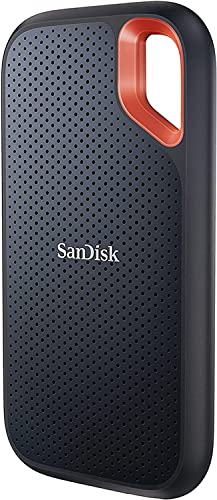
- Up to 1,050MB/s read speeds
- IP65 protection and 3-meter drop resistance
- 256-bit AES hardware encryption
Best For: Mobile video editing and fast project transfers
Best High-Capacity HDD

- Generous 16TB storage capacity
- 7,200 RPM enterprise-class hard drive
- Up to 260MB/s over USB-C
Best For: Large video libraries and desktop project storage
Best Compact SSD
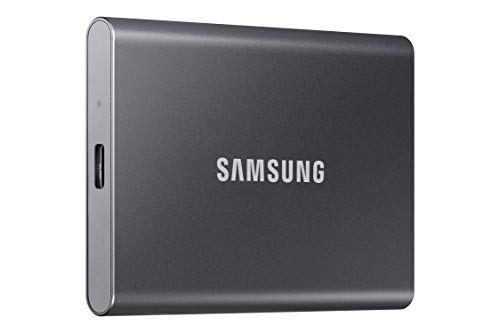
- Up to 1,050MB/s read speeds
- Works with computers and mobile devices
- Shock-resistant aluminum design
Best For: Portable editing, transfers, and compatible 4K recording
Best Rugged HDD

- 5TB capacity for multimedia files
- Resists drops, dust, rain, and crushing
- USB-C and Thunderbolt 3 compatible
Best For: Durable field storage and travel video backups
Rugged SSD Pick
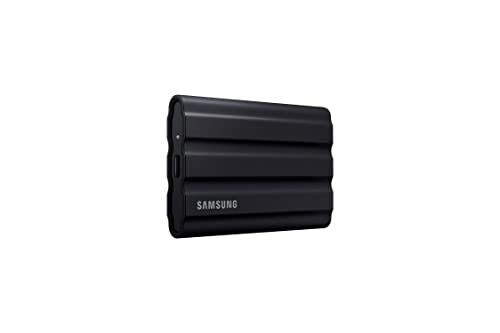
- Up to 1,050 MB/s read speed
- IP65 water and dust resistance
- Drop protection up to 9.8 feet
Best For: Mobile video editors needing a durable, fast portable SSD
High-Capacity Budget Pick

- Large 5TB portable capacity
- Backup software with ransomware defense
- Password protection and hardware encryption
Best For: Editors seeking spacious, portable storage for archives and backups
Fastest Creator SSD
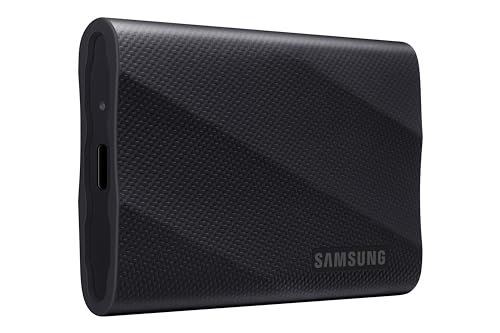
- Up to 2,000 MB/s read and write speeds
- Thermal management for sustained workloads
- AES 256-bit hardware encryption
Best For: Video creators demanding maximum transfer speed on compatible systems
High-Capacity Pick
WD Elements 6TB Portable Hard Drive
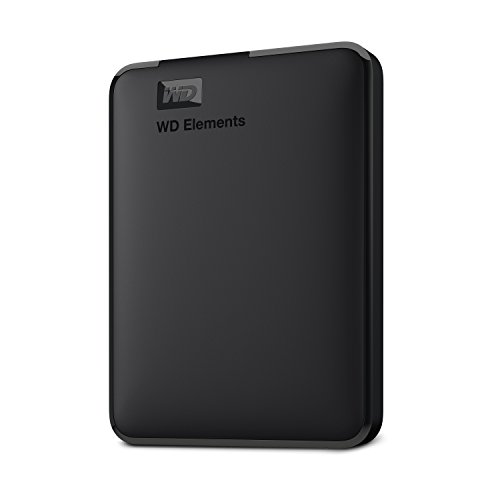
- Large 6TB capacity
- Portable plug-and-play design
- USB 3.2 Gen 1 connection
Best For: Editors storing extensive video libraries and project archives
Balanced Storage Pick
WD Elements 5TB Portable Hard Drive
- Generous 5TB capacity
- Compact portable enclosure
- Plug-and-play USB connectivity
Best For: Editors needing everyday footage storage and backups
Compact Value Pick
WD Elements 4TB Portable Hard Drive
- Portable 4TB capacity
- Small, lightweight enclosure
- Plug-and-play Mac and PC use
Best For: Mobile creators with moderate video storage needs
Best Portable SSD – SanDisk Extreme 2TB Portable SSD
The SanDisk Extreme is a strong choice among external hard drives for video editing when you need fast transfers in a compact, travel-ready format. Its portable SSD design delivers up to 1,050MB/s read speeds, while the rugged enclosure adds useful protection for mobile workflows.
Best For: Video editors who need fast, durable storage for large project files on location or between workstations.
Pros:
- Up to 1,050MB/s read and 1,000MB/s write speeds for quick file transfers.
- 2TB capacity provides room for active video projects and media libraries.
- IP65 water and dust resistance plus up to 3-meter drop protection.
- Includes password protection with 256-bit AES hardware encryption.
Cons:
- Higher-capacity options may be preferable for extensive video archives.
- Actual performance can vary depending on the host device and other factors.
With its high throughput, compact size, and rugged build, the SanDisk Extreme is well suited to editors who regularly move footage. It is especially practical as a working drive or portable project shuttle.
Best High-Capacity HDD – Glyph BlackBox Pro 16TB
The Glyph BlackBox Pro is a practical pick among external hard drives for video editing when capacity matters more than SSD-level portability. Its 16TB enterprise-class 7,200 RPM hard drive and USB-C connectivity provide substantial workspace for footage, projects, and backups.
Best For: Editors who need large-capacity desktop storage for video libraries, completed projects, and ongoing production work.
Pros:
- Large 16TB capacity supports extensive video storage.
- 7,200 RPM enterprise-class HDD delivers speeds up to 260MB/s.
- USB-C 3.2 Gen 2 connectivity supports efficient file transfers.
- Aluminum and silicone enclosure with a removable rugged cover.
Cons:
- Mechanical HDD design is less compact and portable than an SSD.
- Designed for external desktop use rather than maximum travel convenience.
The BlackBox Pro stands out when a video editor needs a lot of storage in one enclosure. Its 16TB capacity is useful for maintaining large media collections without relying on multiple smaller drives.
Best Compact SSD – Samsung T7 1TB Portable SSD
The Samsung T7 is a compact option among external hard drives for video editing, combining NVMe-based SSD performance with broad compatibility. It offers up to 1,050MB/s read speeds and can also support direct recording of high-resolution video with compatible cameras or mobile devices.
Best For: Editors who want a lightweight SSD for active projects, footage transfers, and compatible 4K recording workflows.
Pros:
- Up to 1,050MB/s read and 1,000MB/s write speeds.
- Compact 1TB design works with PCs, Macs, smartphones, tablets, and consoles.
- Shock-resistant aluminum construction with fall protection up to 6 feet.
- Supports 256-bit AES hardware encryption and thermal control.
Cons:
- 1TB capacity may be limiting for large or long-term video libraries.
- It has a shorter stated warranty than some alternatives at three years.
The T7 is a versatile, easy-to-carry SSD for editors who value speed and device compatibility. Its capacity is best suited to current projects and high-speed transfers rather than serving as a sole archive.
Best Rugged HDD – LaCie Rugged USB-C 5TB
The LaCie Rugged USB-C is a dependable choice among external hard drives for video editing when you need extra capacity and physical protection. Its 5TB mechanical drive connects through USB-C and is designed to resist drops, shocks, dust, rain, and crushing.
Best For: Video editors who need a rugged 5TB travel drive for storing and transporting multimedia files.
Pros:
- 5TB capacity provides substantial space for video footage and project files.
- USB-C connectivity works with current Mac and Windows computers.
- Designed to resist drops, shocks, dust, water, rain, and crushing.
- Includes Rescue Data Recovery Services protection and a one-month Adobe Creative Cloud All Apps subscription.
Cons:
- 5400 RPM HDD performance, with listed read speeds up to 130MB/s, is slower than the featured SSDs.
- USB Type-A cable is not included, so older USB connections may require an additional cable.
The LaCie Rugged prioritizes capacity and durability over maximum transfer speed. It is a sensible field-storage companion for editors who work in unpredictable environments or need a protected copy of their media.
Rugged SSD Pick – Samsung T7 Shield 1TB
For video editors who need external hard drives for video editing that can travel, the Samsung T7 Shield combines fast transfers with protection against water, dust, and drops. Its USB 3.2 Gen 2 connection delivers read speeds up to 1,050 MB/s and write speeds up to 1,000 MB/s.
Best For: Mobile editors, photographers, and creators working outdoors or moving between locations.
Pros:
- Fast NVMe-based performance for transferring heavy video files.
- IP65 water and dust resistance plus drop protection up to 9.8 feet.
- Compatible with PC, Mac, Android devices, gaming consoles, and iPhone 15 Pro Res 4K at 60fps.
- Available in capacities from 1TB to 4TB.
Cons:
- The 1TB model offers less workspace than higher-capacity alternatives.
- Its advertised speeds require compatible USB hardware and conditions.
The T7 Shield is a strong all-around choice when portability and durability matter as much as editing speed. Samsung Magician software adds drive-health monitoring, firmware updates, and security tools.
High-Capacity Budget Pick – WD My Passport 5TB
The WD My Passport is a practical option for video editors who prioritize capacity and portability over SSD-level performance. This 5TB portable hard drive uses USB connectivity and includes backup software, password protection, and hardware encryption.
Best For: Editors who need affordable bulk storage for project archives, media libraries, and backups.
Pros:
- Generous 5TB capacity for storing large video libraries.
- Slim 2.5-inch portable design weighing 7.4 ounces.
- Included software supports device management, backup, and ransomware defense.
- Password protection and hardware encryption help secure files.
Cons:
- As a traditional portable hard drive, it is not positioned as an SSD replacement for demanding editing workflows.
- USB compatibility and listed specifications may limit transfer performance compared with newer high-speed SSDs.
- Mac users may need to reformat the drive.
The My Passport makes the most sense as a spacious working-storage or backup companion. Choose it when 5TB of capacity and data-protection features are more important than the fastest possible timeline performance.
Fastest Creator SSD – Samsung T9 1TB
The Samsung T9 is built for creators who want exceptionally fast external hard drives for video editing. Its USB 3.2 Gen 2×2 interface supports read and write speeds up to 2,000 MB/s, while Dynamic Thermal Guard helps manage heat during extended workloads.
Best For: Editors transferring, loading, and working with large video projects on compatible high-speed systems.
Pros:
- Up to 2,000 MB/s read and write speeds for demanding file workflows.
- Dynamic Thermal Guard helps control temperatures during heavy use.
- Drop resistance up to 9.8 feet and AES 256-bit hardware encryption.
- Five-year limited warranty and compatibility with Mac, PC, tablets, iPhone 15/16, and consoles.
Cons:
- The 1TB capacity may fill quickly with high-resolution footage.
- Maximum speeds depend on a compatible USB 3.2 Gen 2×2 setup.
For speed-focused editing, the T9 is the strongest performer in this group. Its thermal management and rugged design make it particularly suitable for sustained transfers, provided your computer can use its full interface speed.
High-Capacity Pick – WD Elements 6TB Portable Hard Drive
For editors building a large media library, this 6TB WD Elements drive provides substantial space for video files, project assets, photos, and documents. Its portable 2.5-inch design and USB 3.2 Gen 1 connection make it a practical storage expansion option for compatible PCs and Macs, though it is a mechanical hard drive rather than an SSD.
Best For: Video editors who prioritize maximum portable capacity for storing and archiving large media collections.
Pros:
- Large 6TB capacity for video and multimedia storage
- Portable 2.5-inch form factor with plug-and-play setup
- SuperSpeed USB 3.2 Gen 1 connection rated up to 5Gbps
- Includes a USB-A cable and carries a two-year limited warranty
Cons:
- Mechanical hard drive performance is less suited to demanding active editing than an SSD
- USB-A connectivity may require an adapter for some newer devices
Choose this model when capacity matters more than workstation-speed editing. It is well suited to keeping a broad video archive or expanding a computer’s available storage without a complicated installation.
Balanced Storage Pick – WD Elements 5TB Portable Hard Drive
This 5TB WD Elements drive offers a useful middle ground for external hard drives for video editing, combining substantial capacity with a compact portable enclosure. It connects through USB 2.0/3.0 and is designed for plug-and-play use with compatible Windows PCs and Macs.
Best For: Editors who want generous portable storage for video files without moving up to the largest capacity option.
Pros:
- 5TB capacity accommodates sizable media collections
- Compact 2.5-inch portable form factor
- SuperSpeed USB 3.2 Gen 1 connection rated up to 5Gbps
- Includes a USB-A cable and two-year limited warranty
Cons:
- Mechanical storage is not ideal for the fastest editing workflows
- USB-A connection may need an adapter with some modern computers
The 5TB capacity makes this a sensible general-purpose media drive for backups, footage storage, and project organization. For frequent timeline work, keep expectations appropriate for a portable mechanical hard drive.
Compact Value Pick – WD Elements 4TB Portable Hard Drive
The 4TB WD Elements is a compact option for editors who need extra room for footage, project files, and other media without choosing the highest-capacity model. Its lightweight 2.5-inch enclosure, plug-and-play setup, and USB 2.0/3.0 compatibility make it easy to add portable storage to a laptop or desktop.
Best For: Mobile editors and creators seeking straightforward, portable storage for moderate-sized video libraries.
Pros:
- 4TB capacity for video, music, photos, and documents
- Small, lightweight 2.5-inch design for portability
- SuperSpeed USB 3.2 Gen 1 connection rated up to 5Gbps
- Plug-and-play compatibility with Mac and PC platforms
Cons:
- Mechanical hard drive is slower than an SSD for active editing
- USB-A connectivity may require an adapter on newer devices
This model is a practical lower-capacity choice for storing footage, backups, and completed projects on the go. It offers useful space in a small enclosure, but demanding editing sessions may benefit from faster primary storage.
How We Picked the Best External Hard Drives for Video Editing
We compared these drives by storage type, stated transfer speeds, connection standard, capacity, portability, and protection features. SSDs generally offer faster access, better resistance to movement, and quieter operation, while mechanical hard drives provide more capacity at a lower cost. We also considered whether each model is better suited to active editing, project storage, backups, or long-term media archiving.
Advertised speeds are maximum interface or sequential-read figures. Real-world performance depends on the computer, cable, file sizes, drive capacity, and whether the host port supports the drive’s full standard.
Quick Comparison
| Drive type | Best use | Main advantage | Primary trade-off |
|---|---|---|---|
| Portable SSD | Editing on the go | Fast, compact, shock-resistant | Higher cost per terabyte |
| Portable HDD | Backups and archives | Affordable capacity | Slower and more sensitive to drops |
| High-capacity HDD | Large media libraries | Maximum space for the money | Less portable and slower for editing |
Key Buying Factors for External Hard Drives for Video Editing
SSD Versus HDD
Choose an SSD for editing directly from the drive, especially with 4K footage, multicamera projects, or frequent timeline scrubbing. A hard drive is usually more economical for completed projects, duplicate backups, proxies, and files you access less often.
Speed and Port Compatibility
USB 3.2 Gen 2 SSDs can reach around 1,000–1,050MB/s under suitable conditions, while the Samsung T9’s USB 3.2 Gen 2×2 interface can reach up to 2,000MB/s with compatible hardware. Check your computer’s ports before paying for higher performance; a slower USB connection will limit the drive.
Capacity and Workflow
Estimate current footage, project files, cache data, and exports, then leave free space for sustained performance. A 1TB SSD can suit active projects, but larger libraries may need a 2TB or 4TB working drive plus a separate high-capacity backup.
Durability and Security
For field work, water, dust, and drop resistance can protect valuable footage. Rugged SSDs and protected portable drives are better for travel. For stored drives, password protection, backup software, and a clear backup routine matter more than rugged construction.
Who Should Buy Which External Hard Drives for Video Editing?
Choose the SanDisk Extreme, Samsung T7 Shield, or LaCie Rugged if you need portable storage for shoots and editing away from a desk. Choose the Samsung T7 or T9 for fast everyday editing, provided your computer supports the relevant USB standard.
Choose the Glyph BlackBox Pro when capacity and sustained desktop-style storage matter more than compact portability. Choose a WD Elements or My Passport drive for affordable backups, archives, and secondary copies of finished projects. Whichever model you select, maintain at least two copies of irreplaceable footage and keep one backup disconnected or stored separately.