Choosing the right desktop computer for architects means balancing processor performance, graphics capability, memory, storage, and upgrade potential. CAD, BIM, visualization, and rendering workloads can place very different demands on a system.
This roundup covers full-size workstations, compact business PCs, and practical design desktops to help you match your software and project scale with the right hardware.
Best 10 Desktop Computer for Architects Picks for 2026
Best Overall Value

- 20-core Core Ultra 7 processor
- RTX 4060 8GB dedicated graphics
- 32GB DDR5 and 1TB NVMe SSD
Best For: Balanced architectural design and creative work
Best Workspace Upgrade
Adjustable Architect Desk Lamp

- Three-bar, wide-area LED illumination
- 2700K–6500K stepless color control
- High CRI 90+ and flicker-free design
Best For: Comfortable drafting and computer workstation lighting
Best Renewed Workstation

- 128GB DDR4 memory installed
- Quadro P4000 with four DisplayPorts
- Two additional 3.5-inch bays
Best For: Memory-heavy professional and multi-display workflows
Best Professional Workstation
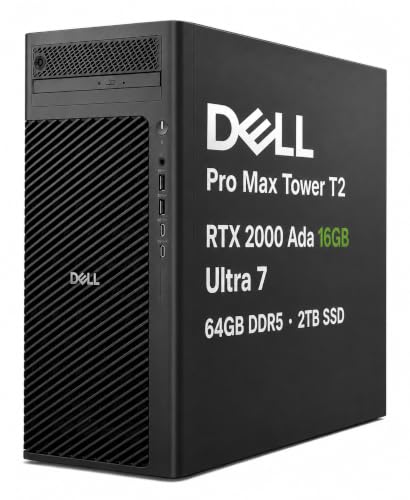
- RTX 2000 Ada with 16GB GDDR6
- 20-core processor, 64GB DDR5, and 2TB SSD
- Up to four displays and ISV certifications
Best For: Professional CAD, 3D modeling, rendering, and simulation
Balanced Performance Pick
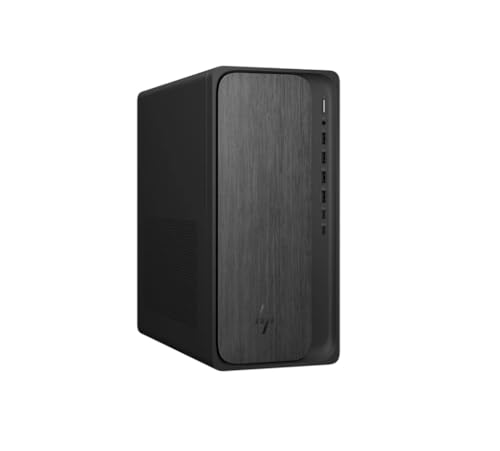
- Ryzen 7 8700G and 32GB DDR5 memory
- 1TB PCIe Gen4 NVMe SSD
- Includes keyboard and mouse
Best For: General architectural productivity and multitasking
Budget Workstation Pick
Dell Precision 3431 CAD Desktop

- Dedicated Quadro P620 graphics
- Windows 11 Pro and 1TB SSD
- Includes keyboard and mouse
Best For: Entry-level CAD and office design workflows
Compact Professional Pick

- ISV-certified for AutoCAD and related software
- Core i7-14700 with 32GB DDR5
- Tiny design with dual-display support
Best For: Space-conscious architectural and engineering workstations
Balanced Business Pick

- 10-core Intel Core i7 processor
- 16GB DDR5 and 512GB SSD
- HDMI plus DisplayPort for dual monitors
Best For: Architectural office work and light creative workloads
Performance-Focused Choice

- 12-core Intel Core i7-12700K processor
- 32GB DDR5 and 1TB PCIe SSD
- Dual 4K monitor support
Best For: CPU-heavy architectural multitasking and large displays
Compact Workspace Option
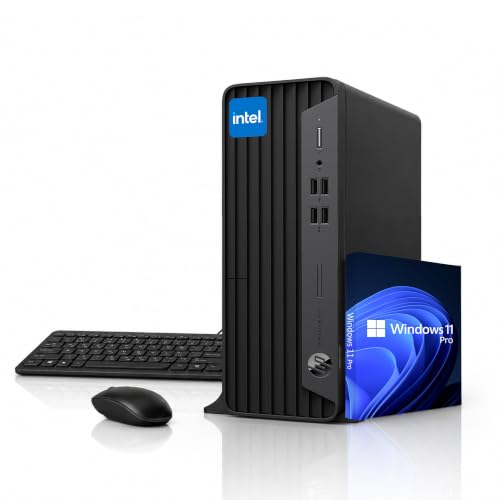
- Space-saving Small Form Factor chassis
- 32GB RAM and 1TB SSD
- Dual 4K display support
Best For: Basic architectural administration and compact offices
Best Overall Value – Dell Tower ECT1250
For shoppers seeking a versatile desktop computer for architects, the Dell Tower ECT1250 combines a 20-core Intel Core Ultra 7 processor, dedicated RTX graphics, generous memory, and fast NVMe storage. It is a practical choice for CAD, visualization, multitasking, and general creative work, although the supplied specifications identify Windows 11 Home rather than Pro.
Best For: Architects who want a balanced new tower for design work, content creation, multitasking, and occasional gaming.
Pros:
- 20-core Intel Core Ultra 7-265F processor with built-in AI capabilities.
- RTX 4060 graphics with 8GB GDDR6 memory for accelerated visual workloads and ray tracing.
- 32GB DDR5 RAM, 1TB NVMe SSD, Wi-Fi 6, and three PCIe expansion slots.
Cons:
- Uses Windows 11 Home, which may offer fewer business-management features than Windows 11 Pro.
- Supplied notes do not identify professional ISV certifications.
The ECT1250 is a strong all-around option when you need capable graphics and responsive storage without moving to a specialized workstation platform. Confirm software requirements and monitor connectivity before buying.
Best Workspace Upgrade – Adjustable Architect Desk Lamp
A quality lamp can make a desktop computer for architects more comfortable to use during long drafting, reading, and review sessions. This adjustable LED desk lamp provides broad, customizable illumination for the workspace rather than adding computer performance.
Best For: Architects, students, and designers who need flexible, low-glare task lighting around a computer workstation.
Pros:
- Three light sources provide broad coverage, with auxiliary bars rotating 270 degrees.
- Stepless brightness from 1% to 100% and color temperature from 2700K to 6500K.
- Flicker-free, asymmetric lighting with CRI 90+ and a memory function.
Cons:
- It is a lighting accessory, not a computer or performance upgrade.
- Requires corded power and is intended for indoor tabletop use.
With its wide coverage, flexible gooseneck, and adjustable color settings, this lamp is a useful complement to an architectural computer setup. Its weighted base is designed to help keep it stable while positioning the light.
Best Renewed Workstation – Lenovo ThinkStation P520
The renewed ThinkStation P520 is a workstation-oriented option for buyers comparing a desktop computer for architects with substantial memory and professional graphics. Its Xeon processor, Quadro P4000, 128GB of DDR4 RAM, and expansion-friendly tower design suit demanding technical workflows, though its six-core CPU and renewed condition should be considered.
Best For: Architects who prioritize very high memory capacity, multiple displays, workstation-class graphics, and storage expansion.
Pros:
- 128GB DDR4 RAM installed, with support for up to 512GB according to the supplied details.
- Quadro P4000 8GB graphics card with four DisplayPort outputs.
- 1TB NVMe SSD, two available 3.5-inch bays, and a 900W 80 PLUS Platinum power supply.
Cons:
- Renewed system with a listed 90-day warranty.
- Keyboard and mouse are not included.
- The Xeon W-2135 has six cores, which may be less suitable for heavily CPU-dependent modern workflows.
The P520 makes the most sense when memory capacity, professional display output, and expandability matter more than having the newest processor platform. Review the renewed-system warranty and compatibility with current applications before purchase.
Best Professional Workstation – Dell Pro Max Tower T2
For demanding architectural workloads, the Dell Pro Max Tower T2 is a high-end desktop computer for architects with professional RTX graphics, a 20-core Intel processor, 64GB of DDR5 memory, and a 2TB SSD. Its display support, Windows 11 Pro, and stated ISV certifications make it especially suited to professional design environments.
Best For: Professional architects and technical teams working with CAD, 3D modeling, rendering, simulation, and complex multitasking.
Pros:
- NVIDIA RTX 2000 Ada professional graphics with 16GB GDDR6 memory.
- 20-core Intel Core Ultra 7 265 vPro processor, 64GB DDR5 RAM, and 2TB SSD.
- Supports up to four displays, with outputs capable of resolutions up to 8K at 60Hz.
- Windows 11 Pro, Thunderbolt 4, multiple USB-C ports, and stated ISV certifications.
Cons:
- The computer has been resealed for memory and SSD upgrades.
- Warranty coverage is split between Issaquah Highlands Tech for upgrades and Dell ProSupport for remaining components.
The Pro Max Tower T2 is the strongest fit here for professional architectural software and demanding visualization workflows. Its upgraded configuration and professional GPU are compelling, but buyers should carefully review the disclosed warranty arrangements.
Balanced Performance Pick – HP OmniDesk Ryzen 7 Desktop
If you need a desktop computer for architects that can handle general design work, multitasking, and everyday productivity, the HP OmniDesk offers a strong hardware foundation. Its Ryzen 7 8700G processor, 32GB of DDR5 memory, and 1TB PCIe Gen4 NVMe SSD provide responsive performance, while Radeon 780M integrated graphics support display output and graphics-oriented tasks.
Best For: Architects seeking a well-equipped general-purpose desktop for productivity, multitasking, and lighter graphics workloads.
Pros:
- Ryzen 7 8700G processor with 8 cores and a 4.2GHz listed speed
- 32GB DDR5-5200 memory supports demanding multitasking
- 1TB PCIe Gen4 NVMe SSD offers fast storage and useful capacity
- Includes a keyboard and mouse, with Wi-Fi 6 and Bluetooth 5.4 connectivity
Cons:
- Radeon 780M graphics are integrated rather than a separate workstation GPU
- Runs Windows 11 Home instead of the Pro edition
The OmniDesk is a practical choice when memory, processor performance, and fast storage matter more than dedicated CAD graphics. It is especially appealing as a ready-to-use office workstation, but users working heavily in complex 3D scenes should verify that its integrated graphics meet their software requirements.
Budget Workstation Pick – Dell Precision 3431 CAD Desktop
For shoppers comparing a desktop computer for architects on a tighter budget, this renewed Dell Precision 3431 emphasizes professional graphics compatibility and business features. Its Quadro P620 GPU, Windows 11 Pro, 16GB of DDR4 memory, and 1TB SSD make it suited to office workflows and entry-level CAD or design work.
Best For: Architects, engineers, and designers who want a renewed workstation with dedicated Quadro graphics and business-oriented Windows features.
Pros:
- NVIDIA Quadro P620 dedicated graphics card with 2GB of VRAM
- Windows 11 Pro includes business-focused security and remote-access features
- 1TB SSD provides fast boot and file access
- DisplayPort and Mini DisplayPort outputs support multi-display setups
Cons:
- Older 9th-generation Intel Core i5-9500 platform
- 16GB DDR4 memory is less generous than newer alternatives
- Renewed condition and a listed 30-day warranty require extra purchase consideration
This Precision is a sensible value option for 2D CAD, office applications, and moderate visual workloads where a certified-style professional GPU is useful. Its older hardware and limited memory make it less suitable for demanding modern 3D rendering or large architectural models.
Compact Professional Pick – Lenovo ThinkStation P3 Tiny
The Lenovo ThinkStation P3 Tiny is a space-saving desktop computer for architects who need professional software support without a full-size tower. It combines an Intel Core i7-14700, 32GB DDR5 memory, 1TB SSD, Windows 11 Pro, and ISV certification for applications including AutoCAD, SOLIDWORKS, ArcGIS, Creo, and MATLAB.
Best For: Architects and engineering professionals who prioritize a compact footprint, certified software compatibility, and multi-display productivity.
Pros:
- Very compact 3-pound design helps conserve desk space
- Intel Core i7-14700 and 32GB DDR5 memory support demanding multitasking
- ISV-certified for AutoCAD and other professional applications listed by Lenovo
- Supports dual displays, including up to 8K via DisplayPort 1.4 and 4K via HDMI 2.1
Cons:
- Uses integrated Intel UHD Graphics 770 rather than a dedicated graphics card
- Its compact form factor may offer less expansion flexibility than a traditional tower
- System has been resealed for memory and SSD upgrades
The P3 Tiny stands out for firms and home offices where desk space, software certification, and secure Windows 11 Pro features are priorities. It is a strong productivity and CAD choice, though users focused on intensive GPU rendering should consider a system with dedicated graphics.
Balanced Business Pick – ASUS V500
The ASUS V500 is a practical desktop computer for architects who need strong general multitasking, fast storage, and a dual-monitor workspace for plans, documents, and reference material. Its 10-core Intel Core i7 processor and DDR5 memory provide a solid foundation for everyday professional workloads, though the integrated graphics are better suited to lighter visual work than demanding 3D rendering.
Best For: Architects handling office applications, document-heavy workflows, browser research, and light creative tasks.
Pros:
- 10-core, 16-thread Intel Core i7-13620H processor with turbo speeds up to 4.9 GHz.
- 16GB DDR5 RAM and 512GB SSD storage for responsive everyday use.
- HDMI and DisplayPort support dual monitors, while Wi-Fi 6, Bluetooth 5.4, and seven USB ports expand connectivity.
- Includes a wired keyboard and mouse.
Cons:
- Integrated graphics may limit demanding 3D modeling or rendering workloads.
- The listed configuration provides 512GB of SSD storage; the additional 512GB is external storage.
The V500 offers a capable, flexible base for architectural productivity, especially when dual-screen organization matters more than workstation-class graphics performance. Verify application requirements before using it for intensive visualization.
Performance-Focused Choice – Dell QCT1250
The Dell QCT1250 is a performance-focused desktop computer for architects who need fast multitasking, substantial memory, and support for high-resolution displays. Its 12-core Intel Core i7-12700K processor and 32GB of DDR5 RAM suit demanding productivity and content-creation tasks, while integrated graphics remain a consideration for serious 3D rendering.
Best For: Architectural professionals managing large project files, multiple applications, data processing, and dual 4K displays.
Pros:
- 12 cores and 20 threads with speeds up to 5.0 GHz for demanding multitasking.
- 32GB DDR5 RAM and a 1TB PCIe SSD provide strong capacity for professional workflows.
- Supports dual 4K monitors through HDMI and DisplayPort.
- Includes USB-C, multiple USB ports, Wi-Fi, Bluetooth, Windows 11 Pro, keyboard, and mouse.
Cons:
- Integrated Intel UHD Graphics 770 may not be ideal for intensive 3D rendering or GPU-heavy visualization.
- The listed memory capacity is 32GB, with the supplied details not indicating an upgrade beyond that configuration.
Among these options, the Dell provides the strongest processor and memory combination for multitasking. It is a sensible choice for architects prioritizing CPU performance and a dual-4K workspace, provided the included integrated graphics meet the software requirements.
Compact Workspace Option – HP ProDesk SFF
The HP ProDesk SFF is a compact desktop computer for architects who need a space-saving workstation for basic office and project administration tasks. Its 32GB of RAM, 1TB SSD, dual-display support, and Windows 11 Pro are useful for organized productivity, but the Intel Pentium processor and integrated graphics make it a poor fit for demanding CAD, modeling, or rendering work.
Best For: Small offices, drafting administration, email, document work, and dual-screen architectural coordination.
Pros:
- Small Form Factor design measures approximately 10.6 x 3.9 x 12.1 inches for easier placement.
- 32GB DDR4 RAM and a 1TB SSD support responsive everyday multitasking.
- HDMI and DisplayPort enable dual 4K display support.
- Includes Windows 11 Pro, Wi-Fi, Bluetooth, keyboard, and mouse.
Cons:
- Intel Pentium Gold G5905 is substantially less capable for demanding professional applications than the Core i7 systems listed above.
- Integrated Intel UHD Graphics 610 is intended for basic visuals rather than intensive 3D work.
The ProDesk SFF makes sense when desk space and routine productivity are the priorities. For architects running complex models or renderers, choose a system with stronger processing and dedicated graphics instead.
How We Picked the Best Desktop Computer for Architects
We compared the selected systems by looking at the components that matter most in architectural workflows: CPU generation and core count, dedicated versus integrated graphics, RAM capacity, SSD storage, display support, workstation certification, upgradeability, and overall suitability for CAD, BIM, modeling, and rendering. We also considered form factor, since a compact workstation may suit a small studio while a tower offers more room for graphics cards, memory, and storage upgrades.
Specifications can vary by configuration or seller, so verify the exact GPU, power supply, operating system, and included accessories before purchasing.
Quick Comparison
| Best For | What to Prioritize | Recommended Type |
|---|---|---|
| 2D CAD and office work | Modern CPU, 16GB or more RAM, fast SSD | Business tower or small-form-factor PC |
| BIM and large project files | 32GB RAM, strong CPU, dedicated GPU | Performance tower or workstation |
| 3D modeling and viewport work | Dedicated graphics with ample VRAM | RTX or professional GPU workstation |
| Rendering and animation | High core count, powerful GPU, cooling | Expandable tower workstation |
| Small studios or mobile desks | Compact design without sacrificing memory | Tiny workstation or mini desktop |
Key Buying Factors for a Desktop Computer for Architects
Processor
CPU speed affects drafting, model navigation, exports, and many single-threaded CAD operations. Higher core counts help with rendering, simulation, compiling, and multitasking. A current Core Ultra, Core i7, Ryzen 7, or Xeon-class processor is a sensible starting point for demanding professional use.
Graphics
A dedicated GPU is important for 3D views, real-time visualization, and GPU-accelerated rendering. GeForce RTX cards can provide strong performance for general design work, while professional RTX or Quadro-class cards may offer certified drivers and application support. Integrated graphics are best reserved for lighter 2D work and modest models.
Memory and Storage
Choose at least 16GB for basic work, but 32GB is a better baseline for BIM, large drawings, and multitasking. Heavy users may benefit from 64GB or more. An NVMe SSD improves boot times, application launches, caching, and file access; 1TB is a practical starting capacity for active projects.
Expansion, Displays, and Reliability
Check available PCIe slots, RAM slots, storage bays, power supply capacity, cooling, and monitor outputs. Dual 4K support is useful for plans, palettes, references, and documentation. Workstations with professional drivers, Windows Pro, and stronger service options can be worthwhile for business-critical projects.
Who Should Buy Which Desktop Computer for Architects?
Students and 2D-focused architects: Choose a modern desktop with 16GB to 32GB of RAM, an NVMe SSD, and reliable dual-display support. You may not need a high-end dedicated GPU.
Residential and commercial BIM users: A tower with 32GB RAM, a capable processor, and a dedicated midrange GPU offers a balanced combination of viewport performance and multitasking.
Visualization specialists and large practices: Favor an expandable workstation with a powerful RTX-class or professional GPU, generous VRAM, 32GB or more memory, and strong cooling. These systems are better suited to complex scenes, real-time rendering, and large coordination models.
Space-conscious studios: A tiny workstation or SFF desktop can work well when desk space matters, but confirm its GPU, thermals, upgrade limits, and port selection before buying.