The best NAS enclosures give you a private, flexible place to store backups, media libraries, work files, and shared household data. The right model depends on more than bay count: drive capacity, backup tools, networking, noise, and ease of use all matter.
This roundup compares 10 two-bay and four-bay options for beginners, home users, creators, remote workers, families, and small teams. Use the guide below to narrow your choice by workload and future storage needs.
Best 10 Nas Enclosures Picks for 2026
Best Advanced Home NAS

- Intel N100, 8GB DDR5, and 2.5GbE
- Two HDD bays plus two M.2 slots
- Docker, VM, media, and surveillance support
Best For: Creators and advanced households with growing media libraries
Best Simple Private Cloud NAS
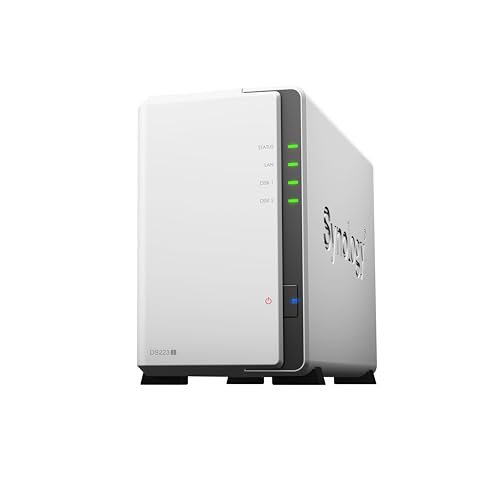
- Private cloud with multi-platform access
- Automated backups for computers and phones
- Supports IP-camera recording and remote viewing
Best For: Households wanting approachable storage and backup tools
Best High-Speed Creator NAS

- 10GbE and Ryzen R2514 for heavy workflows
- RAM expandable from 8GB to 64GB
- Supports Docker, VMs, U.2, and M.2 SSDs
Best For: Creators, freelancers, and smart-home power users
Best DAS Alternative
TerraMaster D2-320 USB RAID Enclosure

- USB 3.2 Gen 2 supports up to 10Gbps
- RAID 0, RAID 1, JBOD, and Single modes
- Up to 44TB with two SATA drives
Best For: Users needing fast local storage rather than a true NAS
Best High-Speed Family NAS

- Four bays and up to 144TB with compatible drives
- 10GbE and 10Gbps USB support fast transfers
- Backups, RAID, Docker, VMs, and AI photo tools
Best For: Families, creators, and small offices needing fast shared storage
Best Simple Backup Hub

- Two-bay diskless enclosure for centralized files
- Automated backups across computers and mobile devices
- Supports collaboration and optional IP-camera monitoring
Best For: Home and office users seeking simple backup management
Best Pro NAS for Virtualization

- Intel Core i3, expandable DDR5 RAM, and dual high-speed networking
- Four bays plus two M.2 slots support flexible storage layouts
- Built for Docker, VMs, developers, and demanding workflows
Best For: IT professionals, developers, and power users
Best Beginner NAS Enclosure

- Two-bay design supports up to 64TB
- Automatic cross-platform device backups
- No Docker or virtual machine support
Best For: Beginners and personal users needing private backups
Best Performance NAS Enclosure

- Dual 10GbE and expandable 8GB RAM
- Supports Docker, VMs, and media servers
- Up to 144TB with multiple storage options
Best For: Creators, power users, and small office teams
Best Family NAS Enclosure

- Four bays support up to 128TB
- AI-powered photo backup and organization
- 2.5GbE, 8GB RAM, and Docker support
Best For: Families and home users with growing media libraries
Best Advanced Home NAS – UGREEN NAS DXP2800
For advanced home users comparing nas enclosures, the UGREEN DXP2800 is a diskless 2-bay option built for centralized backups, media libraries, and heavier applications. Its Intel N100 processor, 8GB DDR5 RAM, 2.5GbE networking, and dual M.2 NVMe slots give it more flexibility than a basic file server.
Best For: Creators, tech enthusiasts, and households managing 4K video, RAW photos, backups, media servers, and multiple NAS apps.
Pros:
- Intel N100 CPU, 8GB DDR5 RAM, and 2.5GbE networking support demanding home workloads.
- Two HDD bays and two M.2 NVMe slots provide up to 80TB of stated storage capacity.
- Supports Docker, virtual machines, Plex-compatible media applications, and local surveillance features.
- Cross-platform access works with Windows, macOS, Android, iOS, browsers, and compatible smart TVs.
Cons:
- Diskless design means compatible HDDs and SSDs must be purchased separately.
- Its advanced features may be more than casual users need.
The DXP2800 is a strong choice when a home NAS needs to handle more than simple file storage. It combines useful expansion options with capable hardware, though buyers should budget for drives and be comfortable with a broader feature set.
Best Simple Private Cloud NAS – Synology DiskStation DS223j
For shoppers seeking straightforward nas enclosures, the Synology DS223j is a diskless 2-bay DiskStation focused on private cloud storage, sharing, syncing, and automated backups. It is designed for multi-platform access and everyday home data management.
Best For: Home users who want private file access, device backups, media sharing, and a basic home security recording system.
Pros:
- Provides private-cloud access with ownership of stored data.
- Supports file sharing and syncing across supported computers and mobile devices.
- Automates backups for Macs, PCs, and mobile devices to multiple destinations.
- Supports multiple IP cameras with remote viewing for home monitoring.
Cons:
- Diskless enclosure requires separate compatible drives.
- The supplied details do not list advanced hardware specifications such as networking speed or memory.
The DS223j makes the most sense for buyers prioritizing an established, approachable private-cloud experience over high-performance workloads. Its 2-bay design and backup features cover common household needs, while the 2-year warranty and ongoing software support add reassurance.
Best High-Speed Creator NAS – UGREEN DXP2800 GT
Among nas enclosures for demanding home workflows, the UGREEN DXP2800 GT stands out with 10GbE networking, an AMD Ryzen Embedded R2514 processor, expandable RAM, and broad SSD support. It is designed for creators, freelancers, smart-home users, and people running self-hosted applications.
Best For: Creators and freelancers moving large files, editing from a NAS, running Docker or virtual machines, and managing smart-home or surveillance data locally.
Pros:
- 10GbE networking targets fast transfers for large photo, video, and backup workloads.
- 8GB DDR4 RAM can be expanded to 64GB.
- Supports Docker, virtual machines, SAN Manager, and self-hosted apps such as Home Assistant.
- Two SATA drives, U.2 NVMe options, and two M.2 SSDs support up to 80TB of stated capacity.
Cons:
- Drives are not included.
- Plex requires Docker and manual setup.
- ECC protection requires a compatible RAM upgrade because the pre-installed memory is non-ECC.
The DXP2800 GT is the performance-oriented pick in this group, particularly for users with compatible 10GbE equipment and demanding applications. Its expansion potential is substantial, but setup and upgrade requirements make it better suited to technically confident buyers.
Best DAS Alternative – TerraMaster D2-320 USB RAID Enclosure
The TerraMaster D2-320 is worth separating from networked nas enclosures: it is a direct-attached USB RAID enclosure, not a NAS. Connected to a Windows, Mac, or Linux computer, it offers two drive bays, hardware RAID modes, and USB 3.2 Gen 2 connectivity for local storage expansion.
Best For: Users who want fast, locally attached storage, drive mirroring, or expanded capacity without running a networked NAS operating system.
Pros:
- USB 3.2 Gen 2 provides up to 10Gbps of interface bandwidth.
- Supports RAID 0, RAID 1, JBOD, and Single modes.
- Accepts two 3.5-inch or 2.5-inch SATA HDDs or SSDs, with up to 44TB stated capacity.
- Tool-free trays and temperature-controlled cooling simplify installation and operation.
Cons:
- It is DAS rather than a networked NAS, so it does not provide standalone network access.
- Diskless design requires separate drives.
- RAID 1 improves redundancy but is not a substitute for an independent backup.
The D2-320 is a practical choice when direct USB storage is the priority. It can deliver high local transfer speeds and flexible RAID configurations, but buyers needing multi-device network access should choose a true NAS instead.
Best High-Speed Family NAS – UGREEN DXP4800 Plus
For families, creators, and small teams comparing nas enclosures, the UGREEN DXP4800 Plus combines four drive bays with fast networking, flexible RAID options, and broad device support. It is a strong fit when centralized storage, backups, remote access, and media or photo management matter more than a basic file server.
Best For: Families, creators, and small offices that need fast shared storage with Docker, virtual machine, and private-cloud features.
Pros:
- Four-bay design supports up to 144TB with compatible drives, which are sold separately.
- 10GbE networking and 10Gbps USB ports support very fast transfers.
- Includes an Intel 5-Core CPU, 8GB DDR5 RAM, 128GB SSD, 4K HDMI, and SD 3.0.
- Supports automatic backups, RAID configurations, encrypted private storage, and AI-powered photo organization.
Cons:
- Hard drives or SSDs are not included.
- Actual transfer speeds depend on the network, drives, CPU, router, and file sizes.
- The models other than the DXP480T Plus use wired Ethernet rather than Wi-Fi.
The DXP4800 Plus is a versatile all-rounder for users who want substantial capacity and high-speed connectivity without moving to a larger rack-style system. Budget separately for compatible drives and wired networking equipment.
Best Simple Backup Hub – Synology DS223
The Synology DS223 is a straightforward two-bay choice among nas enclosures for households and small offices. It centralizes files from computers, phones, and external drives while adding automated backup, file collaboration, and optional IP-camera monitoring.
Best For: Home and office users who prioritize dependable file centralization, automated backups, and an approachable two-bay setup.
Pros:
- Centralizes files from multiple computers, phones, and external drives.
- Supports automated backups for Macs, PCs, and mobile devices to multiple destinations.
- Provides file sharing, synchronization, and version control for collaborative work.
- Can support an IP-camera monitoring setup with motion alerts, schedules, and remote viewing.
Cons:
- It is a diskless enclosure, so storage drives must be purchased separately.
- Two bays provide less expansion room than four-bay alternatives.
- The supplied notes do not specify included storage capacity or networking speeds.
Choose the DS223 when ease of use and backup organization are more important than maximum performance or expansion. Its two-bay format keeps the system compact while still supporting a useful range of home and office tasks.
Best Pro NAS for Virtualization – UGREEN DXP4800 Pro
For demanding workflows, the UGREEN DXP4800 Pro stands out among nas enclosures with a desktop-class Intel processor, expandable memory, dual high-speed networking, and support for Docker and virtual machines. It is designed for developers, video editors, IT professionals, and power users who need more than basic file storage.
Best For: Developers, IT professionals, video editors, and growing teams running virtual machines, containers, and high-throughput storage workflows.
Pros:
- Intel Core i3-1315U processor, 8GB DDR5 RAM expandable to 96GB, and Intel UHD Graphics support demanding multitasking.
- Dual 10GbE and 2.5GbE ports enable transfers of up to 1.25GB/s under suitable conditions.
- Four drive bays and two M.2 PCIe 4.0 slots support up to 144TB, caching, or additional storage pools.
- Offers Docker, virtual machines, RAID 0/1/5/10, on-device AI photo tools, and granular permissions.
Cons:
- Storage drives are not included.
- Its advanced hardware and features may be more than casual home users need.
- Advertised transfer rates require compatible networking, drives, and workloads.
The DXP4800 Pro is the most capable option here for virtualization and sustained, demanding workloads. Its expandable RAM, M.2 support, and dual-network design provide useful headroom, though the added capability makes it a better fit for experienced users.
Best Beginner NAS Enclosure – UGREEN NAS DH2300
The UGREEN NAS DH2300 is a straightforward two-bay NAS enclosure for personal storage, phone backups, photos, and home media. Its 4GB of RAM, 1GbE connection, and beginner-focused design make it a practical step up from scattered external drives or recurring cloud storage fees.
Best For: Beginners, personal users, and content creators who want private file storage and automatic backups without advanced server features.
Pros:
- Supports up to 64TB across two drive bays; storage drives are purchased separately.
- Backs up devices across Windows, macOS, iOS, and Android.
- Includes AI photo organization, duplicate detection, and search tools.
- Offers RAID options, two-factor authentication, permission controls, and encrypted transfers.
Cons:
- Does not support Docker or virtual machines.
- Uses a 1GbE port rather than faster networking found on higher-end models.
- Wi-Fi requires an external USB adapter; wired Ethernet is recommended.
For shoppers comparing nas enclosures, the DH2300 is appealing when ease of use and private backups matter more than application flexibility or maximum network speed. It is a focused entry-level option rather than a platform for demanding self-hosted workloads.
Best Performance NAS Enclosure – UGREEN NAS DXP4800 GT
The UGREEN NAS DXP4800 GT is a high-performance four-bay NAS enclosure built for creators, technical users, and office teams. Its Ryzen Embedded processor, expandable memory, dual 10GbE networking, and support for Docker and virtual machines provide room for demanding storage and self-hosted workflows.
Best For: Creators, media professionals, tech enthusiasts, and small teams handling large files, multiple users, surveillance footage, or self-hosted applications.
Pros:
- Includes a four-core, eight-thread Ryzen Embedded R2514 processor and 8GB DDR4 RAM expandable to 64GB.
- Dual 10GbE ports support high-speed transfers and link aggregation with compatible equipment.
- Supports Docker, virtual machines, Plex, Emby, Jellyfin, Home Assistant, and web hosting workflows.
- Offers SD, USB, HDMI, camera surveillance, and up to 144TB total capacity with compatible drives.
Cons:
- Its advanced features and networking capabilities may be more than basic home users need.
- Full network speeds require compatible 10GbE equipment and cabling.
- Drives are not included and must be purchased separately.
Among these nas enclosures, the DXP4800 GT is the strongest choice for speed, expandability, and application support. It makes the most sense when you can take advantage of fast networking, multiple drive types, and its broader software ecosystem.
Best Family NAS Enclosure – UGREEN NAS DH4300 Plus
The UGREEN NAS DH4300 Plus is a four-bay NAS enclosure for families, home users, and remote workers who need substantial private storage. It combines beginner-friendly setup with automatic phone backups, AI photo albums, Docker support, and a 2.5GbE connection.
Best For: Families with growing photo libraries, remote workers, and home users who want accessible private storage across multiple devices.
Pros:
- Four bays support up to 128TB, with storage disks sold separately.
- Provides real-time photo and video backups plus AI search, recognition, and duplicate removal.
- Offers 8GB LPDDR4X RAM, a 2.5GbE port, and 4K HDMI output.
- Supports Docker while remaining focused on accessible setup across computers, phones, browsers, and smart TVs.
Cons:
- Does not support virtual machines.
- Remote and multi-device access depends on setting up the network and supported apps.
- Its four-bay capacity can be unnecessary for users with modest storage needs.
The DH4300 Plus occupies a useful middle ground in the nas enclosures category: easier to approach than a highly technical server, but roomier and faster than a basic two-bay model. It is a sensible fit for households building a shared photo, media, and backup library.
How We Picked These Nas Enclosures
We selected models across the main use cases buyers face: simple personal backups, family file sharing, media storage, creative workflows, and small-business or power-user deployments. We considered the number of drive bays, expected expandability, software experience, networking, backup capabilities, and whether the enclosure is designed for beginners or more technical users.
Because some products are diskless, remember to budget separately for compatible hard drives or SSDs. A diskless enclosure lets you choose capacity and drive type, but it also requires installation and, in many cases, configuration of storage redundancy.
Quick Comparison
| Best For | Recommended Type | Why |
|---|---|---|
| Personal backups and phone photos | Simple two-bay NAS | Lower cost and easier setup |
| Families and home offices | Two- or four-bay NAS | Shared storage with room to grow |
| Creators and large media libraries | Four-bay performance NAS | More capacity and better expansion |
| Small teams and power users | Advanced four-bay NAS | Higher performance, networking, and management options |
| Direct-attached RAID storage | USB RAID enclosure | Useful when network access and NAS software are not required |
Key Buying Factors for Nas Enclosures
Bay Count and Capacity
Two-bay models are compact and economical, but four-bay Nas Enclosures offer greater usable capacity and more flexible redundancy. If you expect your photo, video, or project archive to grow quickly, paying for extra bays now may be cheaper than replacing the enclosure later.
Drive Compatibility and RAID
Check supported drive sizes, NAS-rated hard-drive recommendations, and the available RAID or redundancy options. RAID can protect against a drive failure, but it is not a substitute for an external or cloud backup. Keep at least one additional copy of irreplaceable data.
Performance and Networking
Creators and offices should check processor performance, memory, network speed, and the number of network ports. Faster networking only helps when your router, switches, computers, and storage drives can support it. For basic document backups, entry-level hardware may be sufficient.
Software and Remote Access
Look for automatic computer and phone backup, user permissions, file synchronization, media-server support, alerts, and secure remote access. A polished operating system can matter as much as raw specifications, particularly for first-time NAS owners.
Noise, Power, and Placement
Hard drives, cooling fans, and busy workloads affect noise. Consider where the enclosure will sit and whether it can run continuously without disturbing a workspace or bedroom. Power-saving schedules and drive sleep settings can also reduce energy use.
Who Should Buy Which Nas Enclosures?
Choose a two-bay beginner model if your priority is straightforward phone, laptop, and household backup. A two-bay home or office unit is a better fit when you need shared folders, basic monitoring, and dependable everyday storage without a large footprint.
Choose a four-bay model if you store video, photographs, games, or growing business files, or if you want more flexibility when configuring redundancy. Creators and small teams should prioritize performance, networking, and user-management features, while IT professionals and power users may prefer the most configurable hardware and software platform.
If you only need local storage connected directly to one computer, a USB RAID enclosure can be simpler and less expensive than a full NAS. For remote access, multiple users, automated backups, and always-available shared files, choose a network-attached model instead.