The best powered studio monitors make it easier to hear detail, balance, and problems in your recordings without relying on exaggerated consumer-speaker tuning. This roundup compares compact desktop models and larger near-field monitors for home studios, production rooms, and critical listening.
We selected options across several budgets and sizes, including popular models from JBL, Yamaha, PreSonus, ADAM Audio, KRK, M-Audio, and Edifier. Use the buying guide below to match monitor size, connectivity, output, and room requirements to your setup.
Best 10 Powered Studio Monitors Picks for 2026
Wide-Sweet-Spot Precision

- Wide imaging with Image Control Waveguide
- Dual 41-watt Class-D amplification
- Room-tuning controls and XLR/TRS inputs
Best For: Music production, podcasting, and cinematic sound design
Mix-Translation Accuracy

- Flat, accuracy-focused monitoring response
- 5-inch nearfield reference monitors
- Two-speaker white bundle with XLR connectivity
Best For: Professional recording and precise mixing
Flexible Nearfield Control
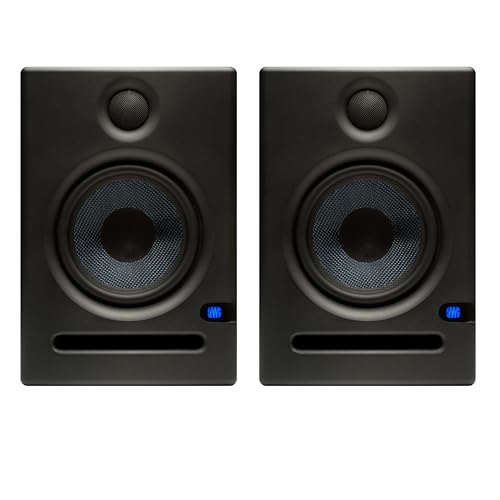
- 80-watt Class AB bi-amplification
- XLR, TRS, and RCA inputs
- Acoustic tuning and front-firing port
Best For: Home studios and flexible professional monitoring
Compact Desktop Detail
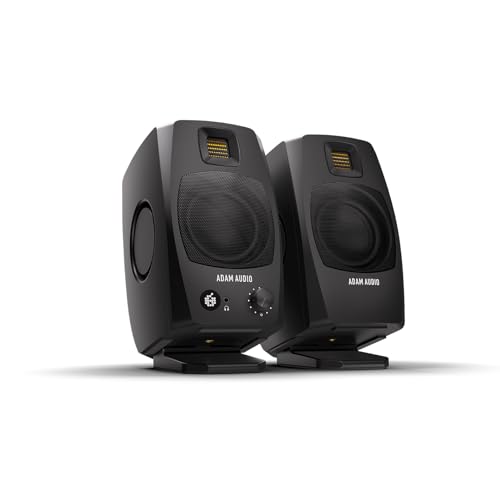
- USB-C desktop connectivity
- D-ART tweeter with 45 Hz extension
- Angled stands and flexible mounting options
Best For: Computer-based production and compact desktop setups
Classic Accuracy
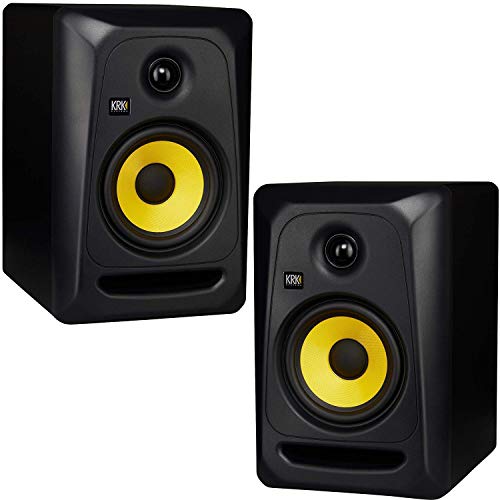
- 5-inch glass-aramid woofer
- 35kHz soft-dome tweeter
- Adjustable low-frequency response
Best For: Versatile home-studio mixing and monitoring
Desktop Flexibility

- 3.5-inch Kevlar woofers
- Multiple analog inputs
- Front headphone access
Best For: Compact desktop production, streaming, and gaming
High-Resolution Versatility
Edifier MR5 2.0 Studio Monitors

- 3-way active crossover
- 110W RMS amplification
- XLR, TRS, Bluetooth, and app control
Best For: Feature-rich near-field monitoring and home audio
Best Compact Pick

- 50 watts of built-in amplification
- TRS, RCA, auxiliary, and headphone connections
- Adjustable high- and low-frequency controls
Best For: Compact desks, multimedia, and entry-level production
Best for Larger Rooms

- 73 watts with a 7-inch active monitor
- Bi-amped Class A/B amplification
- Front-firing port supports flexible placement
Best For: Larger near-field setups and higher-output monitoring
Best Value Features
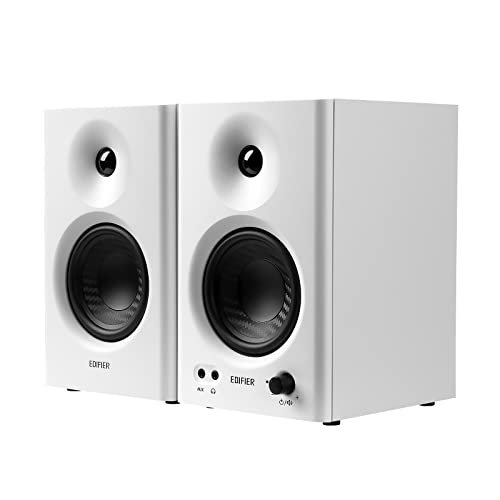
- Near-flat monitor mode for music creation
- Separate music mode for casual listening
- Balanced TRS, RCA, auxiliary, and headphone outputs
Best For: Flexible home production and everyday listening
Wide-Sweet-Spot Precision – JBL 305P MkII Pair
The JBL 305P MkII pair is a practical choice for powered studio monitors when you want clear imaging and flexible room adjustment. Its Image Control Waveguide supports a wide sweet spot, while Boundary EQ and HF Trim help tailor the response to your workspace.
Best For: Music production, podcasting, vloggers, and cinematic sound design in small or mid-sized rooms.
Pros:
- Wide, precise stereo imaging from JBL’s Image Control Waveguide
- Dual 41-watt Class-D amplification with a 5-inch woofer
- Boundary EQ and HF Trim support room-specific adjustments
- XLR and 1/4-inch TRS inputs provide balanced connectivity
Cons:
- Tabletop design may require separate stands or isolation accessories
- Wired AC operation offers no wireless setup
Choose this pair if a broad listening area and adaptable tuning matter more than compact desktop size. The included pair and five-year warranty also make it a well-rounded monitoring setup.
Mix-Translation Accuracy – Yamaha HS5 White Pair
The Yamaha HS5 pair is aimed at buyers seeking powered studio monitors with a concise sound image, high resolution, and a flat response. Its reference-focused design prioritizes hearing mixes as accurately as possible rather than adding coloration.
Best For: Professional recording studios, music production, and accuracy-focused mixing setups.
Pros:
- Designed around a flat, accurate monitoring response
- 5-inch nearfield monitors suit desktop or studio use
- White finish offers an alternative to traditional black monitors
- Pair includes two powered speakers with XLR connectivity
Cons:
- Supplied notes list XLR connectivity but no RCA or TRS inputs
- Accuracy-focused voicing may feel less flattering for casual listening
The HS5 pair is a strong fit when mix translation and dependable reference monitoring are the main priorities. Its straightforward, wired design keeps the focus on evaluating recordings.
Flexible Nearfield Control – PreSonus Eris E5 Pair
The PreSonus Eris E5 pair gives powered studio monitors a useful balance of output, connectivity, and adjustment. Its 5.25-inch woven composite woofer, silk-dome tweeter, and acoustic tuning controls are designed to help mixes translate across different monitoring environments.
Best For: Home studios and professional audio production where flexible connections and room contouring are useful.
Pros:
- 80-watt Class AB bi-amplification provides volume and headroom
- Balanced XLR and 1/4-inch inputs plus unbalanced RCA
- Acoustic tuning controls help adapt the sound to the room
- Front-firing port supports bass-frequency reproduction
Cons:
- Five-and-a-quarter-inch monitors occupy more space than smaller desktop models
- Two-year manufacturer warranty is shorter than some competing options
This pair is especially practical for users who need broad input compatibility and straightforward acoustic adjustment. Protection features and a 102 dB maximum continuous SPL add useful headroom for demanding monitoring sessions.
Compact Desktop Detail – ADAM Audio D3V
The ADAM Audio D3V is a compact powered studio monitor system designed for desks, computers, and mobile-device workflows. USB-C connectivity, angled detachable stands, and a D-ART tweeter make it particularly convenient for producers and songwriters working in limited space.
Best For: Desktop production, songwriting, streaming, gaming, and computer-based listening.
Pros:
- USB-C connectivity supports direct computer and mobile-device connections
- 1.5-inch D-ART tweeter targets precise, unfatiguing highs
- 3.5-inch woofers and passive radiators extend response to 45 Hz
- Includes angled stands, headphone output, and placement-oriented DSP switches
Cons:
- Smaller 3.5-inch woofers may provide less scale than larger studio monitors
- Compact system is primarily optimized for desktop use
The D3V stands out when desk space and modern connectivity are more important than maximum cabinet size. Its mounting options and latest-firmware sleep control add flexibility for longer work or listening sessions.
Classic Accuracy – KRK Rokit 5 G3 Pair
The KRK Rokit 5 Generation 3 pair is a versatile choice among powered studio monitors for music recording, mixing, and mastering. Its 5-inch glass-aramid woofer, soft-dome tweeter, and adjustable low-frequency response are designed to provide clear detail and flexible monitoring in different environments.
Best For: Home studios and creators who want nearfield monitors suited to a range of music styles.
Pros:
- Soft-dome tweeter and optimized waveguide deliver articulate highs up to 35kHz.
- Glass-aramid woofer provides clear midrange and tight bass.
- Adjustable low-frequency setting adds flexibility for mix translation.
- Optional +2dB KRK bass boost provides extra low-end emphasis.
Cons:
- These are corded monitors, so they require a powered setup and suitable placement.
- The 5-inch drivers may provide less low-end scale than larger monitors.
Choose the Rokit 5 G3 if accurate, adaptable nearfield monitoring is your priority. The adjustable low end is particularly useful when your room or listening position varies.
Desktop Flexibility – M-AUDIO BX3 Pair
The M-AUDIO BX3 pair offers an accessible desktop option for powered studio monitors, combining 3.5-inch Kevlar woofers, silk-dome tweeters, and a compact active/passive speaker design. Multiple inputs and front-panel headphone access make this pair practical for computers, gaming, podcasting, streaming, and music production.
Best For: Desktop users who need compact monitors with broad connection options and convenient headphone access.
Pros:
- Kevlar woofers provide a smooth, punchy bass response.
- Silk-dome tweeters support clear highs and stereo imaging.
- 1/4-inch, 1/8-inch, and RCA inputs accommodate varied equipment.
- Rear EQ controls and speaker-position switching allow sound adjustment.
Cons:
- 3.5-inch woofers are less suited to users seeking substantial low-end output.
- The pair uses a wired connection rather than wireless audio.
The BX3 is a practical fit when desk space, connectivity, and everyday versatility matter more than larger-driver output. Included cables and foam feet help simplify setup.
High-Resolution Versatility – Edifier MR5 2.0 Studio Monitors
The Edifier MR5 combines a 3-way active crossover with 110W RMS amplification, making it a flexible option among powered studio monitors for near-field work and broader room listening. Its 5-inch woofer, dedicated midrange driver, room-tuning controls, and extensive wired and wireless connectivity support both studio and home audio use.
Best For: Users who want detailed monitoring with high-resolution wireless audio, room adjustment, and many connection choices.
Pros:
- 3-way design uses a 5-inch woofer, 3.75-inch mid driver, and 1-inch silk-dome tweeter.
- Supports 24-bit/96kHz wired and LDAC wireless audio.
- Rear controls and the EDIFIER ConneX app provide room and EQ adjustments.
- XLR, TRS, RCA, AUX, Bluetooth, and front headphone output offer broad compatibility.
Cons:
- The extensive feature set may be more than needed for a simple monitoring setup.
- The cabinets are larger and heavier than compact desktop monitor pairs.
The MR5 stands out for listeners who need one speaker system to cover studio monitoring, wireless playback, and home audio. Its room-tuning options can help adapt the sound to different spaces.
Best Compact Pick – PreSonus Eris 3.5
The PreSonus Eris 3.5 is a versatile pair of powered studio monitors for compact desks, home studios, gaming setups, and everyday listening. Its 50 watts of built-in amplification, adjustable acoustic controls, and broad input selection make it easy to integrate into a range of desktop systems.
Best For: Small workspaces, multimedia use, entry-level music production, and buyers who want flexible connections.
Pros:
- Sold as a complete stereo pair with 50 watts of built-in amplification.
- 3.5-inch woofers and 1-inch silk-dome tweeters provide balanced, detailed sound.
- Includes TRS, RCA, auxiliary, and front headphone connections.
- High- and low-frequency controls help tailor the sound to the room.
Cons:
- The compact 3.5-inch woofer may not provide the low-end impact of larger monitors.
- These are corded speakers and are not water resistant.
Choose the Eris 3.5 when desk space and connectivity matter as much as monitoring performance. It is a practical all-around option for listeners who need powered studio monitors that can handle both creative work and general media.
Best for Larger Rooms – KRK Classic 7
The KRK Classic 7 is a pair of self-powered studio monitors built around 7-inch drivers and 73 watts of amplification. Its bi-amped Class A/B design, front-firing port, and room-adjustment controls make it a strong choice when you want powered studio monitors with more headroom.
Best For: Music producers and listeners who need larger near-field monitors with flexible placement options.
Pros:
- 73 watts of power and a 7-inch driver support higher output and headroom.
- Custom bi-amped Class A/B amplifiers are matched to the drivers.
- Front-firing ports allow more flexible placement near walls.
- Dedicated low- and high-frequency controls help adapt the response to the room.
Cons:
- The larger 7-inch format may be excessive for a very small desk or room.
- The supplied notes identify this as a corded, tabletop monitor without listing additional connection types.
The Classic 7 stands out for buyers who prioritize output, driver size, and placement flexibility. Its larger enclosure and higher power make it better suited to a more spacious monitoring setup than compact desktop speakers.
Best Value Features – Edifier MR4
The Edifier MR4 combines a near-flat monitor mode with a separate music mode for casual listening. These powered studio monitors use 4-inch composite woofers, 1-inch silk-dome tweeters, MDF construction, and several wired inputs for computers, mixers, tablets, and other source devices.
Best For: Home creators who want an affordable, flexible pair for both production and everyday music.
Pros:
- Near-flat monitor mode is designed for music creation and critical listening.
- Music mode offers a more relaxed option for everyday playback.
- Includes balanced TRS, RCA, auxiliary, and front headphone connections.
- Separate high- and low-frequency controls provide useful adjustment flexibility.
Cons:
- The 42-watt output is lower than the power rating listed for some larger monitors.
- The supplied details list the product as a single item, so confirm the package contents before ordering.
- Its 4-inch woofer is aimed at compact near-field use rather than large-room output.
The MR4 is a sensible choice for buyers who want powered studio monitors that can switch between focused production and relaxed listening. Its input variety and dual-mode design add convenience without requiring separate speaker systems.
How We Picked the Best Powered Studio Monitors
We focused on active, self-powered monitor pairs and monitor systems suited to music production, recording, mixing, editing, and serious desktop listening. The selection covers compact 3.5-inch and 4-inch speakers, versatile 5-inch models, and larger 7-inch monitors for listeners who need more low-end authority. We also considered brand reputation, common studio use, stated power, cabinet size, connectivity, and value.
Because room acoustics and placement strongly affect performance, no single monitor is ideal for everyone. A well-matched smaller speaker can outperform a larger model in a cramped or untreated room.
Quick Comparison
| Monitor size | Best suited to | Main advantage |
|---|---|---|
| 3.5–4 inches | Desks, bedrooms, compact workspaces | Low cost and easy placement |
| 5–5.25 inches | Most home studios | Balanced detail and bass extension |
| 7 inches | Larger rooms and bass-focused work | Higher output and fuller low end |
Key Buying Factors for Powered Studio Monitors
Woofer Size and Room Dimensions
Five-inch monitors are a practical starting point for many home studios. Smaller drivers are easier to place near a wall or on a desk, while 7-inch models can produce more bass and volume but generally need more listening distance and room space.
Accuracy and Frequency Response
Studio monitors should reveal detail rather than simply make music sound pleasant. Look for a controlled response, useful rear-panel adjustments, and enough clarity to identify harshness, muddy low mids, or balance problems. Published frequency ranges are helpful, but they do not replace careful placement and listening.
Inputs, Controls, and Acoustic Adjustment
Check whether the monitor uses balanced TRS or XLR inputs, unbalanced RCA inputs, or a combination. Balanced connections are preferable for longer cable runs and audio interfaces. Room-tuning controls can help compensate for boundary effects, especially when speakers must sit close to walls.
Power, Volume, and Placement
More power is useful for headroom, but maximum volume should not be the deciding factor for a small room. Place the speakers symmetrically, form an equilateral triangle with your listening position, and use isolation pads or stands to reduce desk vibration.
Pair Contents and Accessories
Confirm whether the listing includes two speakers or only one. Some products include cables, while others require separate balanced cables, stands, isolation pads, or a subwoofer. Budget for these essentials when comparing prices.
Who Should Buy Which Powered Studio Monitors?
Choose Compact Monitors for Desktop Production
Three- and four-inch models are a sensible choice for beginners, bedroom producers, podcasters, and listeners working close to a desk. They conserve space and can reduce excessive bass buildup in small rooms.
Choose 5-Inch Monitors for the Best All-Around Balance
Five-inch Powered Studio Monitors suit most home recording setups. They offer a useful combination of midrange detail, manageable bass, and sufficient output for near-field listening without requiring a large control room.
Choose Larger Monitors for Spacious Rooms and Low-End Work
Seven-inch models make more sense when you have adequate listening distance, careful placement, and a room that can handle stronger bass. They are particularly useful for electronic music, beat production, and arrangements where low-frequency decisions matter.
Consider a Subwoofer Only After Fixing Placement
A subwoofer can extend the lowest frequencies, but it may make an untreated room harder to manage. Start with correctly positioned monitors, basic acoustic treatment, and reliable reference tracks before adding one.