Choosing among high-end studio monitors over $2,000 means looking beyond size and wattage. Accuracy, room compatibility, imaging, bass extension, and calibration features all influence whether a monitor will genuinely improve your decisions.
This roundup compares premium nearfield and professional monitoring options for engineers, producers, and serious home-studio owners who need dependable translation and long-term value.
Best 10 High End Studio Monitors Over 2000 Picks for 2026
Flagship DSP Precision

- Three-way monitor with aluminum-cone drivers
- DSP with patented SPOC technology
- Four MEME speaker-emulation models
Best For: Professional mixing, mastering, and reference-focused studios
Three-Way Midfield Reference

- Powered three-way monitor design
- 8.25-inch LF driver with 3-inch midrange
- LF, MF, and HF acoustic controls
Best For: Professional recording, post-production, and broadcast studios
Wide-Dispersion Dynamics
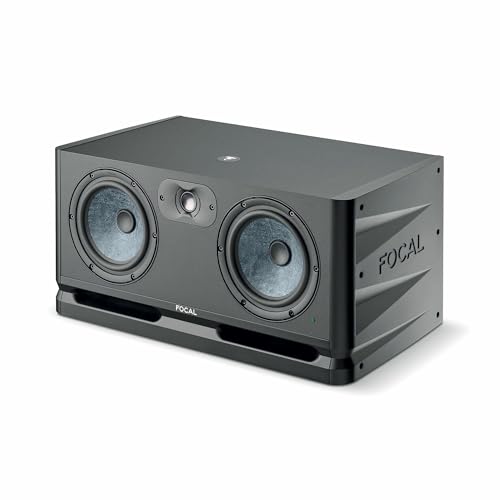
- Active 2.5-channel monitor design
- Wide dispersion for room-wide consistency
- XLR, TRS, and RCA inputs
Best For: Professional rooms with multiple listening positions and sources
Compact DSP Reference

- 5.25-inch woofer and 1-inch tweeter
- Bi-amped 80W LF and 80W HF
- Integrated DSP engine
Best For: Desktop studios, nearfield monitoring, and multichannel setups
Bass-Forward Value

- 8-inch woofer reaches 33 Hz
- U-ART tweeter extends to 25 kHz
- Wide HPS Waveguide sweet spot
Best For: Bass-heavy production and film scoring
Portable Reference Choice
IK Multimedia iLoud Micro Monitor Pro

- Compact pair with integrated stands
- ARC room calibration with mic included
- 100W output and 42 Hz response
Best For: Mobile production and compact studios
Coaxial Precision Pick

- Three-way coaxial design for precise imaging
- 8-inch woofer with extended low end
- 140W tri-amplified power and flexible inputs
Best For: Professional full-range monitoring and flexible studio setups
Room-Tuning Workhorse

- Sold as a powered stereo pair
- 25 boundary and tuning EQ combinations
- 8-inch woven Kevlar woofer
Best For: Recording and mixing in acoustically variable rooms
Balanced Studio Classic

- Includes two powered near-field monitors
- Uncolored presentation for production work
- 70W bi-amplified design with XLR and TRS
Best For: Compact music-production and studio-monitoring setups
Flagship DSP Precision – Barefoot Footprint03
For listeners comparing high end studio monitors over 2000, the Barefoot Footprint03 stands out as a powerful three-way design with DSP processing and built-in secondary-reference tools. Its 260 watts per monitor and professional XLR connectivity make it suited to demanding studio monitoring.
Best For: Professional mixing, mastering, and producers who want multiple reference perspectives from one monitor system.
Pros:
- Three-way design with 6.5-inch woofer, 3.5-inch midrange, and dual-radiator tweeter.
- DSP with patented SPOC technology is designed to support resolution and accuracy.
- MEME technology provides four speaker-emulation models and includes its controller and cable kit.
- 260 watts of power per monitor and XLR connectivity.
Cons:
- The stereo pair weighs 50.5 pounds.
- Its advanced features may be more than a basic desktop setup requires.
The Footprint03 is a feature-rich choice when precision, output, and alternate monitoring references matter. Its three-way architecture and DSP platform make it especially compelling for serious studio work.
Three-Way Midfield Reference – Neumann KH 310
The Neumann KH 310 is a powered three-way monitor for buyers seeking high end studio monitors over 2000 in a professional recording, post-production, or broadcast environment. This listing is for the right-side monitor, so a complete stereo setup requires the matching left-side unit.
Best For: Professional studios needing a high-output three-way midfield monitor with adjustable acoustic controls.
Pros:
- Three-way active design with an 8.25-inch LF driver, 3-inch MF driver, and 1-inch HF driver.
- LF, MF, and HF acoustical controls allow system adjustment.
- 150 watts of speaker power and balanced XLR input.
- Specified for recording, music production, post-production, and broadcasting.
Cons:
- This product is the right-channel monitor only.
- The 35.4-pound cabinet and large dimensions need appropriate placement space.
- Wireless features listed in the specifications should not replace its primary XLR connection for studio use.
The KH 310 is best considered a serious studio monitor component rather than a complete pair. Its three-way driver layout and acoustic controls make it a practical option for larger professional monitoring systems.
Wide-Dispersion Dynamics – Focal Alpha-Twin-EVO
The Focal Alpha-Twin-EVO is a strong contender among high end studio monitors over 2000 for studios that need broad listening coverage and flexible connectivity. Its 2.5-channel active design combines dual 6.5-inch drivers with a 1-inch tweeter and supports three audio sources.
Best For: Professional studios needing wide dispersion, consistent tonal balance, and multiple input options.
Pros:
- Wide dispersion helps maintain a consistent sound across the room.
- Slatefiber cones are manufactured in France and designed for neutrality and low distortion.
- Identical tonal balance is specified at both low and high volume.
- Offers XLR, TRS, and RCA connectivity for up to three audio sources.
Cons:
- The 21.65-inch height may require careful stand or desk placement.
- At 26.9 pounds per listed unit, it is not a lightweight monitor.
- The listing is for one monitor, not a stereo pair.
Choose the Alpha-Twin-EVO when room-wide consistency and connection flexibility are priorities. Its driver layout and wide-dispersion design make it especially useful where several listening positions need a dependable presentation.
Compact DSP Reference – Neumann KH 120 II
The Neumann KH 120 II offers a compact route into high end studio monitors over 2000, pairing a 5.25-inch woofer and 1-inch tweeter with bi-amplification and a DSP engine. Its smaller footprint suits desktop audio, music production, broadcasting, and multichannel setups.
Best For: Desktop studios, nearfield monitoring, and multichannel systems where space is limited.
Pros:
- Reference-class monitor with a 5.25-inch woofer and 1-inch tweeter.
- Bi-amped power allocation provides 80 watts for LF and 80 watts for HF.
- Integrated DSP engine supports controlled studio monitoring.
- Suitable for desktop audio, music production, broadcasting, and multichannel setups.
Cons:
- The 5.25-inch woofer is less substantial than the drivers in larger monitors.
- The listing is for a speaker only rather than a stereo pair.
- The listed connectivity is a combo jack, so users should verify interface compatibility.
The KH 120 II is a sensible fit when accurate monitoring features are needed without moving to a large cabinet. Its DSP engine and bi-amped design give compact workspaces a capable professional monitoring option.
Bass-Forward Value – ADAM Audio T8V
For buyers comparing high end studio monitors over 2000, the ADAM Audio T8V stands out as a practical option for bass-heavy production. Its 8-inch woofer reaches down to 33 Hz, while the U-ART tweeter and HPS Waveguide are designed to preserve high-frequency clarity and provide a wider sweet spot.
Best For: EDM, hip-hop, film scoring, mixing, and producers who want extended low-end response.
Pros:
- 8-inch woofer delivers bass extension down to 33 Hz.
- U-ART tweeter reaches up to 25 kHz for detailed highs.
- HPS Waveguide creates a more controlled, wider listening area.
- Includes XLR, 1/4-inch TRS, and RCA connectivity.
Cons:
- Its larger 8-inch cabinet requires more desk or stand space.
- This listing is for one monitor, so a stereo setup requires two units.
The T8V is a sensible choice when low-frequency reach matters more than compact size. It offers useful studio features and broad connectivity for desktop production, mixing, and mastering.
Precision Alignment Bundle – Neumann KH 120 MKII
For shoppers seeking high end studio monitors over 2000 in a compact format, this Neumann KH 120 MKII bundle pairs reference-class 5.25-inch monitors with DSP and the MA 1 monitor alignment microphone. Bi-amped 80-watt LF and HF sections support detailed nearfield monitoring, while the included isolation pads help complete the setup.
Best For: Professional audio engineering, music production, and accurate nearfield monitoring.
Pros:
- Includes a matched pair of KH 120 MKII monitors.
- DSP engine and MA 1 microphone support monitor alignment.
- Bi-amped design provides 80 watts for both LF and HF sections.
- Includes two Auray IP-S isolation pads.
Cons:
- The 5.25-inch woofer has less low-frequency reach than larger monitors.
- At 44 Hz, its listed frequency response may not suit users needing deep sub-bass.
This bundle is particularly compelling for users who want a calibrated, compact monitoring system rather than simply a pair of speakers. The alignment tools add practical value for achieving more consistent room performance.
Portable Reference Choice – IK Multimedia iLoud Micro Monitor Pro
Among high end studio monitors over 2000, the IK Multimedia iLoud Micro Monitor Pro is aimed at creators who need a compact system they can move easily. The pair uses custom drivers, 100 watts of Class D amplification, ARC room calibration with an included microphone, and X-Monitor software for checking mixes across virtual playback systems.
Best For: Mobile producers, compact studios, and creators who need calibrated monitoring in different locations.
Pros:
- Compact, lightweight pair with integrated stands.
- ARC calibration helps tune the monitors to the room.
- Reaches down to 42 Hz with a listed 95 dB maximum SPL.
- Includes X-Monitor software for virtual playback-system checks.
Cons:
- 3-inch drivers cannot provide the same physical scale as larger studio monitors.
- Its 42 Hz low-end specification may not satisfy deep-sub-bass-focused work.
The iLoud Micro Monitor Pro prioritizes portability and setup flexibility without omitting useful calibration tools. It is a strong fit for small workspaces or producers who need to take a reference system on the road.
Coaxial Precision Pick – Kali Audio IN-8 V2
For listeners seeking high end studio monitors over 2000, the Kali Audio IN-8 V2 emphasizes accurate imaging, extended bass, and flexible room placement in a single 8-inch monitor. Its three-way coaxial design and 140W tri-amplification make it a practical choice for detailed professional monitoring.
Best For: Professional audio production, full-range monitoring, and setups that benefit from flexible placement.
Pros:
- Three-way coaxial design supports precise imaging and phase coherence.
- 8-inch woofer provides extended low-frequency response and punchy bass.
- 140W tri-amplified system offers high headroom and low distortion.
- XLR, TRS, and RCA inputs plus boundary compensation support varied setups.
Cons:
- Sold as a single monitor, so stereo setups require two units.
- Its 8-inch cabinet may require more desk or floor space than smaller monitors.
The IN-8 V2 is a strong fit when accuracy, bass extension, and installation flexibility matter more than compact size. Its room-tuning features and broad input selection make it adaptable across professional and home studio environments.
Room-Tuning Workhorse – KRK RP8G5 ROKIT 8
For buyers comparing high end studio monitors over 2000, the KRK RP8G5 ROKIT 8 pair combines an 8-inch woven Kevlar woofer with extensive acoustic tuning options. The pair is designed for recording and mixing environments where low-frequency control, stereo imaging, and setup flexibility are priorities.
Best For: Professional recording and mixing, especially in rooms needing boundary and EQ adjustment.
Pros:
- Includes a pair of 8-inch powered monitors for stereo operation.
- Offers 25 boundary and tuning EQ combinations for acoustic adjustment.
- Woven Kevlar woofer supports tight low and low-mid performance.
- Low-diffraction baffle and included foam wedges support stereo imaging and positioning.
Cons:
- The 8-inch pair has a substantial footprint for smaller workspaces.
- Connectivity is centered on XLR and 1/4-inch TRS combo analog inputs.
The RP8G5 is a practical choice for users who want a matched stereo pair with unusually broad room-tuning options. Its included isolation wedges and low-diffraction design further support a careful monitoring setup.
Balanced Studio Classic – Yamaha HS5 Pair
For shoppers evaluating high end studio monitors over 2000, the Yamaha HS5 pair offers a focused near-field monitoring setup built around sonic purity. Its 5-inch woofer, 1-inch dome tweeter, and bi-amplified design are suited to music production and studio monitoring where an uncolored presentation is useful.
Best For: Music production, near-field studio monitoring, and listeners who want an uncolored presentation.
Pros:
- Includes two Yamaha HS5 powered studio monitors.
- Designed to emphasize the original sound without coloring or alteration.
- Bi-amplified 70W system combines 45W LF and 25W HF amplification.
- XLR and TRS inputs accept balanced or unbalanced signals.
Cons:
- 5-inch woofers provide less low-end reach than the 8-inch alternatives here.
- The supplied frequency response begins at 54Hz, which may not suit bass-heavy monitoring alone.
The HS5 pair is a sensible option for compact near-field workspaces and straightforward production setups. It prioritizes a clean, uncolored sound over the deeper bass extension and larger output potential of the bigger monitors.
How We Picked the Best High End Studio Monitors Over 2000
We selected monitors based on engineering relevance, published specifications, design features, connectivity, calibration support, and suitability for demanding production environments. The list includes compact nearfields, larger three-way systems, coaxial designs, portable references, and more accessible models that can complement a premium setup.
Because monitor performance depends heavily on room placement and acoustics, we considered practical flexibility as well as raw output. Features such as DSP, boundary controls, dedicated midrange drivers, stereo imaging, and included alignment tools can matter as much as maximum volume.
Quick Comparison
| Best For | Look For | Why It Matters |
|---|---|---|
| Mixing and mastering | Neutral response and controlled dispersion | Supports reliable tonal decisions |
| Large or treated rooms | Three-way designs and higher headroom | Improves detail and low-frequency authority |
| Small studios | Compact cabinets and DSP adjustment | Makes placement and room correction easier |
| Portable or secondary setups | Small footprint and flexible connectivity | Useful for mobile work and alternate references |
Key Buying Factors for High-End Studio Monitors Over 2000
Room Size and Placement
Match monitor output and bass extension to the room, not just your ambitions. Larger speakers can overwhelm untreated spaces, while compact models may be more accurate and easier to position in a small control room. Leave clearance from walls and use isolation when appropriate.
Driver Configuration and Dispersion
Two-way monitors can deliver excellent nearfield results, but three-way and coaxial designs may provide more dedicated midrange detail and smoother driver integration. Controlled dispersion can also reduce reflections and make the listening position more predictable.
DSP, Calibration, and Controls
DSP adjustment, boundary filters, and automated alignment can help compensate for placement and room behavior. These tools are valuable, but they do not replace acoustic treatment, symmetrical positioning, or careful level matching.
Connections and System Matching
Check whether the monitor accepts the outputs from your interface or monitor controller. Balanced XLR or TRS inputs are generally preferable in studio environments. Also consider sensitivity, maximum SPL, low-end extension, and whether you need a subwoofer later.
Who Should Buy Which High End Studio Monitors Over 2000?
Choose a premium three-way monitor when you work in a properly treated room, need strong midrange resolution, and regularly mix at professional levels. A compact DSP-equipped model is usually the smarter choice for a smaller room or desktop-oriented setup. Coaxial monitors suit listeners who prioritize a coherent point-source image, while portable or compact systems work well as secondary references.
Models with calibration accessories or extensive onboard adjustment are especially practical for users who want a repeatable setup without adding a separate correction system. More affordable options in this selection can serve as reliable nearfields or alternate references, but buyers should prioritize room compatibility over prestige or maximum wattage.
Before purchasing, measure your listening distance, review the manufacturer’s recommended placement, and budget for stands, isolation, cables, and acoustic treatment. The best high-end studio monitors over 2000 are the ones that produce trustworthy decisions in your actual room.