Choosing the right audio can make VR worlds feel far more believable. The best spatial audio headphones for VR help you hear direction, distance, and detail with clarity, which can improve immersion in games, social apps, and 360-degree media.
This roundup focuses on practical picks for different headsets, budgets, and comfort preferences, so you can find the right balance of sound quality, fit, and compatibility.
Best 10 Spatial Audio Headphones for Vr Picks for 2026
Editor’s Pick
final VR2000 Immersive 3D Live Sound Headphones

- Fast-response directional sound for gaming
- Redesigned driver focused on sound quality
- Comfort-oriented in-ear fit with ear hooks
Best For: VR gamers who want quick positional audio in a compact in-ear design
Most Versatile
SteelSeries Arctis 3 All-Platform VR Headset

- Works with VR, PC, consoles, and mobile
- ClearCast mic with background noise cancellation
- Comfortable over-ear design for long play
Best For: Gamers who need one headset for VR and everyday gaming across platforms
Best Quest 3 Accessory
AMVR Noise-Isolating Earphones for Meta Quest 3
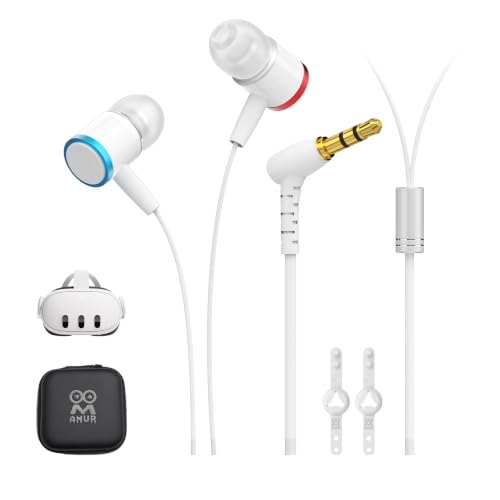
- Designed specifically for Meta Quest 3
- Includes strap holders and multiple ear tips
- Noise-isolating in-ear fit for immersion
Best For: Meta Quest 3 owners who want a secure in-ear audio accessory
Best Focused Soundstage

- Strong 3D audio localization and object separation
- Focused soundstage for controlled listening
- Adjustable earcups with built-in mic
Best For: Gamers who want a tighter soundstage and precise audio placement
Noise-Isolating Quest 2 Earbuds
Custom Made for Meta Quest 2 VR Headset

- 10mm neodymium drivers with clear, punchy sound
- 360-degree surround-style left/right calibration
- Includes silicone holders and S/M/L ear tips
Best For: Quest 2 users who want compact, isolating earbuds
Spatial Gaming Earphone Pick
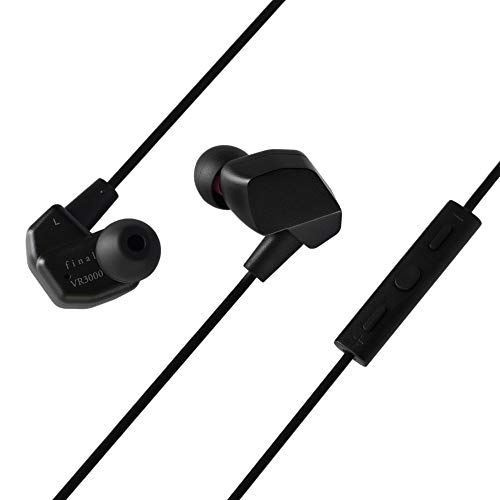
- Spatial tuning for VR and open-world games
- 6mm dynamic driver for precise sound
- Earhooks reduce cable friction noise
Best For: VR gamers who want directional, spacious earphone sound
Off-Ear VR Audio Choice
VR Ears Headphones for Quest 2

- Off-ear design avoids pressure on the ears
- Compatible with Quest, Quest 2, Rift S, and more
- Lightweight build with easy installation
Best For: Players who want comfortable off-ear VR sound
Budget-Friendly Spatial Audio Pick

- Windows Sonic Spatial Sound compatible
- 50mm drivers with JBL QuantumSOUND
- Lightweight comfort with memory foam
Best For: VR gamers who want a simple wired headset
Immersive Surround Sound Upgrade

- JBL Quantum Surround sound technology
- VR and multi-platform compatible
- Echo-cancelling boom mic
Best For: Players who want surround-style immersion in VR
Comfort-Focused Cross-Platform Choice

- Windows Sonic spatial sound compatible
- Detachable mic with mute option
- Memory foam comfort for long sessions
Best For: Budget VR players who want simple wired compatibility
Editor’s Pick – final VR2000 Immersive 3D Live Sound Headphones
If you want spatial audio headphones for vr that focus on fast sound response and positional cues, the final VR2000 is built around exactly that use case. It uses a redesigned F-CORE DU driver and a fit-first ear tip design to help keep audio clear, directional, and comfortable during long sessions.
Best For: VR players who want quick sound localization for FPS, rhythm games, and immersive 360 audio.
Pros:
- Designed for fast reaction and directional sound in gaming
- Redesigned F-CORE DU driver for improved sound quality
- Comfort-focused ear tips and housing aim for a pressure-free fit
- Includes built-in mic and controls for convenience
Cons:
- Wired 3.5 mm connection only
- In-ear design may not suit buyers who prefer over-ear headsets
Overall, the VR2000 is the most specialized pick here if your priority is precise directional audio over general-purpose features. It is especially appealing for users who care about quick in-game cues and a compact, lightweight design.
Most Versatile – SteelSeries Arctis 3 All-Platform VR Headset
For shoppers comparing spatial audio headphones for vr across multiple devices, the SteelSeries Arctis 3 stands out for broad compatibility and a comfortable over-ear fit. It is designed to work with VR, PC, consoles, and mobile, while also offering Windows Sonic spatial audio support on compatible systems.
Best For: Multi-device gamers who want one wired headset for VR, console, and PC use.
Pros:
- Compatible with VR plus PC, PlayStation, Xbox One, Switch, Android, and iOS
- ClearCast microphone is noted for voice clarity and noise cancellation
- S1 drivers are tuned for low-distortion audio detail
- AirWeave ear cushions are made for cooler long-session comfort
Cons:
- Spatial audio support is system-dependent
- Wired setup may be less convenient than wireless options
In practical terms, this is the most flexible option in the group if your headset needs to move between VR and non-VR devices. It prioritizes compatibility, comfort, and voice quality more than specialized VR-only tuning.
Best Quest 3 Accessory – AMVR Noise-Isolating Earphones for Meta Quest 3
If you need spatial audio headphones for vr built specifically around Meta Quest 3, this AMVR set is purpose-made for that platform. It combines noise-isolating in-ear audio with strap holders and multiple ear tip sizes to help the earbuds stay secure while improving immersion.
Best For: Meta Quest 3 users who want a secure, accessory-friendly in-ear solution with isolation.
Pros:
- Made specifically for Meta Quest 3 compatibility
- Noise-isolating earbud caps help create an in-ear seal
- Includes silicone holders and S/M/L replacement caps
- Lightweight build with aluminum alloy and TPE materials
Cons:
- Wired cables may feel limiting for some users
- Only works with Meta Quest 3, not a broad multi-device pick
This is the most accessory-specific option in the roundup, and that’s its biggest strength. If you want a cleaner Quest 3 setup with practical fit aids and a focus on 360-degree surround-style immersion, it makes a strong case.
Best Focused Soundstage – VR500 for Gaming
The VR500 is aimed at listeners who want spatial audio headphones for vr with a tighter, more controlled sound image. According to the supplied notes, it emphasizes 3D audio localization, object separation, and a swing-fit adjustable earcup design to help maintain clear directional audio.
Best For: Players who want a focused soundstage and strong object separation for VR and gaming.
Pros:
- Enhanced 3D audio localization for directional listening
- Focused, controlled soundstage compared with the VR3000
- Adjustable earcups aim to improve fit and reduce distortion
- Integrated microphone and one-button controller add convenience
Cons:
- Product details are sparse compared with other models
- Over-ear design may not appeal to buyers seeking in-ear isolation
The VR500 is the most specialized choice for users who care about pinpoint placement and separation of individual sounds. If you want a more contained audio image rather than a broad presentation, this model is worth a close look.
Noise-Isolating Quest 2 Earbuds – Custom Made for Meta Quest 2 VR Headset
If you want spatial audio headphones for vr that stay lightweight and direct the sound straight into your ears, the AMVR earbuds are built for Meta Quest 2 users who prefer an in-ear setup. The 10mm dynamic drivers, noise-isolating fit, and left/right calibration are aimed at giving games a more immersive 3D sound feel without adding much bulk.
Best For: Quest 2 players who want compact, noise-isolating earbuds with easy storage.
Pros:
- 10mm neodymium drivers for clear highs, mid-tones, and strong bass
- Left/right mono calibration for 360-degree surround-style 3D sound
- Includes silicone holders plus S/M/L ear tips for fit and storage
- Light 20 g build with short custom cable lengths to reduce snagging
Cons:
- Made specifically for Oculus/Meta Quest 2-style use, so compatibility is narrower
- In-ear design may not suit users who dislike earbud pressure
- Wired 3.5 mm connection limits mobility compared with wireless options
Overall, this is a practical VR audio add-on for players who value isolation and a tidy, headset-friendly design. It prioritizes immersion and comfort accessories over extra features, which makes it a straightforward pick for Quest 2 sessions.
Spatial Gaming Earphone Pick – VR3000 Gaming Earphones
For shoppers comparing spatial audio headphones for vr, the Final VR3000 focuses on directional sound and a spacious presentation for open-world and VR environments. Its 6mm dynamic driver, sound-isolating fit, and earhooks are designed to keep game audio clear while reducing cable friction noise during play.
Best For: VR gamers who want directional sound and a more open-feeling earphone tuning.
Pros:
- Spatial gaming sound tuned for VR and open-world environments
- 6mm high-fidelity dynamic driver for precise sound delivery
- Earhooks with locking mechanism help reduce microphonic cable noise
- Five pairs of silicone eartips for fit and noise isolation
Cons:
- Wired 3.5 mm design may not suit users looking for wireless convenience
- In-ear form factor may not appeal to everyone for long sessions
- Built-in microphone is useful, but this is still a gaming earphone first
This is a strong option if your priority is directional accuracy and a spacious gaming sound profile rather than a bulky headset. The included comfort and isolation features make it a sensible choice for focused VR play.
Off-Ear VR Audio Choice – VR Ears Headphones for Quest 2
If you want spatial audio headphones for vr without putting anything in your ears, the Rebuff Reality VR Ears use an off-ear design that concentrates sound directly toward you. They are aimed at Quest 2 and other VR headsets, with easy installation, lightweight materials, and a custom-length cable setup for a more comfortable long-session experience.
Best For: VR users who prefer off-ear audio and long-wear comfort.
Pros:
- Off-ear design avoids ear pressure during long play sessions
- Helps reduce outside noise and channel sound more directly to the ears
- Compatible with many VR headsets, including Quest, Quest 2, and Rift S
- Lightweight and easy to install or remove in minutes
Cons:
- At 218 g, it is heavier than in-ear alternatives
- Requires a 3.5 mm jack connection and setup attention
- Sound is directed off-ear, so users seeking deep isolation may prefer earbuds
These are a good fit if you want VR audio that stays comfortable over time and keeps your ears uncovered. The design leans into convenience and all-day wearability more than maximum portability.
Budget-Friendly Spatial Audio Pick – JBL Quantum 200
If you want spatial audio headphones for vr without overcomplicating the setup, the JBL Quantum 200 is a straightforward wired option. It supports Windows Sonic Spatial Sound on Windows 10 and Xbox One, and its 3.5 mm connection makes it easy to use across PC, PlayStation, Xbox, Nintendo Switch, mobile, Mac, and VR.
Best For: VR players who want a simple, cross-platform wired headset with spatial sound compatibility.
Pros:
- Compatible with Windows Sonic Spatial Sound for supported VR and console setups
- 50mm drivers and JBL QuantumSOUND Signature aim for an immersive soundscape
- Memory foam ear cushions and a lightweight build suit longer sessions
- Flip-up directional mic with auto on/off and mute features
Cons:
- No wireless option
- Spatial sound support is tied to compatible Windows 10 or Xbox One systems
Overall, the Quantum 200 is a practical pick if you mainly care about wired simplicity, comfort, and spatial audio compatibility rather than premium extras. It keeps the feature set focused on gaming and VR readiness.
Immersive Surround Sound Upgrade – JBL Quantum 300
JBL Quantum 300 - Wired Over-Ear Gaming Headphones with JBL Quantum Engine Software - Black, Large
Check Price On AmazonThe JBL Quantum 300 is a strong option for spatial audio headphones for vr if you want wired convenience with more emphasis on immersive directionality. It features JBL Quantum Surround sound technology and comes with 3.5 mm plus USB adapter connections, making it compatible with PC, Mac, Xbox, PS4, Nintendo Switch, mobile, and VR.
Best For: VR users who want a wired headset with surround sound tuning and broad platform support.
Pros:
- JBL Quantum Surround sound is designed for immersive gaming audio
- Works with VR and multiple gaming platforms
- Echo-cancelling boom mic helps voice chat stay clear
- Memory foam ear cushions with soft PU leather support marathon sessions
Cons:
- Wired design may limit movement in VR
- Bulky over-ear build may not suit every user
If you want a headset that leans more into surround-style immersion than basic chat audio, the Quantum 300 fits well. It is especially appealing for gamers who move between VR and traditional consoles or PC.
Comfort-Focused Cross-Platform Choice – JBL Quantum 100M2
The JBL Quantum 100M2 is an easy pick for spatial audio headphones for vr when you want a wired headset that stays simple. It supports Windows Sonic spatial sound on Windows 10 PCs and Xbox One, and the single 3.5 mm jack works with PC, PlayStation, Xbox, Nintendo Switch, mobile, Mac, and VR.
Best For: Budget-minded VR players who want comfort, cross-platform support, and spatial sound compatibility.
Pros:
- Windows Sonic spatial sound compatibility for supported systems
- Detachable directional microphone with mute option
- Fabric-covered memory foam ear cushions for comfort
- Wide 3.5 mm cross-platform compatibility, including VR
Cons:
- No wireless connectivity
- No dedicated noise control feature listed
For players who want a practical headset that covers the essentials, the Quantum 100M2 is easy to recommend. It balances comfort, broad device support, and spatial sound compatibility without adding complexity.
How We Picked the Best Spatial Audio Headphones for Vr
We prioritized spatial cues, comfort for long sessions, microphone quality, connection type, and broad compatibility with popular VR headsets and gaming platforms. We also looked for models that suit different use cases, from compact in-ear designs to over-ear headsets for roomier sound.
Quick Comparison
If you want a simple starting point, think in terms of fit and use case: in-ear models are usually lighter and easier to wear with head straps, while over-ear models tend to offer fuller sound and stronger passive isolation. For wireless convenience, some users will prefer VR-specific designs, but wired options still remain the safest bet for low latency and consistent audio.
Key Buying Factors for Spatial Audio Headphones for Vr
Positional Accuracy
Look for headphones that preserve directional detail without smearing footsteps, dialogue, or ambient effects. For Spatial Audio Headphones for Vr, clarity in the midrange and treble often matters more than heavy bass.
Comfort and Headset Compatibility
VR sessions can run long, so weight, clamp force, and ear-tip or ear-cup design matter. Check whether the headphone shape works well with your specific headset, especially around straps, facial interfaces, and side-mounted hardware.
Latency and Connection
Wired 3.5 mm or USB connections usually provide the most reliable low-latency performance. If you want plug-and-play simplicity, confirm the cable length and connector style before buying.
Mic and Controls
If you use VR chat or multiplayer games, a clear mic and easy-access volume controls are worth prioritizing. Inline controls can be especially convenient when you do not want to remove the headset.
Isolation and Sound Profile
Better noise isolation can help block room distractions and make positional audio easier to perceive. Some users prefer stronger bass for games and movies, while others want a more neutral tuning for accuracy.
Who Should Buy Which Spatial Audio Headphones for Vr?
Choose in-ear options if you want the lightest fit and the least interference with your headset. Choose over-ear models if you want comfort, broader sound, and stronger isolation for longer sessions. If you play across multiple devices, pick a headset with broad platform support and a simple wired connection. For the most immersive spatial experience, the best choice is the one that matches your headset, your session length, and your preference for portability versus full-size comfort.