Choosing studio monitors with subwoofer output makes it easier to extend low-end response without replacing your entire monitoring setup. The right combination can deliver deeper bass while preserving the detail needed for mixing and critical listening.
We’ve gathered 10 monitor and subwoofer options ranging from compact desktop pairs to dedicated 8- and 10-inch studio subs. Use the guide below to compare connectivity, room fit, power, and setup requirements before you buy.
Best 10 Studio Monitors with Subwoofer Output Picks for 2026
Complete 2.1 Starter Bundle

- Includes monitors, subwoofer, cable, and remote
- 3.5-inch monitors with tone and placement controls
- 8-inch Bluetooth subwoofer with adjustable crossover
Best For: Compact music, gaming, and casual-listening setups
Professional Low-End Extension
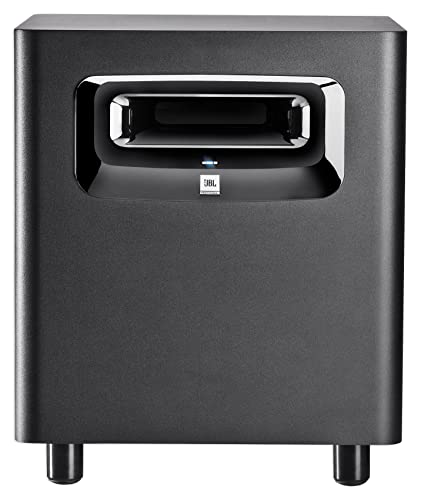
- 10-inch driver reaches into the 20Hz region
- Balanced XLR and TRS connectivity
- XLF mode adds club-style bass tuning
Best For: Professional studios and surround LFE applications
Flexible Wireless Bass Upgrade

- 100 watts with bass down to 30Hz
- Bluetooth 5.0 plus TRS, RCA, and aux inputs
- Adjustable crossover and room-tuning controls
Best For: Versatile home production and multimedia systems
High-Power Studio Integration

- 150-watt amplifier with an 8-inch driver
- 22Hz–150Hz specified frequency response
- Adjustable filters and phase switch
Best For: Recording and live-music monitoring systems
Best Balanced Monitor Pair

- Wide sweet spot with precise imaging
- Room-tuning EQ controls
- XLR and TRS inputs
Best For: Producers building a flexible compact monitoring system
Best Dedicated Bass Upgrade

- 8-inch woofer reaches down to 30Hz
- Front-firing port aids placement
- Footswitch-ready crossover bypass
Best For: Studios adding powerful low-frequency extension
Best Compact Value Pair

- Compact 4.5-inch monitor pair
- TRS, RCA, and auxiliary inputs
- Compatible with Eris Sub 8BT
Best For: Desktop setups and small production spaces
Deep Bass Upgrade

- Made for CR Series monitors with TRS or RCA
- Adjustable crossover and sub bypass controls
- Bluetooth input and included desktop remote
Best For: CR Series owners adding bass to a desktop monitoring setup
Compact Monitoring Pair

- Stereo pair with 3.5-inch woofers
- XLR/TRS, RCA, and stereo-mini inputs
- Room control and high-trim response controls
Best For: Small studios and desktop setups that may add a subwoofer
Versatile Desktop Pair

- 50-watt stereo pair for desktop audio
- TRS, RCA, auxiliary, and headphone connections
- Adjustable high- and low-frequency controls
Best For: Desktop multimedia and compact music-production setups
Complete 2.1 Starter Bundle – Mackie CR3.5 + CR8SBT System
If you want studio monitors with subwoofer output in one ready-to-use package, this bundle combines Mackie CR3.5 powered monitors with an 8-inch CR8SBT subwoofer. It includes the speakers, subwoofer, a 10-foot RCA cable, and a desktop remote for convenient level control.
Best For: Buyers building a compact music, gaming, or casual-listening setup with added low-end impact.
Pros:
- Includes CR3.5 monitors, CR8SBT subwoofer, cable, and desktop remote.
- CR3.5 monitors offer tone control and desktop or bookshelf modes.
- CR8SBT provides Bluetooth, RCA, and TRS connectivity with adjustable crossover from 40Hz to 180Hz.
Cons:
- The compact 3.5-inch monitors may be less suitable for larger rooms.
- This is a 2.1 bundle rather than a pair of larger full-range monitors.
This bundle is a practical all-in-one choice when convenience matters. Its flexible inputs, headphone output, Bluetooth subwoofer, and included cable reduce setup complexity, while the remote makes everyday volume and subwoofer adjustment easier.
Professional Low-End Extension – JBL LSR310S 10-Inch Subwoofer
The JBL LSR310S is a dedicated 10-inch studio subwoofer for extending a monitor system into the low-frequency range. Its balanced XLR and 1/4-inch TRS connections make it a strong fit for professional setups that need studio monitors with subwoofer output and flexible signal compatibility.
Best For: Studio users who need powerful, professional low-frequency extension or an LFE channel for surround applications.
Pros:
- Custom 10-inch driver reaches into the 20Hz region and delivers up to 113dB peak output.
- Balanced XLR and 1/4-inch TRS inputs and XLR outputs integrate with professional monitor systems.
- XLF mode provides an alternate bass tuning intended to emulate dance-club low end.
Cons:
- It is a subwoofer only, so separate studio monitors are required.
- Its professional connectivity may be more than needed for basic consumer setups.
Choose the LSR310S when deep bass and professional signal handling are priorities. The sensitivity switch supports both professional and lower-level sources, while the dedicated design lets you add low-end extension without replacing your existing monitors.
Flexible Wireless Bass Upgrade – PreSonus Eris Sub 8BT
The PreSonus Eris Sub 8BT adds controlled low end to a monitoring setup while supporting both wired and Bluetooth sources. Its adjustable highpass and lowpass filters help coordinate the subwoofer with compatible monitors, making it a versatile option for studio monitors with subwoofer output.
Best For: Home producers, hi-fi listeners, gamers, and multimedia users who want flexible connections and tunable bass.
Pros:
- 100-watt, 8-inch subwoofer extends response down to 30Hz.
- Bluetooth 5.0 joins balanced TRS, RCA, and front-panel auxiliary inputs.
- Highpass, lowpass, and room-tuning controls help tailor integration and placement.
Cons:
- It is a subwoofer only and does not include main monitors.
- The compact 8-inch design may provide less maximum output than larger professional subwoofers.
The Eris Sub 8BT stands out for its combination of wireless convenience and practical crossover controls. It is particularly useful when the same system serves production, music listening, gaming, and headphone-reference duties.
High-Power Studio Integration – Yamaha HS8S Powered Subwoofer
The Yamaha HS8S is an 8-inch bass-reflex powered subwoofer designed for recording and live-music applications. With a 150-watt amplifier, XLR connectivity, adjustable crossover controls, and phase switching, it is built to complement studio monitors with subwoofer output in a more focused monitoring system.
Best For: Recording and live-music setups that need powerful, adjustable low-frequency monitoring.
Pros:
- 8-inch bass-reflex design pairs with a 150-watt amplifier.
- Specified frequency response extends from 22Hz to 150Hz.
- Low-cut, high-cut, phase, and 80–120Hz crossover controls support system tuning.
Cons:
- It is a standalone subwoofer, so compatible main monitors are needed.
- XLR connectivity may be less convenient for basic consumer audio systems.
- The floor-standing cabinet is relatively substantial for a compact desktop setup.
The HS8S is a strong choice for users who want more control over subwoofer integration than a simple plug-and-play bass speaker provides. Its dedicated filter and phase controls make it easier to adapt the low end to the rest of a recording or live-music monitoring chain.
Best Balanced Monitor Pair – JBL 305P MkII
For producers looking for studio monitors with subwoofer output, the JBL 305P MkII pair offers a strong nearfield foundation with clear stereo imaging, adjustable room controls, and wired connectivity for a future subwoofer setup.
Best For: Music production, podcasting, and cinematic sound design in rooms that need flexible tonal adjustment.
Pros:
- Image Control Waveguide provides a wide sweet spot and precise imaging.
- Dual 41-watt Class-D amplification and 5-inch woofers deliver substantial output.
- Boundary EQ and HF Trim help adapt the monitors to different rooms.
- XLR and 1/4-inch TRS inputs support professional audio connections.
Cons:
- The 5-inch woofers may not provide the deepest bass without a dedicated subwoofer.
- The pair requires AC power and wired audio connections.
This is a versatile starting point for a compact studio. Its room-tuning controls and professional inputs make it easier to build an accurate monitoring system, while a wired subwoofer can add more low-end extension later.
Best Dedicated Bass Upgrade – KRK S8.4 Generation 4
The KRK S8.4 is a dedicated studio subwoofer for listeners who want studio monitors with subwoofer output and substantially deeper low end. Its 8-inch woofer, front-firing port, and crossover control are designed for production and recording environments.
Best For: Studios that need bass extension for music production, recording, and detailed low-frequency monitoring.
Pros:
- 8-inch glass aramid composite woofer extends bass down to 30Hz.
- 112dB maximum SPL supports powerful monitoring.
- Front-firing bass port allows more placement flexibility.
- Footswitch control can bypass the subwoofer and crossover filter.
Cons:
- This is a subwoofer, not a complete pair of main studio monitors.
- The footswitch for bypass control is not included.
- Its 26.5-pound cabinet requires more space than compact monitors.
Choose the S8.4 when your existing monitors need more controlled low-end authority. It is a specialized addition rather than an all-in-one monitoring solution, so confirm that your current setup supports its wired XLR connection and crossover arrangement.
Best Compact Value Pair – PreSonus Eris E4.5
The PreSonus Eris E4.5 pair is a compact option for buyers seeking studio monitors with subwoofer output. It combines 4.5-inch woven-composite woofers with balanced and unbalanced inputs, room-tuning controls, and a compatible Eris Sub 8BT upgrade path.
Best For: Desktop music production, multimedia reference, gaming, and personal listening where space is limited.
Pros:
- 50 watts of Class AB amplification provides 25 watts per side.
- Balanced TRS, RCA, and front-panel auxiliary inputs support varied sources.
- High- and low-frequency controls help tailor the sound to the room.
- Compatible with the Eris Sub 8BT for a larger 2.1 system.
Cons:
- The 4.5-inch woofers offer less low-end capability than larger monitors.
- One speaker is active and the other is passive, so placement requires the included connection arrangement.
- The listed Bluetooth feature is associated with the companion Eris Sub 8BT, not necessarily the monitors themselves.
For a desk or small workspace, the Eris E4.5 provides useful connectivity and tuning in a compact format. Add the compatible Eris subwoofer when your work or listening benefits from stronger bass without replacing the monitor pair.
Deep Bass Upgrade – Mackie CR8SBT Subwoofer
If your desktop monitors need more low-end weight, the Mackie CR8SBT is a practical choice for setups built around CR Series monitors. It connects through TRS or RCA and includes adjustable crossover controls for blending the sub with your existing speakers.
Best For: CR Series monitor users who want a controlled bass extension, desktop volume access, and Bluetooth playback.
Pros:
- Designed for Mackie CR Series monitors with TRS and RCA connectivity.
- Adjustable crossover helps integrate the subwoofer with your monitors.
- Includes a desktop remote for volume control and subwoofer bypass.
- Built-in Bluetooth supports compatible phones, tablets, computers, and other devices.
Cons:
- Large and heavy for a desktop-focused setup, weighing 32.4 pounds.
- Its 40 Hz listed frequency response is focused on bass reinforcement rather than full-range monitoring.
The CR8SBT stands out when you want a dedicated subwoofer output solution with convenient controls. It is especially sensible for CR monitor owners who want stronger bass without replacing their existing speakers.
Compact Monitoring Pair – Yamaha HS3 Studio Monitors
The Yamaha HS3 is a compact stereo pair for buyers seeking studio monitors with subwoofer output potential in a small workspace. Its wired XLR/TRS, RCA, and stereo-mini connections make it straightforward to integrate with an audio interface or compatible subwoofer system.
Best For: Small desktop studios, music-production setups, and listeners who need compact monitors with room-adjustment controls.
Pros:
- Sold as a stereo pair with compact 3.5-inch woofers and 0.75-inch dome tweeters.
- Provides XLR/TRS, RCA, and stereo-mini input options.
- Room control and high-trim controls help tailor the response to the listening space.
- Includes speaker and stereo-mini-to-RCA cables plus anti-slip pads.
Cons:
- The 70 Hz–22 kHz listed response leaves the deepest bass to a separate subwoofer.
- Rated output is 26 watts and above, which may be limiting for larger rooms.
HS3 is a space-conscious starting point for a subwoofer-expandable monitoring system. Its useful input selection and tuning controls make it easier to build around, though a separate subwoofer will be important for extended low-end coverage.
Versatile Desktop Pair – PreSonus Eris 3.5 Monitors
The PreSonus Eris 3.5 is a compact active pair for desktop audio, gaming, and entry-level production. Its balanced TRS and RCA inputs can fit into a wider system involving studio monitors with subwoofer output, while the acoustic controls help adjust the sound before adding extra bass equipment.
Best For: Desktop users who want a versatile stereo pair with multiple inputs, front headphone access, and adjustable tonal controls.
Pros:
- Complete stereo pair with 3.5-inch woven-composite woofers and 1-inch silk-dome tweeters.
- Offers balanced TRS, RCA, front auxiliary, and headphone connections.
- High- and low-frequency controls help adapt the sound to the room.
- Integrated 50-watt amplification supports clear, dynamic desktop playback.
Cons:
- The listed 80 Hz–20 kHz response does not provide deep sub-bass on its own.
- The supplied notes do not specify a dedicated subwoofer output, so system compatibility should be checked before purchase.
Eris 3.5 is a flexible compact monitor pair, especially for mixed computer, gaming, and music-production use. It makes a good desktop foundation, but buyers specifically planning a subwoofer should verify the intended connection path.
How We Picked These Studio Monitors with Subwoofer Output
We focused on products that can form a practical nearfield monitoring system with a subwoofer, either as a complete bundle or through compatible outputs and monitor connections. The selection covers compact 3.5- and 4.5-inch monitors, larger 5-inch reference speakers, and dedicated subwoofers from established audio brands.
We also considered connection flexibility, crossover and level-control options, power output, enclosure size, and suitability for bedrooms, offices, project studios, and larger listening spaces. Because the listed products include both monitor pairs and standalone subs, check the product description carefully to confirm exactly what is included.
Quick Comparison
- Best all-in-one value: The Mackie CR3.5 and CR8SBT bundle provides a straightforward monitor-and-subwoofer starting point.
- Best for deeper low end: The JBL LSR310S uses a 10-inch driver for extended bass in a larger room or production setup.
- Best compact subwoofer: PreSonus Eris Sub 8BT and KRK S8.4 options suit smaller systems that still need controlled bass extension.
- Best compact monitors: PreSonus Eris 3.5, Eris E4.5, and Yamaha HS3 pairs are easier to place on desks and smaller stands.
- Best established monitor platform: JBL 305P MkII monitors and Yamaha HS-series products are strong choices for focused nearfield work.
Key Buying Factors for Studio Monitors with Subwoofer Output
Connectivity and Signal Routing
Confirm whether your monitors, audio interface, or mixer provides the outputs needed for a subwoofer. Balanced XLR or TRS connections are generally preferred for longer cable runs and lower noise. A subwoofer with input and output connections can simplify routing by sitting between the interface and monitors.
Room Size and Driver Diameter
Large subs and powerful monitors can overwhelm a small untreated room, creating boomy or uneven bass. Compact monitors paired with an 8-inch sub are often more manageable for bedrooms and desktop studios, while a 10-inch model may be better suited to larger spaces and higher listening levels.
Crossover, Phase, and Level Controls
Look for adjustable crossover frequency, volume, and phase or polarity controls. These settings help the sub blend with the main speakers instead of creating a noticeable hole or overlap in the bass. Positioning and calibration matter as much as rated frequency response.
Balanced Sound Versus Entertainment Bass
For mixing, prioritize accuracy, low distortion, and consistent response over maximum impact. Bluetooth and remote controls are convenient for casual listening, but they should not replace reliable wired connections for production work.
Who Should Buy Which Studio Monitors with Subwoofer Output?
Choose a compact monitor pair if you work at a desk, have limited space, or mainly produce podcasts, electronic music, and general media. Add a subwoofer later if you need more low-end information.
Choose a complete bundle if you want the simplest setup with fewer compatibility decisions. This is especially useful for first-time home studios and users who already know they need extended bass.
Choose larger reference monitors with a dedicated sub if you mix bass-heavy music, monitor at moderate distances, or have a treated room with room for careful placement. Whichever route you take, leave space around rear ports, use balanced cables where possible, and calibrate the subwoofer at a moderate level so it supports rather than dominates the mix.