Choosing among network switches with redundant PSU can be difficult when uptime, PoE capacity, port density, and management features all matter. The right model depends on whether you are building a data-center fabric, powering access points and cameras, or supporting a demanding industrial network.
This roundup compares 10 options across enterprise, smart-managed, unmanaged, industrial, and high-speed categories. Use the buying guide below to match port type, redundancy needs, switching performance, and deployment environment to your network.
Best 10 Network Switches with Redundant Psu Picks for 2026
High-Capacity Core
Dell PowerSwitch S6000 32-Port 40Gb Switch

- 32 40Gb QSFP+ ports
- Dual PSU design
- Renewed enterprise hardware
Best For: High-density data-center and server-network links
Managed Fiber Aggregation
Ubiquiti UniFi Pro Aggregation Switch
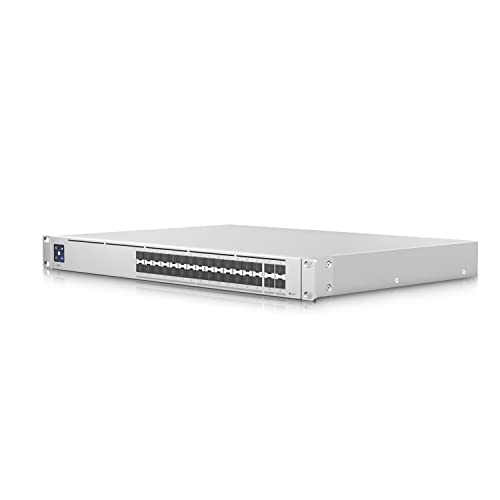
- 28-port Layer 3 switch
- Optical-fiber support
- Rack-mountable design
Best For: Scalable managed fiber aggregation
PoE Enterprise Access
Juniper EX4300-48P 48-Port PoE Switch
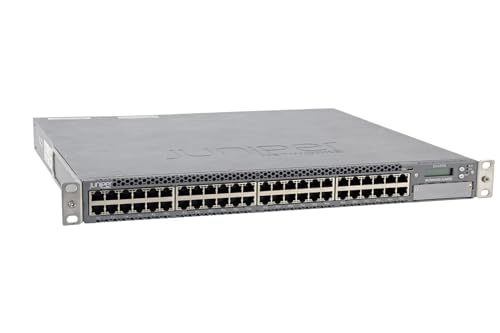
- 48 managed PoE ports
- Dual PSU configuration
- Metal enterprise chassis
Best For: High-port-count PoE access networks
Rugged Redundant Power
Steloproad 10-Port Industrial Gigabit Switch

- 10 Gigabit RJ45 ports
- 12–48V DC redundant power
- -40°F to 176°F operating range
Best For: Industrial and outdoor low-voltage networks
High-Capacity PoE Choice

- 48 Gigabit PoE+ ports for powered devices
- Hot-swappable redundant APS1000W power supplies
- 10GBASE-T, SFP+, and stackable managed design
Best For: Enterprise and surveillance networks needing high PoE capacity
Quiet Rackmount Value
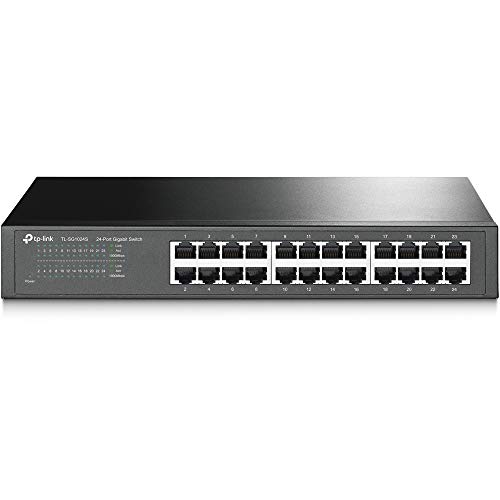
- 24 Gigabit RJ45 ports with plug-and-play setup
- Fanless design for quiet operation
- Metal 1U rackmountable enclosure
Best For: Small networks that do not require redundant power
Industrial Redundant-Power Pick
Omada IES208G Industrial Switch

- 1+1 redundant power input
- -40 to 75°C operating range with 6kV protection
- Managed VLAN, QoS, and STP/RSTP features
Best For: Industrial and harsh-environment edge networks
Quiet PoE Essentials

- 16 Gigabit PoE+ ports
- 183W shared PoE budget
- Fanless, unmanaged design
Best For: Small, quiet PoE installations
Industrial Redundant Power Pick
Omada IES206GPP Industrial PoE++ Switch
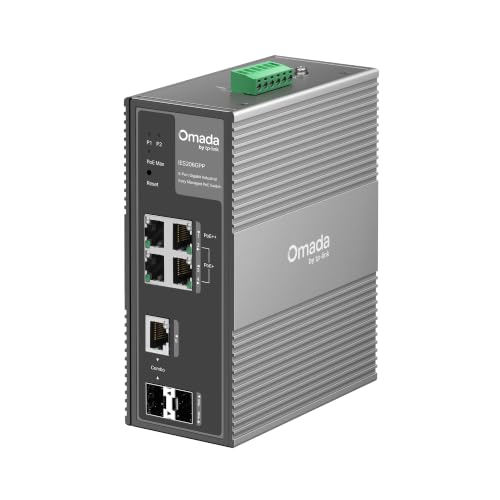
- 1+1 redundant power input
- PoE++ with 120W budget
- Industrial -40 to 75°C rating
Best For: Resilient industrial edge networks
High-Capacity Managed PoE
NETGEAR GS348TPv2 48-Port PoE+ Switch

- 48 PoE+ Gigabit ports
- 380W shared PoE budget
- Four 1G SFP uplinks
Best For: Larger managed PoE networks
High-Capacity Core – Dell PowerSwitch S6000 32-Port 40Gb Switch
Dell PowerSwitch S6000 32 Ports 40Gb QSFP+ Ethernet Network Switch Dual PSU (Renewed)
Check Price On AmazonThe Dell PowerSwitch S6000 is a renewed, high-density option for buyers seeking network switches with redundant PSU support. Its 32-port 40Gb QSFP+ design is suited to environments that need fast connections and dual-power hardware.
Best For: Data-center or server-network deployments requiring 40Gb QSFP+ connectivity and dual PSUs.
Pros:
- 32 QSFP+ ports provide high-density 40Gb connectivity.
- Dual PSU design supports power redundancy.
- Renewed hardware can offer a more budget-conscious route to enterprise-class switching.
Cons:
- Renewed condition may not suit buyers seeking new equipment.
- 40Gb QSFP+ ports may be excessive for basic Ethernet networks.
This is a specialized choice rather than a general-purpose switch. Choose it when port density, 40Gb performance, and redundant power matter more than simple deployment or broad compatibility.
Managed Fiber Aggregation – Ubiquiti UniFi Pro Aggregation Switch
The Ubiquiti UniFi Pro Aggregation Switch is a Layer 3 managed option for buyers comparing network switches with redundant PSU potential in a rack environment. It offers 28 ports, optical-fiber support, and a listed 280Gbps transfer rate for scalable network designs.
Best For: Rack-mounted Layer 3 aggregation networks using fiber links and centralized configuration.
Pros:
- Layer 3 switching supports scalable routing designs.
- 28 ports and optical-fiber support suit aggregation workloads.
- Rack-mountable alloy-steel construction supports organized installations.
- Listed 280Gbps data-transfer rate provides substantial switching capacity.
Cons:
- The supplied specifications do not explicitly confirm redundant PSUs.
- Its 220V power specification may require appropriate rack power planning.
- Maximum power consumption is listed at 100 watts.
This switch is a strong fit for managed, fiber-oriented aggregation, but verify the exact power-supply configuration before buying if redundant PSU operation is essential to your design.
PoE Enterprise Access – Juniper EX4300-48P 48-Port PoE Switch
Juniper Networks EX4300-48P 48 Port PoE Gigabit Network Switch w/ Dual PSU (Renewed)
Check Price On AmazonThe renewed Juniper EX4300-48P combines 48-port managed Gigabit switching with PoE and dual PSUs. For buyers researching network switches with redundant PSU capability, it is designed for installations that need many connected devices and power delivery over Ethernet.
Best For: Managed access networks supporting numerous PoE-connected devices and redundant power hardware.
Pros:
- 48 ports provide substantial Gigabit Ethernet capacity.
- PoE support can connect and power compatible devices.
- Dual PSUs provide a redundant power configuration.
- Metal construction is suited to professional network installations.
Cons:
- Renewed condition may be less suitable than new equipment for critical deployments.
- Its 22.2-pound package weight suggests a less portable installation.
- The included warranty is listed as 90 days limited.
With 48 managed PoE ports and dual PSUs, this Juniper is aimed at substantial access-layer deployments. Confirm rack space, power requirements, and the renewed unit’s condition before purchase.
Rugged Redundant Power – Steloproad 10-Port Industrial Gigabit Switch
The Steloproad industrial switch is a compact choice for buyers seeking network switches with redundant PSU support outside a traditional server rack. It provides 10 Gigabit RJ45 ports, dual redundant power, and a 12–48V DC input for industrial, outdoor, or solar-powered installations.
Best For: Harsh-environment networks using DIN-rail or wall mounting and low-voltage DC power.
Pros:
- 10 RJ45 ports support 10/100/1000Mbps connections.
- 12–48V DC input and power boosting accommodate varied centralized power sources.
- Dual redundant power supports improved power resilience.
- Industrial temperature range from -40°F to 176°F and aluminum housing suit harsh environments.
Cons:
- It is limited to Gigabit Ethernet rather than higher-speed uplinks.
- The compact 10-port design may not meet larger network requirements.
- Its industrial feature set may be unnecessary for ordinary office deployments.
This is the most purpose-built option in the group for industrial connectivity. Its flexible DC input, redundant power, and DIN-rail or wall-mount options make it practical where environmental conditions and installation flexibility are priorities.
High-Capacity PoE Choice – M4300-52G-PoE+ Managed Switch
For demanding networks with redundant power requirements, the NETGEAR M4300-52G-PoE+ combines 48 Gigabit PoE+ ports with hot-swappable power supplies. It also provides 10GBASE-T and SFP+ uplinks, making it a strong fit for larger installations that need high PoE capacity and flexible expansion.
Best For: Enterprise, surveillance, and access-point deployments needing managed switching and redundant PoE power.
Pros:
- 48 Gigabit PoE+ ports support extensive powered-device deployments.
- Hot-swappable APS1000W supplies provide redundant power operation.
- Includes 2 10GBASE-T and 2 SFP+ uplinks, with stackable managed functionality.
- Offers a lifetime hardware warranty and lifetime next-business-day support.
Cons:
- Its 20-pound chassis and enterprise feature set may be excessive for small networks.
- PoE power figures vary by input voltage and power-sharing mode.
This is the most capable option here for buyers who specifically need redundant PSU support alongside substantial PoE capacity. Confirm your electrical setup and required power budget before installation.
Quiet Rackmount Value – TL-SG1024S 24-Port Switch
The TP-Link TL-SG1024S is a straightforward 24-port Gigabit switch for networks that value quiet operation and simple deployment. However, it is unmanaged and has no redundant PSU feature listed, so it is not a direct match for buyers specifically seeking network switches with redundant psu.
Best For: Homes, offices, and small installations needing affordable plug-and-play Gigabit connectivity.
Pros:
- Provides 24 auto-negotiating 10/100/1000Mbps RJ45 ports.
- Fanless design supports whisper-quiet operation.
- Metal enclosure offers durability, heat dissipation, and EMI protection.
- Supports desktop or standard 1U rackmount installation.
Cons:
- Unmanaged design does not provide VLAN, QoS, or other configurable network controls.
- The supplied notes do not indicate redundant power supplies or redundant power input.
This switch is a practical basic-network option, but buyers requiring power redundancy should look elsewhere or plan an external power solution. Its strengths are quiet operation, easy setup, and a sturdy rack-friendly enclosure.
Industrial Redundant-Power Pick – Omada IES208G Industrial Switch
The Omada IES208G is a compact industrial managed switch built around resilient installation requirements. Its 1+1 redundant power input, wide -40 to 75°C operating range, and 6kV lightning protection make it a particularly relevant choice among network switches with redundant psu for industrial and edge environments.
Best For: Industrial control, outdoor-edge, and harsh-environment networks needing compact managed connectivity and redundant power input.
Pros:
- Provides 1+1 redundant power input for improved power resilience.
- Supports six Gigabit RJ45 ports plus two RJ45/SFP combo ports.
- Operates from -40 to 75°C and includes 6kV lightning protection.
- Offers VLAN, QoS, STP/RSTP, and centralized Omada cloud management.
Cons:
- Its eight-port capacity is much smaller than that of enterprise access switches.
- Industrial-focused features may be unnecessary for ordinary office deployments.
For installations where temperature tolerance and power redundancy matter more than port count, the IES208G is the most purpose-built option in this roundup. DIN-rail and wall-mount support also simplify deployment in industrial spaces.
Quiet PoE Essentials – NETGEAR 16-Port PoE+ Switch
The NETGEAR GS316PP is a straightforward choice for smaller installations that need PoE+ connectivity without management overhead. Its 16 Gigabit ports, 183W shared PoE budget, fanless design, and desktop or wall-mount flexibility make it practical for powering compatible devices. However, it is an unmanaged switch and the supplied notes do not indicate redundant power supplies, so it is not a complete match for network switches with redundant PSU.
Best For: Small offices, surveillance setups, and users who want simple, quiet PoE+ expansion.
Pros:
- Provides 16 Gigabit Ethernet ports with 16 PoE+ ports.
- Offers up to 183W of shared PoE power with dynamic allocation.
- Fanless metal design supports quiet desktop or wall-mounted operation.
- Plug-and-play setup requires no software or configuration.
Cons:
- Unmanaged design lacks advanced VLAN, QoS, and monitoring controls.
- Supplied specifications do not list a redundant PSU.
- PoE power is shared across all connected devices.
The GS316PP prioritizes simple installation and quiet operation over resiliency features. Choose it for uncomplicated PoE deployment, but consider an industrial managed model if redundant power input is essential.
Industrial Redundant Power Pick – Omada IES206GPP Industrial PoE++ Switch
The Omada IES206GPP is the strongest fit here for buyers specifically seeking network switches with redundant PSU capability. This easy-managed industrial switch includes 1+1 redundant power input, a 120W PoE budget, PoE++ support, fiber connectivity, and an operating range of -40 to 75°C for demanding environments.
Best For: Industrial, outdoor-adjacent, and temperature-variable installations that need redundant power input and managed networking.
Pros:
- Includes 1+1 redundant power input for improved power resilience.
- Supports one PoE++ port, three PoE+ ports, and up to 120W total PoE power.
- Offers VLAN, QoS, and STP/RSTP features with Omada cloud management.
- Provides -40 to 75°C operation, 6kV lightning protection, and DIN-rail or wall mounting.
Cons:
- Has only six total ports, making it less suitable for larger networks.
- Its 1Gbps switching capacity is limited compared with higher-port-count options.
- Industrial features may be unnecessary for basic office deployments.
With explicit redundant power input and industrial protection, the IES206GPP aligns closely with the target use case. Its compact port count favors edge deployments rather than central network distribution.
High-Capacity Managed PoE – NETGEAR GS348TPv2 48-Port PoE+ Switch
The NETGEAR GS348TPv2 is built for larger Gigabit networks that need extensive PoE coverage and smart management. It provides 48 PoE+ ports, a 380W power budget, four dedicated 1G SFP ports, and desktop or rack-mount installation. The supplied specifications do not identify a redundant PSU, so verify the power architecture before choosing it for a high-availability design involving network switches with redundant PSU.
Best For: Larger offices, surveillance deployments, and managed networks requiring many PoE+ connections and fiber uplinks.
Pros:
- Provides 48 Gigabit PoE+ ports with a 380W total power budget.
- Includes four dedicated 1G SFP ports for fiber connectivity and expansion.
- Smart management supports controlled setup, access management, and SNMP/NMS 300 management.
- Supports desktop or rack-mount installation.
Cons:
- Supplied notes do not list a redundant PSU.
- Its 380W PoE budget is shared across the 48 PoE+ ports.
- The 10.6-pound, 17.3-inch-wide chassis requires more installation space than compact switches.
The GS348TPv2 offers substantially more port capacity and management flexibility than the other listed NETGEAR option. It is a capable PoE aggregation switch, but buyers requiring power redundancy should confirm that requirement separately.
How We Picked These Network Switches with Redundant Psu
We selected models that cover the main requirements buyers consider when evaluating resilient network infrastructure: power-supply redundancy or a business-class power design, port count, uplink flexibility, PoE support, management capability, and installation environment. The list spans 5- to 52-port switches, copper and fiber uplinks, managed and unmanaged interfaces, industrial enclosures, and enterprise platforms.
Because specifications can vary by revision, region, and renewed condition, verify the seller’s listing for included power supplies, licensing, rack hardware, warranty, and exact PoE budget before purchase.
Quick Comparison
| Best For | Look For | Relevant Options |
|---|---|---|
| Data-center aggregation | 40GbE or high-speed fiber uplinks, stacking, and enterprise management | Dell PowerSwitch S6000, Ubiquiti UniFi Pro Aggregation |
| PoE-heavy access networks | High PoE budget, managed VLANs, and redundant power support | Juniper EX4300-48P, NETGEAR M4300-52G-PoE+, GS348TPv2 |
| Small offices and quiet installations | Simple setup, compact design, and low noise | TP-Link 24-port, NETGEAR GS316PP |
| Industrial deployments | Rugged construction, easy management, and suitable uplinks | Omada IES208G, Omada IES206GPP, 8X1000M industrial switch |
Key Buying Factors for Network Switches with Redundant Psu
Power Redundancy and Availability
Confirm whether the switch has two hot-swappable power supplies, dual inputs, or simply an internal power design. True redundancy requires separate power paths where possible, ideally connected to different UPS circuits. Also check whether replacement PSUs are readily available.
Port Speed, Density, and Uplinks
Count the ports you need today, then allow room for growth. Gigabit copper is suitable for many access networks, while 10GbE, SFP+, QSFP+, or aggregation ports help prevent uplink bottlenecks. Make sure transceiver compatibility matches your existing cabling and optics.
PoE Budget and Standards
For cameras, phones, and wireless access points, compare total PoE wattage with the maximum draw of all connected devices. Check whether the switch supports PoE, PoE+, or PoE++ and whether the budget remains sufficient at full port utilization.
Management and Installation
Managed switches add VLANs, monitoring, link aggregation, access controls, and quality-of-service features. Smart-managed models are often easier for smaller teams, while fully managed enterprise platforms provide deeper control. For factories or outdoor cabinets, prioritize temperature range, mounting options, and industrial protection.
Who Should Buy Which Network Switches with Redundant Psu?
Choose the Dell or Ubiquiti aggregation options for high-bandwidth cores and fiber-focused networks. Pick the Juniper or NETGEAR managed PoE models when you need substantial device power, VLAN control, monitoring, and room to scale. The TP-Link and unmanaged NETGEAR models suit straightforward office or workshop deployments where advanced configuration is unnecessary. For harsh or space-constrained environments, compare the Omada industrial switches and the industrial RJ45 model based on PoE requirements, uplinks, and environmental ratings.