FET compressors remain a go-to choice when you want fast transient control, added energy, and the familiar punch associated with classic recording hardware. The right model can tighten vocals, drums, bass, guitars, and full mixes without flattening their character.
This roundup compares 10 FET-style and FET-based compressors, from single-channel rack units and 500 Series modules to pedals, dual-channel designs, and microphone preamp combinations. Use the guide below to match features, format, and workflow to your studio or stage setup.
Best 10 Fet Audio Compressors Picks for 2026
Classic Rack FET Value

- 1176-style FET compression
- Discrete path with MIDAS transformers
- Selectable ratios and all-button mode
Best For: Professional studio tracking and mixing
Discrete 1176-Style Favorite

- Single-channel discrete compressor
- CineMag USA transformers
- Includes all-buttons-in mode
Best For: Classic-style vocal and instrument compression
Guitar-Friendly FET Control

- Electric-guitar compressor pedal
- Ratio and dry-blend controls
- Analog 1/4-inch connectivity
Best For: Pedalboard-based electric guitar compression
Compact 500-Series Utility
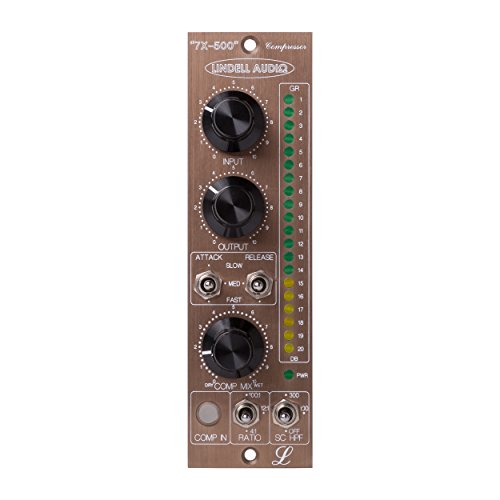
- 500-series rack format
- FET compressor and limiter
- High-pass sidechain and true bypass
Best For: Modular studio racks and compact setups
Classic Tracking Control

- Single-channel discrete FET design
- Compressor/limiter for studio use
- Built for clean gain
Best For: Dedicated recording and mix-channel control
Pedalboard Bass Dynamics
Origin Effects Cali76 Bass Compressor

- Analog FET compressor pedal
- Bass-focused control set
- Compact 1.3-pound format
Best For: Electric bass pedalboards and portable rigs
Hybrid Dual-Circuit Flexibility

- FET and optical compressor circuits
- 76 and 2A configurations
- Stereo-linking capability
Best For: Flexible recording and mixing workflows
Versatile FET Front End
- Four-channel tube/FET preamp and compressor
- Tone blending knob for flexible character
- Eight-channel 24-bit/192kHz A/D conversion
Best For: Multi-channel recording setups needing preamps, compression, and conversion
Vintage-Voiced Dual FET

- Dual-channel discrete FET compression
- Warm, vintage-voiced sound profile
- Solid-state design with two-year limited warranty
Best For: Two-channel compression with vintage-oriented character
Clean Gain Dual FET

- Dual-channel discrete FET compressor/limiter
- Focused on clean gain control
- Combines compression and limiting in one unit
Best For: Two-channel FET compression and limiting
Classic Rack FET Value – Klark Teknik 76-KT
The Klark Teknik 76-KT is a practical choice for engineers seeking fet audio compressors with a classic 1176-style approach. Its discrete signal path, MIDAS transformers, Class-A output amplifier, adjustable timing controls, and selectable compression ratios make it suited to professional rack-based recording and mixing.
Best For: Home and professional studios that want a versatile, vintage-inspired mono FET compressor.
Pros:
- Classic FET-style design modeled after iconic 1176LN revisions
- Completely discrete signal path with custom-built MIDAS transformers
- Offers 4:1, 8:1, 12:1, 20:1, and all-button compression modes
- Adjustable attack and release times
Cons:
- Rack-format hardware requires dedicated space and cabling
- The supplied specifications contain unrelated listing details, so buyers should verify final dimensions before installation
The 76-KT stands out when you want broad ratio selection and traditional FET-style controls in a discrete rack unit. It is a strong all-around option for tracking and mixing applications.
Discrete 1176-Style Favorite – Warm Audio WA76
The Warm Audio WA76 is a single-channel option for producers comparing fet audio compressors for vocals, instruments, and mix-bus duties. It combines a fully discrete signal path with custom CineMag USA transformers and supports the familiar all-buttons-in setting.
Best For: Engineers who want a classic-style single-channel compressor with transformer-based circuitry.
Pros:
- Fully discrete signal path
- Custom CineMag USA transformers
- Designed to stay true to the classic ’76 format
- Supports the all-buttons-in ratio setting
Cons:
- Single-channel design limits simultaneous processing
- The supplied listing specifies a DC power supply, so confirm the included power arrangement for your setup
The WA76 is a focused choice rather than a feature-heavy multichannel unit. Its appeal comes from the straightforward single-channel design, discrete construction, and classic compression behavior.
Guitar-Friendly FET Control – Origin Effects Cali76 FET
The Origin Effects Cali76 brings fet audio compressors into a pedal format for electric guitar. Its ratio, dry-blend, release, and attack controls provide hands-on compression shaping while the analog signal format and 1/4-inch connections keep it integrated with a conventional pedalboard or amplifier chain.
Best For: Electric guitarists who want adjustable FET-style compression in a compact pedal.
Pros:
- Pedal format designed for electric guitar
- Provides ratio, dry blend, release, and attack controls
- Analog signal format with standard 1/4-inch audio connections
- Backed by a two-year warranty
Cons:
- Pedal format is less suitable for rack-based studio workflows
- Supplied notes indicate no cover or footswitch is included
The Cali76 is the most portable option in this group. Its dry-blend control and guitar-oriented format make it especially practical for players who want compression before an amp or effects chain.
Compact 500-Series Utility – 7X-500 F.E.T. Compressor
The 7X-500 is a compact 500-series choice for buyers comparing fet audio compressors for modular rack systems. It combines FET compression and limiting with stepped controls, a built-in high-pass sidechain filter, and true bypass.
Best For: Studio owners building a 500-series rack who want compact FET compression and limiting.
Pros:
- Fits the 500-series rack format
- Combines FET compression and limiting
- Includes stepped controls and a high-pass sidechain filter
- Provides true bypass
Cons:
- Requires a compatible 500-series rack or chassis
- Stepped controls offer less continuous adjustment than fully variable controls
The 7X-500 makes sense when rack space and modular expansion matter. Its sidechain filter and limiter function add useful flexibility, provided you already have suitable 500-series power and housing.
Classic Tracking Control – Warm Audio WA76-D
The Warm Audio WA76-D is a single-channel discrete FET compressor/limiter designed for clean gain and straightforward recording control. Its 10-pound chassis and rack-style dimensions make it a practical studio choice when you want dedicated hardware for tracking or mixing.
Best For: Studio users seeking a single-channel FET compressor/limiter for recording and mix control.
Pros:
- Discrete FET compressor/limiter design
- Single-channel format for focused processing
- Designed for clean gain
Cons:
- Single-channel operation may require additional units for stereo processing
- At 10 pounds, it is less portable than a pedal-format compressor
The WA76-D is a focused option among FET audio compressors, especially for buyers who prioritize a dedicated, clean-gain channel over compact size or multi-channel flexibility.
Pedalboard Bass Dynamics – Origin Effects Cali76 Bass Compressor
The Origin Effects Cali76 Bass Compressor is a compact analog FET-compressor pedal for electric bass. Ratio, sidechain high-pass filter, attack, release, and blend controls provide practical ways to shape bass dynamics while retaining a pedalboard-friendly 1.3-pound format.
Best For: Bassists who want adjustable analog FET compression in a compact pedal format.
Pros:
- Designed specifically for electric bass
- Includes ratio, sidechain HPF, attack, release, and blend controls
- Compact 1.3-pound enclosure with 1/4-inch audio connectivity
- Includes a power cable and user manual
Cons:
- Pedal format may not suit users seeking rack-mounted studio hardware
- Requires corded electric power
Among FET audio compressors, the Cali76 Bass stands out for bass-focused controls and portable pedal convenience, making it a natural fit for live rigs and compact recording setups.
Hybrid Dual-Circuit Flexibility – Black Lion Audio B172A
The Black Lion Audio B172A combines FET and optical compressor circuits, with 76 and 2A circuits that can be switched A/B, B/A, or independently. Stereo linking adds flexibility for recording and mixing applications, while its 17.9-pound build suits a more permanent studio setup.
Best For: Recording and mixing users who want switchable FET/optical circuits and stereo-linking options.
Pros:
- Combines FET and optical compression circuits
- Supports 76 and 2A circuit configurations
- Offers A/B, B/A, and independent switching
- Includes stereo linking for broader studio flexibility
Cons:
- At 17.9 pounds, it is relatively heavy
- Its broader feature set may be more than needed for simple single-circuit compression
The B172A is a versatile choice among FET audio compressors for studios that want FET character alongside optical circuitry and multiple routing configurations.
Versatile FET Front End – Universal Audio 4-710d
The Universal Audio 4-710d combines four microphone preamp channels with tube/FET processing, making it a flexible choice for recording setups that need both gain and compression. Its tone-blending control and included A/D conversion add practical routing and sound-shaping options.
Best For: Recording engineers who need four channels of tube/FET preamplification and compression in one unit.
Pros:
- Four-channel tube/FET preamp and compressor design
- Tone blending knob for combining tube and FET character
- Eight-channel 24-bit/192kHz A/D conversion
Cons:
- Heavier than the dual-channel alternatives at 11.5 pounds
- Its broader preamp and conversion feature set may be more than needed for a dedicated compressor setup
Among these fet audio compressors, the 4-710d stands out for channel count and versatility. Choose it when integrated preamps, tone blending, and conversion are as important as compression.
Vintage-Voiced Dual FET – Warm Audio WA76-A2
The Warm Audio WA76-A2 is a two-channel, vintage-voiced discrete FET compressor built for setups that want solid-state operation and a warm sound profile. Its dual-channel format can add efficient stereo or multi-source processing without requiring two separate units.
Best For: Engineers seeking dual-channel FET compression with a warm, vintage-voiced character.
Pros:
- Two-channel discrete FET compressor design
- Vintage-voiced sound profile
- Solid-state amplifier type
- Backed by a two-year limited warranty
Cons:
- At 12.5 pounds, it is not a lightweight option
- Supplied specifications do not indicate integrated preamps or A/D conversion
The WA76-A2 is a focused option in the fet audio compressors category. Its main appeal is straightforward: two channels of discrete FET compression with a warm, vintage-oriented presentation.
Clean Gain Dual FET – Warm Audio WA76-D2
The Warm Audio WA76-D2 is a dual-channel discrete FET compressor/limiter designed for users who want clean gain control across two channels. Its compact feature description centers on straightforward FET compression and limiting rather than additional preamp or conversion functions.
Best For: Tracking and mixing setups that need two channels of discrete FET compression and limiting.
Pros:
- Dual-channel discrete FET compressor/limiter
- Designed for clean gain control
- Provides two processing channels in one unit
Cons:
- Supplied notes provide limited detail about additional features
- Its 12.5-pound weight may matter in portable racks
For shoppers comparing fet audio compressors, the WA76-D2 is the direct, clean-gain choice of the three. It makes the most sense when dual-channel FET compression and limiting are the priority.
How We Picked These Fet Audio Compressors
We selected these models for their practical differences, not just their shared FET-style character. The lineup covers single- and dual-channel rack compressors, 500 Series hardware, pedal-format units, and a multi-channel preamp/compressor. We considered control flexibility, channel count, connectivity, intended use, analog design features, and how easily each unit can fit into a recording, mixing, pedalboard, or live-sound workflow.
Because Fet Audio Compressors can vary considerably in format and purpose, there is no single best choice for every buyer. A vocal-tracking compressor may prioritize fast controls and transformer coloration, while a bass pedal needs rugged operation and stage-friendly access.
Quick Comparison
| Best For | What to Look For |
|---|---|
| Vocals and tracking | Fast attack and release controls, input/output metering, and useful gain makeup |
| Mix bus or stereo work | Dual channels, stereo linking, matched controls, and stable gain reduction |
| 500 Series systems | Available rack space, module power requirements, and rear-panel connectivity |
| Bass and guitar | Pedalboard compatibility, instrument-level operation, and easy footswitch access |
| Multi-mic recording | Multiple preamp channels, independent compression, and flexible routing |
Key Buying Factors for Fet Audio Compressors
Format and Channel Count
Choose a single-channel unit for focused vocal, bass, guitar, or drum-bus duties. Dual-channel models are more efficient for stereo sources, paired microphones, or parallel processing. A 500 Series compressor makes sense if you already own a compatible chassis, while a pedal is designed for direct instrument use rather than line-level studio routing.
Controls and Compression Response
Look for independent attack and release controls when you need to shape transients precisely. Ratio selection, input threshold behavior, output gain, and a reliable gain-reduction meter also affect how quickly you can dial in a sound. FET designs are often valued for aggressive, responsive compression, but the most useful unit is the one with controls suited to your source and workflow.
Transformers, Preamps, and Connectivity
Transformer-coupled designs can contribute noticeable weight and color, while integrated microphone preamps reduce the number of devices needed for tracking. Before buying, confirm whether the compressor accepts microphone, instrument, or line-level signals and whether its outputs match your interface, patchbay, amplifier, or pedalboard.
Build, Noise, and Headroom
For studio rack gear, check metering, bypass behavior, power requirements, and available headroom. For pedals and live rigs, prioritize enclosure quality, switching reliability, power compatibility, and noise performance. A highly colored compressor can be inspiring, but transparent operation may be preferable when you need to preserve an already-treated signal.
Who Should Buy Which Fet Audio Compressors?
Home-studio vocalists and tracking engineers: Choose a single-channel FET compressor with straightforward controls, dependable metering, and enough input/output flexibility for your interface.
Mix engineers and stereo bus users: Consider a dual-channel model with matched operation or stereo linking. This avoids buying two separate units and makes stereo processing easier to manage.
500 Series owners: A 500 Series FET module is a practical choice when rack space and modular expansion matter more than a standalone enclosure.
Bassists and guitarists: Choose a dedicated compressor pedal if you need instrument-level connectivity, compact dimensions, and footswitch control on stage or in a pedalboard rig.
Project studios recording several sources: A multi-channel preamp/compressor can deliver more tracking capacity while reducing cabling and rack-space requirements.