The best optical audio compressors deliver smooth, musical gain reduction that can control dynamics without making vocals, bass, guitars, or mixes sound overly processed.
We selected 10 standout studio compressors and optical compressor pedals, covering tube, 500 Series, rack, DAW-controlled, and compact pedal formats for different recording and performance needs.
Best 10 Optical Audio Compressors Picks for 2026
Warm Tube Classic

- Single-channel tube optical compressor
- All-discrete path with custom optical photocell
- Cinemag transformers and 2-year warranty
Best For: Studio voice and instrument recording
Abbey Road-Inspired Control

- Single-channel 500 Series optical compressor
- Sharp or rounded knee selection
- True bypass and VU meter
Best For: Flexible compression in a 500 Series rack
Classic Leveling Authority
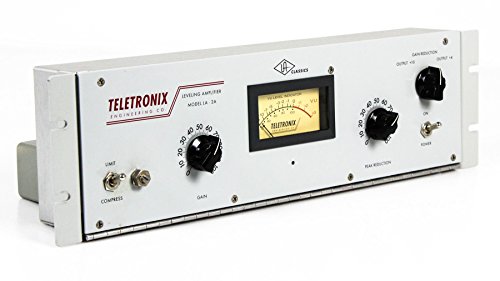
- Electro-optical compressor and limiter
- Tube circuitry
- Classic focused design
Best For: Tube-based compression and limiting
Pedalboard Vintage Voice
Mary Cries Optical Compressor Pedal

- Optical compressor pedal with analog signal format
- True bypass and 1/4-inch I/O
- Warm, thick, vintage sound profile
Best For: Portable pedalboard compression
Tube Character Pick

- Single-channel optical tube compressor
- Transformer-balanced I/O and sidechain filters
- Dedicated tube saturation section
Best For: Studio users wanting optical compression with tube color
Compact Pedal Pick
Universal Audio LA-2A Compressor Pedal

- LA-2A optical tube compressor emulation
- Mix control for parallel compression
- Compact 9V stompbox with stock/fast attack switch
Best For: Pedalboard users wanting vintage-style optical compression
DAW Integration Pick
Antelope Audio A4-1B Compressor

- Variable attack, release, gain, threshold, and ratio
- VST3, AAX, and AU automation support
- Frequency-selective sidechain and custom transformers
Best For: Hybrid mixing workflows requiring analog compression automation
Flexible Dual-Character Compression

- FET and optical compressor circuits
- A/B-B/A-independent switching
- Stereo linking for mixing workflows
Best For: Recording and mixing engineers seeking flexible circuit options
Warm Tube-Optical Tone

- One-channel tube optical compression
- Warm, balanced, versatile sound profile
- Rackmount chassis included
Best For: Studio users wanting warm analog compression
Pedalboard Optical Control
Highpoint Optical Compressor Pedal

- Studio-grade analog optical compression
- Parallel Blend control preserves transients
- 160 Hz sidechain high-pass filter
Best For: Pedalboard users wanting detailed compression control
Warm Tube Classic – WA-2A Optical Compressor
The Warm Audio WA-2A is a single-channel tube optical compressor for users who want an all-discrete signal path, custom optical photocell, and Cinemag transformers. Its XLR connectivity and analog hardware design make it a practical studio-focused choice among optical audio compressors.
Best For: Studio vocal, instrument, and voice-recording chains requiring one channel of tube optical compression.
Pros:
- Tube optical compression in a single-channel format
- All-discrete signal path with a custom optical photocell
- Uses Cinemag transformers and includes a 2-year warranty
Cons:
- Single-channel design limits simultaneous processing
- At 6.6 pounds, it is not especially lightweight
The WA-2A is a focused option when transformer-equipped, tube-based optical compression matters more than portability or multiple channels.
Abbey Road-Inspired Control – TG Opto 500 Series Compressor
The Chandler Limited TG Opto is a single-channel 500 Series optical compressor with selectable sharp or rounded knees, continuous input control, true bypass, and a VU meter. Its compact analog format suits buyers comparing flexible optical audio compressors for a 500 Series setup.
Best For: 500 Series users who want adjustable compression character and hands-on metering in a compact module.
Pros:
- Selectable sharp and rounded knee settings
- Continuous input control and release control
- True bypass and a VU meter for practical operation
Cons:
- Requires a compatible 500 Series enclosure
- Provides one channel of compression
Choose the TG Opto if system compatibility is already covered and you value selectable response options, analog controls, and a compact footprint.
Classic Leveling Authority – Teletronix LA-2A Compressor
The Universal Audio Teletronix LA-2A is an electro-optical compressor and limiter with tube circuitry. It is a straightforward choice for buyers seeking a classic tube-based approach when comparing optical audio compressors.
Best For: Users looking specifically for an electro-optical compressor/limiter with tube circuitry.
Pros:
- Combines compressor and limiter functions
- Uses an electro-optical design
- Features tube circuitry
Cons:
- The supplied specifications do not list connectivity or channel count
- Its tube-based design may not suit buyers seeking a compact pedal or 500 Series format
The LA-2A is best considered when the core requirement is a tube-circuit electro-optical compressor/limiter rather than a feature-heavy modern control layout.
Pedalboard Vintage Voice – Mary Cries Optical Compressor Pedal
The PRS Mary Cries is an optical compressor pedal with 1/4-inch input and output, true bypass, and a warm, thick, vintage sound profile. Its 9-volt operation and analog signal format make it a practical pedal-format option among optical audio compressors.
Best For: Guitarists and pedalboard users wanting a warm, thick, vintage-style optical compressor.
Pros:
- Compact pedal format with 1/4-inch input and output
- True bypass switching
- 9-volt operation and low 10-milliamp listed amperage
Cons:
- Designed for pedalboard use rather than studio rack integration
- Offers a single optical compressor effect
The Mary Cries is the most portable choice in this group, especially for players who prioritize a vintage-leaning pedal format over studio-oriented connectivity.
Tube Character Pick – Heritage Audio Tubesessor
The Heritage Audio Tubesessor is a practical choice among optical audio compressors when you want one-channel tube coloration alongside transformer-balanced connectivity. Its multiple sidechain filter settings and dedicated tube saturation section add useful tone-shaping options for tracking or mixing.
Best For: Engineers seeking a single-channel optical tube compressor with added saturation and sidechain flexibility.
Pros:
- Combines optical compression with transformer-balanced I/O.
- Offers multiple sidechain filter settings for more controlled compression.
- Includes a dedicated tube saturation section.
Cons:
- Provides only one compression channel.
- Its 10.48-pound, rack-style hardware footprint may require dedicated studio space.
The Tubesessor suits buyers who want compression and analog tone in one substantial studio unit. Consider it when transformer-balanced I/O, sidechain filtering, and tube saturation matter more than a compact format.
Compact Pedal Pick – Universal Audio LA-2A Compressor Pedal
The Universal Audio LA-2A Studio Compressor Pedal brings the character of an optical tube compressor into a compact stompbox. For musicians comparing optical audio compressors, it offers an emulation of the Teletronix LA-2A design, plus mix control for parallel compression and a selectable stock/fast attack response.
Best For: Guitarists, pedalboard users, and musicians who want LA-2A-style compression in a compact analog pedal.
Pros:
- Emulates the Teletronix LA-2A optical tube compressor/limiter.
- Includes mix control for parallel compression effects.
- Provides true/buffered bypass and a stock/fast attack switch.
- Compact 4.75 x 2.58 x 2.29-inch enclosure weighs 259 grams.
Cons:
- Uses a 9-volt DC power supply and draws 100 milliamps.
- Its 1/4-inch audio connections are aimed at pedal-style setups rather than balanced studio I/O.
This pedal is the most portable option in the group, prioritizing familiar LA-2A-style behavior and straightforward controls. It is a strong fit when hands-on compression and pedalboard convenience are more important than rackmount studio connectivity.
DAW Integration Pick – Antelope Audio A4-1B Compressor
The Antelope Audio A4-1B is designed for engineers who want optical tube compression with extensive parameter control and DAW integration. Among optical audio compressors, it stands out for variable attack, release, gain, threshold, and ratio controls, along with plugin-based remote operation and automation.
Best For: Mixing engineers who need automated DAW control, detailed compression adjustment, and analog tube character.
Pros:
- Provides fully variable attack, release, gain, threshold, and ratio controls.
- Supports VST3, AAX, and AU remote operation and automation.
- Includes motorized potentiometers for hands-on feedback during mixing.
- Offers frequency-selective sidechain processing and custom UK transformers.
Cons:
- Its 28 x 12 x 4-inch dimensions require substantial studio space.
- The supplied notes do not specify a warranty.
The A4-1B is best suited to hybrid workflows where analog processing needs to remain closely tied to DAW sessions. Its broad control set and automation features make it the most workflow-focused choice of these three products.
Flexible Dual-Character Compression – B172A FET/Optical Compressor
The Black Lion Audio B172A is a versatile choice among optical audio compressors for recording and mixing. Its FET/optical design provides two compression circuit types, with A/B-B/A-independent switching and stereo linking for more flexible setups.
Best For: Recording and mixing engineers who want selectable FET and optical compression in one rack unit.
Pros:
- Combines FET and optical compressor circuits.
- Offers A/B-B/A-independent switching.
- Includes stereo linking for linked compression workflows.
- Comes with a 2-year manufacturer warranty.
Cons:
- At 17.9 pounds, it is relatively heavy.
- Its corded-electric design is less portable than a pedal-style compressor.
The B172A stands out when flexibility matters more than minimalism. Its dual circuit approach and stereo-linking capability make it a practical studio tool for users who work across recording and mixing applications.
Warm Tube-Optical Tone – WA-1B Optical Compressor
The Warm Audio WA-1B is a one-channel tube optical compressor designed for users seeking warm, balanced, and versatile analog compression. Its knob-based control layout and rackmount chassis suit a dedicated studio setup.
Best For: Studio users who want single-channel tube optical compression with a warm analog sound profile.
Pros:
- Uses a tube optical compression design.
- Provides a warm, balanced, and versatile sound profile.
- Features knob controls for hands-on operation.
- Includes a rackmount chassis and compressor unit.
Cons:
- It is a single-channel compressor.
- Its 12.1-pound rackmount format is less convenient for portable use.
- The supplied notes identify a 9-volt, 9-milliamp power specification, so buyers should confirm setup compatibility.
The WA-1B is a focused option for adding tube-based optical compression to a studio rack. Its single-channel format makes it best suited to targeted processing rather than multi-channel duties.
Pedalboard Optical Control – Highpoint Optical Compressor Pedal
The Walrus Audio Highpoint brings studio-grade analog optical compression to a pedal format. It combines parallel compression through a Blend control with detailed Attack, Release, Ratio, and Make-Up controls, while its sidechain high-pass filter helps reduce low-frequency over-triggering.
Best For: Musicians and pedalboard users who want extensive analog optical compression control in a compact format.
Pros:
- Offers studio-grade analog optical compression.
- Blend control provides true parallel compression.
- Includes Attack, Release, Ratio, and Make-Up gain controls.
- Selectable 160 Hz sidechain high-pass filter helps manage low-frequency triggering.
Cons:
- As a pedal, it may be less suitable for rack-based studio workflows.
- Its comprehensive control set may require more setup time than a simpler compressor.
The Highpoint is the most compact and performance-oriented option in this group. It is particularly appealing when natural transients, sustain, and hands-on pedalboard control are priorities.
How We Picked the Best Optical Audio Compressors
We evaluated these Optical Audio Compressors by looking at their circuit design, intended use, controls, connectivity, workflow, and suitability for common recording or live-performance applications. The lineup includes classic leveling-amplifier designs, modern tube compressors, 500 Series modules, hybrid FET/optical units, and guitar pedals.
We also considered practical factors such as metering, sidechain or automation features, stereo operation, hardware integration, ease of setup, and the amount of tonal character each format can provide. The goal is not to identify one universal winner, but to help match each compressor to the source, studio, and workflow where it will perform best.
Quick Comparison
| Best For | Recommended Format | Why It Fits |
|---|---|---|
| Classic vocal leveling | LA-2A-style hardware | Gentle, musical compression with familiar tube character |
| 500 Series setups | Chandler Limited TG Opto | Compact rack integration and distinctive tone |
| Modern studio flexibility | Tube or DAW-controlled rack compressor | More control for tracking, mixing, and automation |
| Guitar and bass pedals | Optical compressor pedal | Easy integration with a pedalboard and live rig |
| Hybrid compression | FET/optical design | Combines responsive control with smooth leveling |
Key Buying Factors for Optical Audio Compressors
Hardware Format and Connectivity
Choose a rack unit if you need flexible studio routing, a 500 Series module if you already own a compatible chassis, or a pedal if the compressor belongs in a guitar or bass signal chain. Check balanced connections, stereo-link options, and available input and output controls before buying.
Compression Character
Optical circuits are generally valued for gradual, program-dependent gain reduction. They are often a strong choice for vocals, bass, acoustic instruments, and mix-bus duties where natural control matters. Tube stages can add warmth and saturation, while hybrid designs may offer a faster or more assertive response.
Controls and Metering
Look for the controls your workflow requires, such as peak reduction, gain, attack, release, ratio, sidechain filtering, mix, or blend. Clear metering is especially useful when tracking, while simpler controls can be preferable for fast live adjustments.
Studio Integration
If you mix largely in the box, DAW control, automation, recall, or an insert-friendly design may save time. For hardware tracking, prioritize low-noise operation, reliable metering, and enough headroom for your interface or console.
Who Should Buy Which Optical Audio Compressors?
Choose a classic LA-2A-style compressor if you want dependable vocal and bass leveling with minimal setup. A 500 Series optical compressor makes sense for engineers building a modular channel-strip collection. Tube-oriented models suit users who want compression plus harmonic color, while a modern DAW-controlled unit is better for hybrid studios that need repeatable automation and recall.
Guitarists and bassists should focus on pedal models with practical bypass, blend, level, and tone controls. Choose a hybrid FET/optical compressor if you want smoother sustain but still need a more immediate response. Whichever model you select, match the compressor’s headroom, connectivity, and control range to your signal chain rather than choosing solely by vintage styling or brand reputation.