Tube audio compressors can add smooth leveling, harmonic color, and a more finished feel to vocals, bass, guitars, and full mixes. The right choice depends on whether you need classic optical compression, fast FET-style control, or a versatile channel-strip workflow.
We compare 10 options across recording, mixing, live sound, and hybrid setups so you can match features, connectivity, and compression character to your studio.
Best 10 Tube Audio Compressors Picks for 2026
Classic Optical Warmth

- Single-channel tube optical compressor
- All-discrete path with Cinemag transformers
- Custom optical photocell
Best For: Focused vocal and instrument recording chains
Accessible LA-2A-Style Compression

- Tube optical compressor and limiter
- MIDAS input and output transformers
- Balanced XLR and TRS connections
Best For: Studio or live users seeking flexible classic compression
Sidechain-Controlled Tube Color

- Single-channel optical tube compressor
- Multiple sidechain filter settings
- Dedicated tube saturation section
Best For: Tone shaping with filtered sidechain control
Flexible Tube or Solid-State Operation

- Selectable tube or solid-state control
- Optical isolators and variable blend
- Switchable +4 dBu/-10 dBV levels
Best For: Hybrid setups and parallel compression workflows
Versatile Tube Control

- Class A 12AX7 tube preamp
- Variable VCA compressor
- Three-band EQ and flexible inputs
Best For: Recording setups needing an integrated tube preamp, compressor, and EQ
Classic FET Dynamics

- 1176LN-style FET compression
- Discrete Class A output stage
- MIDAS transformers and selectable ratios
Best For: Professional audio setups seeking vintage-inspired FET compression
Connected Tube Channel Strip
ART VoiceChannel Tube Channel Strip
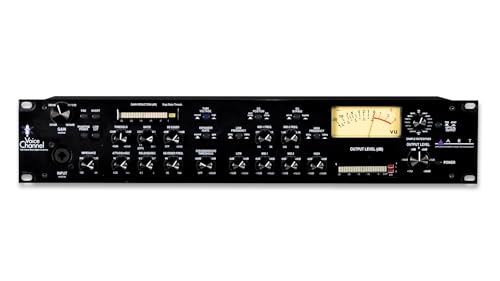
- Tube preamp for warmth and definition
- Compressor, expander, de-esser, and gate
- USB and multiple digital output formats
Best For: Recording workflows needing tube tone, dynamics tools, and digital connectivity
Practical Rack Compression
Behringer Composer Pro-XL MDX2600

- Two-channel compressor, limiter, and gate
- Designed for production, mixing, and mastering
- Portable 4.7-pound rack-style chassis
Best For: Rack-based studios needing versatile two-channel dynamics processing
Flexible Stereo Dynamics

- Dual-channel or linked-stereo operation
- Balanced TRS and XLR inputs
- Selectable auto or manual attack and release
Best For: Studios and live rigs needing versatile analog dynamics control
Vintage-Inspired Pedal Compression
Universal Audio LA-2A Studio Compressor Pedal

- LA-2A optical tube compressor/limiter emulation
- Mix control for parallel compression
- Compact 9-volt pedal with attack switch
Best For: Pedalboard users seeking vintage-inspired optical compression
Classic Optical Warmth – Warm Audio WA-2A
The Warm Audio WA-2A is a single-channel tube optical compressor designed for buyers seeking the character of an all-discrete signal path, custom optical photocell, and Cinemag transformers. Its straightforward one-channel format suits focused recording and processing setups.
Best For: Vocal, instrument, and voice-recording chains that benefit from tube optical compression.
Pros:
- All-discrete signal path with tube optical compression.
- Custom optical photocell and Cinemag transformers.
- Includes a two-year warranty and weighs 6.6 pounds.
Cons:
- Single-channel design limits use for stereo processing without a second unit.
- The supplied specifications list limited control details.
The WA-2A is a focused choice among tube audio compressors when simplicity, transformer-equipped analog circuitry, and optical compression are the priorities.
Accessible LA-2A-Style Compression – Klark Teknik 2A-KT
The Klark Teknik 2A-KT is an affordable tube optical compressor modeled after the classic LA-2A approach. It combines premium tubes, MIDAS input and output transformers, balanced connections, and flexible compression and limiting controls for studio or live use.
Best For: Buyers wanting classic optical tube compression with both XLR and 1/4-inch TRS balanced I/O.
Pros:
- Uses 12AX7, 12BH7, and EL84 tubes with optical attenuator technology.
- Offers compression and limiting, variable release, and a Limit/Compress switch.
- Includes XLR and 1/4-inch TRS balanced inputs and outputs.
Cons:
- It is a single-channel compressor.
- The supplied dimensions are inconsistent, so rack-fit measurements should be verified.
With its classic VU metering, transformer-balanced connectivity, and accessible positioning, the 2A-KT is a practical entry point into tube audio compressors for flexible analog processing.
Sidechain-Controlled Tube Color – Heritage Audio Tubesessor
The Heritage Audio Tubesessor is a single-channel optical tube compressor with transformer-balanced input and output. Its multiple sidechain filter settings and dedicated tube saturation section make it suited to buyers who want more tonal-shaping options from tube audio compressors.
Best For: Engineers who want optical compression combined with sidechain filtering and tube saturation.
Pros:
- Combines optical compression with a tube-based signal path.
- Provides multiple sidechain filter settings.
- Includes a separate tube saturation section and transformer-balanced I/O.
Cons:
- Single-channel operation may not suit stereo processing needs.
- At 10.48 pounds, it is heavier than some listed alternatives.
The Tubesessor stands out when sidechain control and added tube saturation matter as much as basic optical compression, though its one-channel format should be considered before purchase.
Flexible Tube or Solid-State Operation – ART Solo VLA
The ART Solo VLA is a single-channel multi-voice compressor built around a mastering-quality audio path. It offers selectable tube or solid-state operation, analog optical isolators, variable parallel blend, and switchable +4 dBu or -10 dBV level modes.
Best For: Users who want to compare tube and solid-state compression or blend compressed and uncompressed signals.
Pros:
- Selectable MultiVoice tube/solid-state control.
- Variable blend supports parallel compression workflows.
- Switchable +4 dBu and -10 dBV operating levels.
Cons:
- Single-channel design limits stereo use.
- The supplied notes do not specify detailed frequency-response or control ranges.
Among tube audio compressors, the Solo VLA is especially versatile for hybrid setups because it can shift between tube and solid-state operation while retaining optical compression and blend control.
Versatile Tube Control – PreSonus STUDIOCHANNEL
The PreSonus STUDIOCHANNEL is a practical choice among tube audio compressors when you want preamplification, dynamics control, and EQ in one rack unit. Its Class A 12AX7 tube preamp supports mic, instrument, and line inputs, while the variable VCA compressor adds flexible attack, release, and knee options.
Best For: Home studios and rack-based recording setups needing an integrated tube preamp, compressor, and EQ.
Pros:
- High-voltage Class A 12AX7 tube preamplifier
- Variable VCA compressor with automatic attack and release
- Three-band EQ with parametric midrange and shelving or peak high and low bands
- Includes high-pass filter, pad, phantom power, and polarity reverse
Cons:
- Combines several processing sections, which may be more than needed for a simple compressor setup
- Limited to three EQ bands
The STUDIOCHANNEL stands out as an all-in-one front end rather than a compressor-only unit. Choose it when input flexibility and integrated tone shaping are as important as tube-driven dynamics control.
Classic FET Dynamics – Klark Teknik 76-KT Compressor
The Klark Teknik 76-KT is a focused option for tube audio compressor shoppers who want classic FET-style dynamics rather than a tube signal path. It models 1176LN-style D and E revisions and pairs adjustable attack and release with a discrete Class A output stage and MIDAS transformers.
Best For: Professional audio applications seeking selectable FET compression ratios and a vintage-inspired signal path.
Pros:
- Classic FET-style design modeled after 1176LN D and E revisions
- Completely discrete signal path with Class A line-level output amplifier
- Custom-built MIDAS input and output transformers
- Selectable 4:1, 8:1, 12:1, and 20:1 ratios, plus all-button mode
Cons:
- It is a FET-style compressor, not a tube compressor
- Focused compression design lacks an integrated preamp or EQ section
The 76-KT is best viewed as a dedicated character compressor. Its ratio selection, adjustable timing, and transformer-coupled discrete design make it a better fit for users specifically pursuing FET-style control.
Connected Tube Channel Strip – ART VoiceChannel Tube Channel Strip
The ART VoiceChannel expands the tube audio compressor concept into a complete recording channel. Its ART tube preamp is paired with compressor, expander, de-esser, and gate processing, while ADAT, AES/EBU, S/PDIF, TOSLink, and USB connectivity support digital recording workflows.
Best For: Recording engineers who need tube preamp character, integrated vocal-oriented dynamics tools, and digital outputs.
Pros:
- Tube preamp designed for warmth and definition
- Combines compressor, expander, de-esser, and gate
- Supports ADAT, AES/EBU, S/PDIF, TOSLink, and USB connections
- Offers a maximum sample rate of 192 kHz
Cons:
- Its broad channel-strip feature set may be excessive for compression-only needs
- Digital connectivity requires compatibility with the rest of the recording system
The VoiceChannel is a strong choice when compression is only one part of the signal chain. Its combination of tube preamp tone, multiple dynamics processors, and digital I/O suits modern studio recording more than a minimal analog rack setup.
Practical Rack Compression – Behringer Composer Pro-XL MDX2600
The Behringer Composer Pro-XL MDX2600 is a practical choice for buyers seeking tube audio compressors alternatives in a rackmount format. Its two-channel design combines compression, limiting, and gating for audio production, mixing, and mastering setups.
Best For: Home studios and rack-based systems needing two-channel dynamics processing.
Pros:
- Combines compressor, limiter, and gate functions.
- Provides two channels for dual-mono or related processing needs.
- Suitable for audio production, mixing, and mastering.
- Includes a two-year manufacturer warranty.
Cons:
- It is a rack-style processor rather than a tube compressor.
- The supplied specifications list corded electric power and 100-volt operation.
Choose the MDX2600 if flexible, multi-function dynamics control matters more than an authentic tube signal path. Its portable 4.7-pound chassis is suited to a permanent rack or mobile setup.
Flexible Stereo Dynamics – ART SCL2 Compressor/Limiter
The ART SCL2 is a dual-channel compressor, limiter, expander, and gate for buyers comparing tube audio compressors and other analog dynamics tools. It supports dual-channel or linked-stereo operation with balanced 1/4-inch TRS and XLR connections.
Best For: Studio and live setups that need flexible mono or linked-stereo dynamics control.
Pros:
- Supports dual-channel and linked-stereo operation.
- Offers selectable automatic or manual attack and release.
- Includes 1/4-inch TRS and XLR balanced inputs.
- Provides precise LED level meters and a stereo balance control.
Cons:
- Its supplied specifications identify it as an analog processor, not a tube compressor.
- The 19-inch chassis may be less convenient for compact desktop setups.
The SCL2 stands out when connection flexibility and stereo linking are priorities. Its combination of compression, limiting, expansion, and gating makes it a broad-purpose dynamics unit.
Vintage-Inspired Pedal Compression – Universal Audio LA-2A Studio Compressor Pedal
The Universal Audio LA2A Studio Compressor Pedal is a compact option for players and producers exploring tube audio compressors in a pedal format. It emulates the Teletronix LA-2A optical tube compressor/limiter, including its transformers, tube amplifiers, and T4 optical cell.
Best For: Guitarists and producers wanting vintage-inspired optical compression with pedalboard-friendly controls.
Pros:
- Emulates an iconic LA-2A optical tube compressor/limiter.
- Includes a mix control for parallel compression.
- Offers a stock/fast attack switch.
- Uses true/buffered bypass and a compact 9-volt design.
Cons:
- It is a pedal rather than a full-size studio rack processor.
- The supplied specifications list a 1/4-inch audio connection and USB-C, with no XLR input noted.
For authentic tube-style character in a small footprint, the LA2A pedal is the most directly aligned option here. The mix control also makes it easier to blend compressed and dry signals.
How We Picked These Tube Audio Compressors
We evaluated these models by looking at compression design, tube implementation, control range, connectivity, noise performance, flexibility, and overall usefulness in a modern studio. The lineup includes dedicated optical compressors, FET-style units, channel strips, stereo processors, and a pedal-format option. That range matters because “tube compressor” can describe very different workflows and sonic results.
We also considered whether each unit is better suited to tracking, mixing, live processing, voice recording, or occasional color. Build quality, practical metering, bypass options, and the ability to integrate with balanced studio equipment were included in the comparison.
Quick Comparison
| Best For | Recommended Type | Why It Makes Sense |
|---|---|---|
| Classic vocal leveling | Optical tube compressor | Smooth, forgiving gain reduction |
| Fast vocal or drum control | FET-style compressor | Quick attack and assertive character |
| Recording one source | Channel strip | Compression plus preamp and tone shaping |
| Stereo buses or multiple sources | Dual-channel compressor | More flexible routing and processing |
| Affordable general-purpose use | Budget rack compressor | Broad controls at a lower cost |
Key Buying Factors for Tube Audio Compressors
Compression Style
Optical circuits are usually the easiest starting point for vocals because their response tends to be smooth and musical. FET-style designs can sound more immediate and energetic, making them useful on drums, aggressive vocals, bass, and sources that need sharper peak control. Variable or multi-voice designs offer more ways to balance transparency and coloration.
Tube Character and Headroom
Tubes may be used in the gain stage, compression circuit, or output section, so their sonic contribution varies. Look for sufficient headroom if you plan to record loud sources, and consider whether you want subtle warmth or obvious harmonic saturation. A unit with a wide threshold and ratio range will remain useful as your recording needs change.
Controls, Metering, and Routing
Attack and release controls determine how much punch and movement remain in the signal. Sidechain filtering can help prevent low frequencies from causing excessive gain reduction, while stereo linking is important for mix-bus work. Clear gain-reduction metering and a reliable bypass make setup and level matching easier.
Connections and Studio Role
Check whether the compressor offers balanced line inputs and outputs, suitable operating levels, and enough gain for your interface or console. Channel strips can save space by combining a preamp, EQ, and compressor, while single-purpose rack units may be easier to place across inserts or patch bays. A pedal-format compressor is convenient for guitar rigs but may require different gain staging than a rack processor.
Who Should Buy Which Tube Audio Compressors?
Choose an optical model if you want polished vocal leveling, bass control, or a forgiving tracking compressor. Pick a FET-style unit if you need faster, more assertive dynamics control. A tube channel strip is the better fit for singers, voiceover artists, and project studios that want preamp, EQ, and compression in one box.
For stereo buses, multiple channels, or more complex routing, prioritize dual-channel and linkable designs. Budget-minded users should focus on essential controls, dependable metering, and balanced connections rather than paying for features they will not use. Finally, confirm rack space, maintenance access, and compatibility with your interface before buying—tube equipment can deliver excellent character, but the best result comes from matching the circuit and workflow to the source.