A well-planned patch bay can make a church sound system easier to troubleshoot, reconfigure, and expand. It keeps connections organized while reducing the need to reach behind racks or repeatedly unplug valuable equipment.
These 10 options cover balanced 1/4-inch and XLR patching, modular installations, and compact setups. The right choice depends on your channel count, connector types, normalled routing needs, and how often your worship team changes configurations.
Best 10 Patch Bays for Church Sound Systems Picks for 2026
Flexible Routing Pick

- 48 balanced 1/4-inch patch points
- Normal, half-normal, and thru modes
- 1U rack-mount metal construction
Best For: Church racks needing flexible balanced routing
XLR Integration Pick

- 16 channels with XLR connectors
- Shielded all-steel 1U enclosure
- Reversible rack ears and PCB wiring
Best For: Church systems centered on XLR connections
Rugged Simplicity Pick

- 48 front and 48 rear 1/4-inch jacks
- 1U rack-mount metal construction
- Centralizes quick audio rerouting
Best For: Straightforward, high-capacity 1/4-inch patching
Maximum Flexibility Pick

- 48-point balanced patchbay
- Four selectable routing functions
- Rugged construction with quality jacks
Best For: Complex church racks needing adaptable signal routing
Flexible Rack Routing

- 16 balanced XLR ports
- Reversible male/female connectors
- Steel rackmount chassis with hardware
Best For: Churches using XLR-based live sound and microphone routing
High-Capacity Cable Organization
Art Pro Audio P48 48-Point Patch Bay

- 48 balanced patch points
- Fits a standard 19-inch rack
- Fully shielded steel construction
Best For: Larger church PA, AV, studio, and live sound installations
Compact TRS Expansion

- Eight 1/4-inch TRS points
- Modular design for compatible gear
- Steel enclosure with limited lifetime warranty
Best For: Smaller church systems using 1/4-inch TRS connections
Most Flexible Modular Option
AA AUDIO ACCESSORY AP16 XLR Patchbay

- Four independent blocks support 4-, 8-, 12-, or 16-channel setups
- Zone-based modules simplify cabling and maintenance
- Steel chassis and reversible rack ears support rack installation
Best For: Churches wanting adaptable XLR routing and serviceable modular construction
Best for Balanced TRS Routing
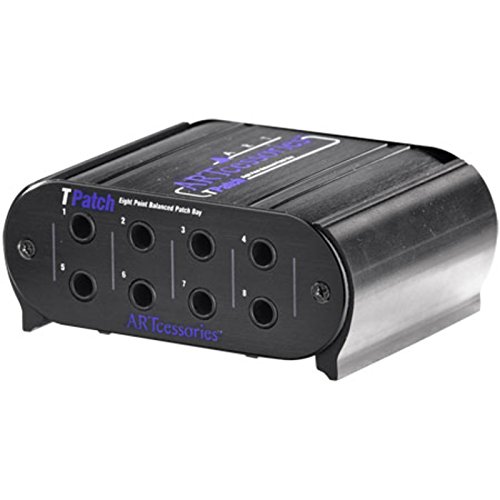
- Eight balanced patch points for line-level routing
- Switchable half-normal, normal, and through modes
- Rugged extruded aluminum case
Best For: Churches using balanced 1/4-inch TRS connections in their racks
Best for Front-Access XLR Inputs

- 12-point XLR patchbay in a single rack chassis
- Brings hard-to-reach mixer inputs to the front
- Reversible design supports varied rack layouts
Best For: Church audio racks needing easier access to rear XLR connections
Flexible Routing Pick – Samson S-Patch Plus
Samson S-Patch Plus Balanced 48-Point 1/4" Patch Bay | 1/4 Inch Phone Connections
Check Price On AmazonFor churches comparing patch bays for church sound systems, the Samson S-Patch Plus offers 48 balanced points with front-panel controls for changing each channel’s routing. Its 1U rack-mount design can make mixer and equipment-rack connections easier to access.
Best For: Church sound racks that need flexible routing and balanced 1/4-inch connections.
Pros:
- 48-point, fully balanced design with front and rear 1/4-inch connections
- Selectable normal, half-normal, and thru operation
- Front-panel toggles reduce the need to reach behind rack equipment
- Solid metal, 1U rack-mount construction
Cons:
- Uses 1/4-inch TRS connections rather than XLR
- Its many routing options may require careful labeling and setup
The S-Patch Plus is a strong all-purpose choice when a church needs balanced patching with easy front-panel configuration and a clean rack installation.
XLR Integration Pick – ART P16 XLR Patchbay
The ART P16 is a practical option for patch bays for church sound systems built around XLR cabling. It provides 16 channels through a rugged, fully shielded 1U enclosure, with female XLR connectors on the front and male XLR connectors on the rear.
Best For: Church audio racks that primarily use XLR inputs and outputs.
Pros:
- 16-channel XLR patchbay layout
- Reliable PCB wiring for all connections
- Fully shielded, all-steel enclosure
- Reversible rack ears support installation flexibility
Cons:
- Offers fewer channels than 48-point 1/4-inch models
- Does not list selectable normal, half-normal, or thru modes
Choose the P16 when XLR compatibility is more important than maximum point count. Its straightforward layout and shielded steel housing suit permanent church rack installations.
Rugged Simplicity Pick – dbx PB-48
The dbx PB-48 keeps patch bays for church sound systems straightforward, with 48 quarter-inch jacks on the front and 48 on the rear. Its rugged metal 1U rack-mount construction provides a central access point for rerouting audio gear.
Best For: Church sound systems needing a basic, high-capacity 1/4-inch patchbay.
Pros:
- 48 front and 48 rear 1/4-inch jacks
- Provides convenient access for quick signal rerouting
- Helps reduce wear on mixer and equipment jacks
- Rugged metal 1U rack-mount construction
Cons:
- Supplied notes do not specify selectable routing modes
- Uses quarter-inch connections rather than XLR
The PB-48 is a sensible choice for a church that wants plentiful 1/4-inch connections without adding a more complex switching system to the rack.
Maximum Flexibility Pick – Behringer PX3000
Behringer ULTRAPATCH PRO PX3000 Multi-Functional 48-Point 3-Mode Balanced Patchbay
Check Price On AmazonFor churches seeking flexible patch bays for church sound systems, the Behringer ULTRAPATCH PRO PX3000 provides 48 points and multiple operating modes. Its channels can be configured for parallel, half-normalled, normalled, or open operation to accommodate varied rack layouts.
Best For: Church audio installations that need adaptable routing across multiple equipment configurations.
Pros:
- 48-point balanced patchbay design
- Supports parallel, half-normalled, normalled, and open functions
- High-quality jack connectors and rugged construction
- Helps organize cabling and reduce clutter
Cons:
- Its broad configuration options may take more planning to manage
- Designed for indoor use according to the supplied details
The PX3000 stands out when routing flexibility is the priority. It is well suited to a church rack that connects different combinations of mixers and audio equipment over time.
Flexible Rack Routing – DIYTECH 16-Port XLR Patchbay
For churches comparing patch bays for church sound systems, the DIYTECH 16 Port XLR Patchbay is a practical choice when your setup relies on balanced XLR connections. Its reversible connectors, rack-mount design, and 16 ports can help organize microphones, mixers, preamps, and other audio gear.
Best For: Houses of worship and live sound rigs needing a rugged, reversible XLR patching hub.
Pros:
- 16 balanced XLR ports support flexible audio routing.
- Reversible male/female connectors accommodate customized I/O layouts.
- Steel chassis and included mounting screws suit standard 19-inch racks.
- 3-pin balanced wiring is designed to minimize noise and interference.
Cons:
- Uses XLR connections rather than 1/4-inch TRS patching.
- Designed for indoor use.
The DIYTECH stands out for church installations that prioritize XLR connectivity and straightforward rack organization. Its two-year warranty and durable construction add useful reassurance for regular service use.
High-Capacity Cable Organization – Art Pro Audio P48 48-Point Patch Bay
The Art Pro Audio P48 is worth considering among patch bays for church sound systems when you need a 48-point balanced patch bay in a standard 19-inch rack. Its fully shielded steel design helps centralize connections while reducing wear on the ports of mixers and other audio equipment.
Best For: Installed PA, AV, home theater, recording, and live sound systems requiring many balanced patch points.
Pros:
- Provides 48 balanced patch points for larger routing layouts.
- Fits a 19-inch rack for organized installation.
- Fully shielded construction supports cleaner cable management.
- Suitable for studios, PA, AV, home theater, and live sound applications.
Cons:
- The supplied notes do not specify the individual normaling or routing configuration.
- Its large point count may be more than a small church system needs.
With its high point count and rack-ready steel construction, the P48 is a strong fit for churches managing numerous audio connections. Confirm the exact routing layout before installation to ensure it matches your system plan.
Compact TRS Expansion – Hosa MHB-350 8-Point Patchbay
For smaller or modular patching needs, the Hosa MHB-350 offers eight points of 1/4-inch TRS connectivity. It can be useful in patch bays for church sound systems that connect mixers, recorders, or outboard gear with compatible balanced connectors.
Best For: Compact church audio setups and modular racks using compatible 1/4-inch TRS equipment.
Pros:
- Eight-point modular 1/4-inch TRS patchbay design.
- Compatible with mixers, recorders, and outboard gear using matching connectors.
- Steel enclosure offers a durable housing.
- Limited lifetime warranty provides long-term coverage.
Cons:
- Eight points provide less capacity than larger patch bays.
- Requires compatible 1/4-inch connections rather than XLR ports.
- The supplied notes do not detail its normaling or signal-routing configuration.
The Hosa MHB-350 is a straightforward option when a church needs a smaller TRS patching module rather than a high-capacity XLR panel. Check your equipment connectors and required point count before choosing it.
Most Flexible Modular Option – AA AUDIO ACCESSORY AP16 XLR Patchbay
For church sound systems that need organized XLR routing and adaptable rack installation, the AA AUDIO ACCESSORY AP16 offers a modular approach. Its four-channel blocks can be configured for 4, 8, 12, or 16 channels without cutting or modifying the PCB.
Best For: Churches needing flexible XLR zone management, rack-mounted installation, and easier long-term maintenance.
Pros:
- Four independent modules support multiple channel configurations without cutting.
- Modules can be assigned to different system zones and replaced individually.
- Full-steel chassis, gold-plated XLR pins, and reversible rack ears suit studio or live environments.
Cons:
- It is a 16-channel XLR patchbay, which may be more capacity than smaller systems require.
- The supplied notes do not specify half-normal or normalled routing modes.
The AP16 is a strong choice when serviceability and installation flexibility matter as much as straightforward signal routing. Its modular construction can help a church maintain cleaner cabling as the system evolves.
Best for Balanced TRS Routing – ART Pro Audio TPatch
The ART Pro Audio TPatch is a compact choice for patch bays for church sound systems that use balanced 1/4-inch TRS connections. It provides eight balanced points and switchable half-normal, normal, and through-type operation for flexible signal access.
Best For: Churches routing balanced line-level connections between mixers, interfaces, processors, or other rack equipment.
Pros:
- Offers eight points of balanced direct signal connections.
- Switchable half-normal and normal modes provide routing flexibility.
- Rugged extruded aluminum case supports regular rack-room or installation use.
Cons:
- Uses 1/4-inch TRS connectors rather than XLR connections.
- With eight channels, it may not cover larger patching requirements on its own.
The TPatch is well suited to churches whose equipment racks rely on balanced TRS connections. Its selectable routing modes make it more adaptable than a simple pass-through panel.
Best for Front-Access XLR Inputs – Hosa PDR-369 XLR Patchbay
The Hosa PDR-369 is a practical option for patch bays for church sound systems where mixer or preamp XLR inputs are difficult to reach. Its 12-point reversible design brings those connections to the front of a single rack chassis.
Best For: Churches that need convenient front-panel access to rear-mounted XLR mixer inputs, interfaces, or microphone preamps.
Pros:
- Provides 12 XLR patch points in one rack-mount chassis.
- Reversible design helps accommodate different rack and cabling layouts.
- Compatible with audio mixers, audio interfaces, and microphone preamps.
Cons:
- The supplied notes do not list selectable normalled or half-normalled routing modes.
- It is intended for XLR connections, so it is less suitable for systems built around TRS patching.
The PDR-369 focuses on a common installation problem: reaching XLR connections at the back of rack equipment. Its 12-channel capacity and reversible format make it a straightforward fit for many church audio racks.
How We Picked These Patch Bays for Church Sound Systems
We focused on practical requirements for worship venues: balanced signal support, useful channel capacity, rack compatibility, connector accessibility, and flexible routing. The selection includes full-size 48-point units for larger technical racks, XLR patch panels for microphone and stage-box connections, and compact modules for smaller systems or custom installations.
We also considered whether each design suits repeatable weekly use. A patch bay should make signal flow clearer, not introduce another confusing point of failure, so build quality, labeling space, connector layout, and access to normalled or reversible connections matter.
Quick Comparison
| Best For | Recommended Type | Why It Helps |
|---|---|---|
| Large mixing and recording racks | 48-point balanced 1/4-inch bay | High channel density and flexible routing |
| Microphone and stage connections | 16-channel XLR patch bay | Fast, familiar connections for balanced lines |
| Small worship systems | 8- or 12-point module | Less rack space and lower installation complexity |
| Custom or changing layouts | Reversible or multi-mode design | Lets installers adapt signal flow to the system |
Key Buying Factors for Patch Bays for Church Sound Systems
Connector and Signal Compatibility
Match the patch bay to the connectors already used by your mixer, stage box, outboard gear, and amplifiers. Balanced TRS and XLR connections are generally preferable for longer runs and electrically noisy environments. Avoid assuming that every 1/4-inch jack supports the same wiring or signal type.
Point Count and Rack Space
Count the inputs and outputs you expect to access regularly, then leave room for growth. A 48-point bay may be unnecessary for a compact sanctuary, while an 8-point module can become restrictive in a larger installation. Confirm rack width, mounting depth, and rear-panel clearance before buying.
Normalled Routing and Flexibility
Normalled connections let a default signal path work without patch cables, while half-normalled or non-normalled layouts provide different routing behavior. Multi-mode and reversible models can be useful when the church frequently changes equipment or volunteers need a clear, predictable workflow.
Installation and Labeling
Choose a layout that leaves enough room to label channels clearly. Labels should identify both the source and destination, such as “Stage Box 1” and “Mixer Input 1.” Front access is valuable during services, but rear connections should also be reachable during installation and maintenance.
Who Should Buy Which Patch Bays for Church Sound Systems?
Choose a 48-point balanced patch bay if your church uses a larger rack, multiple pieces of outboard equipment, or regularly routes signals between a console, recording system, and processors. XLR models are a strong fit when the main goal is convenient microphone, stage-box, or balanced line connections.
Smaller 8- and 12-point units suit chapels, portable worship rigs, and systems with only a few frequently accessed connections. If your layout is custom or likely to change, prioritize reversible connectors or selectable operating modes. Whichever model you choose, document the wiring and test every normalled path before a service.