The best field recorders with external microphone input give you more control than a phone or basic voice recorder, whether you are capturing dialogue, music, interviews, or ambient sound. The right model can add professional microphones, cleaner preamps, multitrack recording, and dependable battery-powered operation.
This roundup covers compact stereo recorders, flexible 32-bit float models, and advanced multichannel units. Use the guide below to match inputs, recording features, portability, and budget to the way you work.
Best 10 Field Recorders with External Microphone Input Picks for 2026
Versatile 4-Track Choice

- Two XLR/TRS inputs plus 1/8-inch mic input
- Four-track recording up to 24-bit/96 kHz
- USB audio interface with built-in effects
Best For: Musicians, filmmakers, podcasters, and mobile multitrack recording
Clip-Free Professional Pick

- 32-bit float recording for unpredictable peaks
- Dual locking XLR/TRS inputs
- Ultra-low-noise preamps for location work
Best For: Filmmakers and recordists needing reliable two-input field capture
Flexible 32-Bit Float Recorder
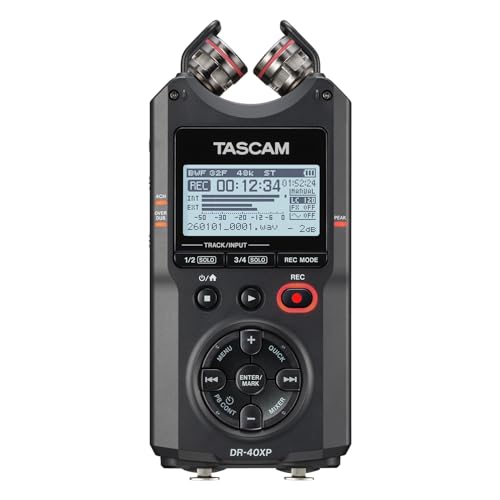
- Four-channel recording with built-in and external mics
- 32-bit float WAV recording up to 96 kHz
- USB-C 2-in/2-out audio interface
Best For: Creators needing adjustable stereo mics and simultaneous external inputs
Expandable Filmmaking Recorder
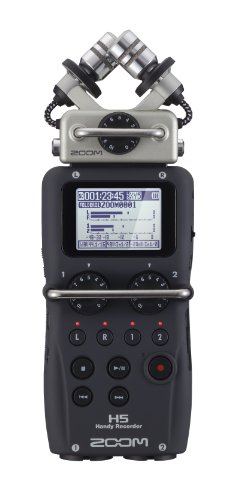
- Two XLR/TRS inputs with phantom power
- Interchangeable microphone capsule system
- Four-track recording and USB interface modes
Best For: Filmmakers and musicians wanting adaptable external-input recording
Everyday Capture

- 32-bit float, 24-bit, 16-bit, WAV, and MP3 recording
- Built-in stereo microphones rated up to 125dB SPL
- 2-in/2-out USB-C interface with up to 17.5 hours of battery life
Best For: Music, meetings, dictation, video audio, and podcasting
Two-Input Flexibility

- Two XLR/TRS combo inputs for microphones and instruments
- 32-bit/96kHz recording with OLED waveform display
- 3.5mm stereo input, headphone output, and up to 1TB SDXC support
Best For: Filmmakers, musicians, and podcasters using two external sources
Adjustable Stereo

- 3.5mm MIC/EXT IN jack with plug-in power capability
- Adjustable AB/XY microphones rated up to 125dB SPL
- 32-bit float recording and 2-in/2-out USB-C interface
Best For: Portable stereo recording with a 3.5mm external microphone option
Professional Production Powerhouse
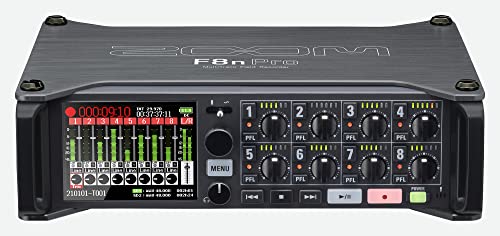
- Eight inputs and 10-track recording
- 32-bit float capture with high-gain preamps
- Dual SD recording and precise timecode
Best For: Professional film crews and location sound recordists
Compact Creator Companion
Xvive XV1-R Portable Stereo Recorder

- 32-bit float stereo recording
- Built-in X/Y microphones and USB mode
- WAV and AAC formats with up to 12-hour battery life
Best For: Portable recording, podcasting, and USB voice work
Accessible Two-Input Handheld

- Two XLR/TRS external inputs
- 32-bit float and four-track recording
- USB-C recording or streaming with SD backup
Best For: Musicians, podcasters, and filmmakers needing two external inputs
Versatile 4-Track Choice – Zoom H4n Pro
The Zoom H4n Pro is a flexible option for anyone comparing field recorders with external microphone input. Its two XLR/TRS combo inputs and stereo 1/8-inch mic input support external microphones, while the built-in X/Y microphones handle quick stereo recordings.
Best For: Musicians, video creators, podcasters, and home recordists who want multitrack recording with several input options.
Pros:
- Records up to four tracks simultaneously at up to 24-bit/96 kHz.
- Provides two XLR/TRS combo inputs plus a stereo 1/8-inch mic input.
- Works as a 2-in/2-out USB audio interface and includes built-in effects.
- Can mount to a mic stand, tripod, or DSLR setup with an optional adapter.
Cons:
- Battery life is listed at up to 5.5 hours, or up to 8 hours in Stamina mode.
- Uses two AA batteries and SD/SDHC media for recording.
The H4n Pro is a practical all-rounder when you need external mic connectivity, onboard stereo microphones, and straightforward four-track recording in a portable package.
Clip-Free Professional Pick – Zoom F3
The Zoom F3 is a focused choice among field recorders with external microphone input, built for demanding location work. Its dual locking XLR inputs and 32-bit float recording help simplify level management when recording dialogue, music, or unpredictable sound sources.
Best For: Run-and-gun filmmakers, professional recordists, and musicians who need secure connections and clean audio in the field.
Pros:
- 32-bit float recording is designed to capture quiet sounds and sudden peaks without stopping to adjust levels.
- Dual locking XLR/TRS inputs help keep cables secure in complex or out-of-reach setups.
- Ultra-low-noise preamps support clean recordings in uncontrolled environments.
- Offers flexible power options and standalone or USB workflows.
Cons:
- Its two-input design is less suited to larger multitrack setups than four-track models.
- Recording requires microSD media, and the unit uses two AA batteries.
The F3 prioritizes dependable external microphone recording over extra onboard features, making it especially compelling when 32-bit float capture and locking XLR connections matter most.
Flexible 32-Bit Float Recorder – TASCAM DR-40XP
The TASCAM DR-40XP combines adjustable built-in microphones with two external inputs, making it a versatile option for field recorders with external microphone input. Its four-channel mode can record the onboard microphones and external sources at the same time.
Best For: Musicians, interviewers, and video creators who want adjustable stereo recording plus external microphone support.
Pros:
- Records four channels using the built-in microphones and external inputs together.
- Supports 32-bit float, 24-bit, and 16-bit WAV recording at rates up to 96 kHz.
- Adjustable A-B or X-Y condenser microphones support flexible stereo placement.
- Functions as a 2-in/2-out USB-C audio interface.
Cons:
- microSD card and batteries are not included.
- The adjustable built-in microphones are rated for up to 125 dB SPL.
The DR-40XP stands out when you want more than simple external inputs: its simultaneous four-channel recording and adjustable microphone array support adaptable music, interview, and video workflows.
Expandable Filmmaking Recorder – Zoom H5
The Zoom H5 is a capable choice for field recorders with external microphone input, combining two XLR/TRS combo inputs with a detachable, interchangeable X/Y capsule. This gives filmmakers and musicians a way to adapt the recorder to different capture setups.
Best For: Filmmakers and musicians who want four-track recording, phantom-powered external inputs, and an expandable capsule system.
Pros:
- Two XLR/TRS inputs provide selectable phantom power and a -20 dB pad.
- Interchangeable input capsules let you change the recording configuration.
- Supports four-track simultaneous recording and an audio safety net.
- Works as a multichannel or stereo USB audio interface for PC, Mac, and iPad.
Cons:
- Included recording media support is listed for SD/SDHC cards up to 32GB.
- Battery life is listed at about 10 hours, and the required batteries are not included in the stated package details.
The H5 is a strong middle ground for users who need external microphone inputs today but may want to expand their recording setup with compatible Zoom capsules later.
Everyday Capture – DR-05XP
If you want field recorders with external microphone input but also value simple handheld operation, the TASCAM DR-05XP is a practical choice. It records in 32-bit float, 24-bit, 16-bit, WAV, or MP3 formats and doubles as a 2-in/2-out USB-C audio interface for computer recording.
Best For: Music, meetings, dictation, audio-for-video, and podcasting where built-in stereo microphones and computer connectivity are useful.
Pros:
- Supports 32-bit float recording along with 24-bit, 16-bit, and MP3 modes.
- Built-in omnidirectional condenser microphones handle sources up to 125dB SPL.
- Works as a 2-in/2-out USB-C audio interface and offers up to 17.5 hours of battery operation.
Cons:
- The supplied notes identify the microphone as built-in and do not specify an external microphone input.
- SD card and batteries are not included.
The DR-05XP is a straightforward portable recorder for users who want flexible recording quality and USB-C computer use. If connecting an external microphone is your main requirement, verify the input configuration before buying.
Two-Input Flexibility – Zoom H1 XLR
The Zoom H1 XLR is a strong fit for shoppers comparing field recorders with external microphone input. Its two XLR/TRS combo inputs accept microphones, instruments, and other sources, while 32-bit/96kHz recording and an OLED waveform display support detailed capture and quick level checks.
Best For: Filmmakers, musicians, podcasters, and anyone building a two-source recording setup with XLR or TRS connections.
Pros:
- Provides two XLR/TRS combo inputs for microphones, instruments, and other sources.
- Records at up to 32-bit/96kHz for detailed audio capture.
- Includes a waveform display, 3.5mm stereo input, headphone output, and SDXC support up to 1TB.
Cons:
- The supplied notes do not state battery life or whether batteries and a card are included.
With two combination inputs and both 3.5mm input and output connections, the H1 XLR offers the most clearly defined external-input setup in this group. It is especially suited to users who need flexible connections rather than only built-in microphones.
Adjustable Stereo – DR-07XP
For shoppers seeking field recorders with external microphone input alongside adjustable built-in microphones, the TASCAM DR-07XP offers a versatile setup. Its stereo AB/XY condenser microphones can be repositioned, and a 3.5mm stereo MIC/EXT IN jack supports an external source and can provide plug-in power.
Best For: Portable stereo recording, audio-for-video, meetings, dictation, music, and podcasting with the option to connect a 3.5mm external microphone.
Pros:
- Includes a 3.5mm stereo MIC/EXT IN jack with plug-in power capability.
- Adjustable AB/XY stereo condenser microphones handle sources up to 125dB SPL.
- Supports 32-bit float recording, USB-C audio-interface operation, and microSD cards up to 512GB.
Cons:
- MicroSD card and two AA batteries are sold separately.
- The external microphone connection is a 3.5mm stereo input rather than an XLR/TRS combination input.
The DR-07XP is a well-rounded choice when you want built-in microphone positioning plus a dedicated 3.5mm external input. Its 32-bit float modes and USB-C interface add flexibility for both field work and computer-based recording.
Professional Production Powerhouse – Zoom F8n Pro
For filmmakers who need field recorders with external microphone input, the Zoom F8n Pro is a production-focused option with eight inputs, 10-track recording, and high-gain preamps. Its 32-bit float recording, dual SD slots, and timecode support make it suited to demanding location workflows.
Best For: Professional film crews, location sound recordists, and productions requiring multiple inputs and reliable synchronization.
Pros:
- Eight inputs and 10-track recording support complex production setups.
- 32-bit float recording and dual AD converters help provide clip-free audio capture.
- Dual SD slots support redundant recording, while timecode accuracy is rated down to 0.2ppm.
- Can function as an 8-in/4-out USB audio interface while recording to an SD card.
Cons:
- At 1.8 kg, it is substantially less portable than a compact handheld recorder.
- Its professional feature set may be more than casual users need.
- Battery life is listed at approximately 8.5 hours.
The F8n Pro is the strongest fit here for multi-microphone film and field work. Choose it when input count, timecode, redundancy, and advanced production control matter more than minimal size.
Compact Creator Companion – Xvive XV1-R Portable Stereo Recorder
The Xvive XV1-R is a compact choice among field recorders with external microphone input, combining 32-bit float recording with built-in X/Y microphones and USB microphone functionality. Its lightweight design, auto-record features, and WAV or AAC options suit portable recording and content creation.
Best For: Musicians, podcasters, filmmakers, and creators who want a small recorder for stereo capture, voice work, or USB recording.
Pros:
- 32-bit float recording reduces the need for manual gain adjustment in dynamic situations.
- X/Y microphones can capture audio up to 130 dB SPL without distortion, according to the supplied specifications.
- Works as a USB microphone with computers, mobile devices, and tablets.
- Supports WAV and space-saving AAC recording, with up to 12 hours of listed battery life.
Cons:
- The supplied details do not specify external microphone input connectors.
- There is no headphone jack listed.
- USB microphone operation is fixed at a 48 kHz sample rate.
The XV1-R is best viewed as a lightweight stereo recorder and USB microphone rather than a multi-input field mixer. It is appealing for creators who prioritize portability, simple operation, and flexible file formats.
Accessible Two-Input Handheld – Zoom H4 Essential
The Zoom H4 Essential is a practical handheld option for buyers comparing field recorders with external microphone input. It combines built-in stereo microphones with two XLR/TRS inputs, 32-bit float recording, and USB-C connectivity for recording or streaming.
Best For: Musicians, podcasters, interviewers, and filmmakers who need external mic or instrument connections in a portable recorder.
Pros:
- Two XLR/TRS inputs accept external microphones, instruments, mixers, or soundboards.
- 32-bit float recording helps reduce concerns about distorted takes.
- Can record to an SD card while connecting to a phone, tablet, or computer over USB-C.
- Spoken menu guidance can make operation more accessible and easier to navigate.
Cons:
- Four-track recording offers less expansion than the F8n Pro’s 10-track design.
- It requires two AA batteries, with a listed recording time of up to 10 hours.
- It has fewer external inputs than a larger professional field recorder.
The H4 Essential strikes a useful balance between handheld portability and external connectivity. It is a strong everyday choice when two XLR/TRS inputs are enough and straightforward operation is a priority.
How We Picked the Best Field Recorders with External Microphone Input
We focused on recorders that accept an external microphone through dedicated XLR, TRS, or combination inputs, rather than models limited to built-in microphones. We also considered recording resolution, channel count, preamp flexibility, battery operation, monitoring, portability, and suitability for film, music, podcasting, interviews, and field sound.
The selection spans accessible handheld recorders, compact professional units, and higher-input systems for crews or multitrack sessions. Features such as 32-bit float recording can simplify gain management, while traditional 24-bit models may offer a familiar workflow and strong value.
Quick Comparison
- Best for simple stereo capture: Compact TASCAM and Xvive models are easy to carry and operate.
- Best for filmmakers and musicians: Zoom H4n Pro, H5, H4 Essential, and F3 provide useful external-input flexibility.
- Best for fast-changing levels: The 32-bit float recorders help protect recordings from clipping when gain is difficult to set in advance.
- Best for larger productions: The Zoom F8n Pro offers multiple inputs and tracks for more elaborate location setups.
Key Buying Factors for Field Recorders with External Microphone Input
Inputs and Microphone Compatibility
Check whether you need XLR inputs for professional microphones, 1/4-inch TRS connections for instruments, or combo jacks that support both. Phantom power matters for condenser microphones, while plug-in power is relevant to some compact lavalier and stereo microphones. Also verify whether the recorder supports the number of microphones or sources you plan to use simultaneously.
Recording Format and Gain Control
32-bit float recording is useful for unpredictable dialogue, concerts, and outdoor work because it provides substantial headroom during compatible post-production workflows. It does not replace good microphone placement, and it may not be necessary for controlled sessions. Confirm supported WAV formats, sample rates, limiter options, and manual gain controls before buying.
Portability, Power, and Handling
For location work, consider weight, battery type, battery life, wind protection, mounting options, and whether the controls are practical outdoors. A recorder that fits securely on a camera rig or in a pocket may be more useful than a larger unit with features you rarely use. Headphone monitoring and a clear display are especially important when recording alone.
Workflow and Connectivity
USB audio-interface functionality can make a recorder useful for podcasting, streaming, or computer-based production. Look for easy file transfer, reliable media support, overdubbing or multitrack features when needed, and outputs that match your monitoring or camera setup.
Who Should Buy Which Field Recorders with External Microphone Input?
Choose a compact stereo recorder if you mainly capture lectures, rehearsals, interviews, travel sound, or quick reference recordings. Choose a 32-bit float handheld model if levels can change suddenly or you want a forgiving setup for documentary and location work. Choose a recorder with two or more professional inputs for external microphones, instruments, or dual-source dialogue. Choose a multichannel unit such as the F8n Pro when you need several microphones, isolated tracks, time-sensitive production work, or room to expand.