The right projector screen can make a bigger difference than upgrading the projector alone. Screen size, aspect ratio, setup style, and viewing environment all affect brightness, clarity, and convenience.
We selected 10 projector screens covering compact portable models, pull-down designs, electric screens, large outdoor displays, and inflatable options so you can match the screen to your space and viewing habits.
Best 10 Projector Screens Picks for 2026
Best Portable Pick
Mdbebbron 120-Inch Foldable Screen

- 120-inch 16:9 viewing area
- Supports front and rear projection
- Lightweight, washable foldable fabric
Best For: Portable indoor and outdoor movie setups
Best Retractable Value
VIVOHOME 100-Inch Pull-Down Screen
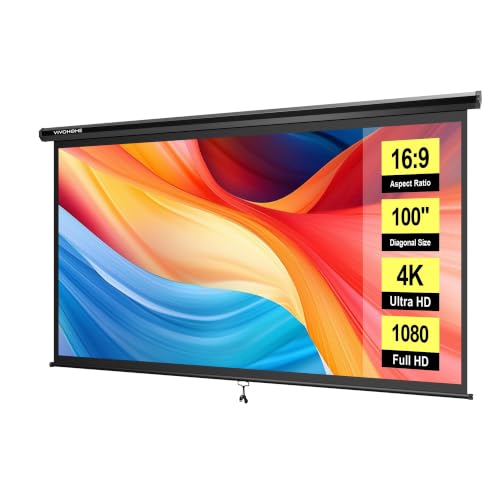
- Self-locking manual pull-down design
- Supports up to 8K content
- Wall- or ceiling-mountable housing
Best For: Rooms needing tidy, reusable projection
Best for Backyard Events
XHYCPY 16-Foot Inflatable Screen

- Massive 16-foot outdoor display
- Front and rear projection support
- Includes blower, stakes, tethers, and bag
Best For: Backyard movies and large outdoor gatherings
Best Motorized Upgrade
DINAH 120-Inch Electric Screen

- Remote-controlled motorized operation
- Large 120-inch display
- Designed for 4K and 3D HD projection
Best For: Permanent home theater or presentation installations
Best Lightweight Screen
AAJK 150-Inch Foldable Projector Screen

- 2.8-pound foldable design
- Washable fabric supports front and rear projection
- Flexible hook, bracket, nail, or tape mounting
Best For: Portable screen-only setups and temporary mounting
Best Wind-Ready Screen
STWUI 120-Inch Screen with Stake-Down Stand

- Stakeable base reduces reliance on sandbags
- Steel frame, ropes, and four stakes aid stability
- Wrinkle-free screen supports front and rear projection
Best For: Outdoor viewing on soil or other stake-friendly ground
Best Portable 80-Inch Tripod Screen
VISULAPEX 80-Inch Projector Screen

- 1.2-gain fiberglass surface for vivid projection
- Tripod adjusts from 59 to 89 inches
- Sets up in less than three minutes
Best For: Portable indoor and outdoor movie nights
Best Large Outdoor Movie Screen
SKERELL 100-Inch Projector Screen

- Large 100-inch 16:10 display
- Tool-free setup in about five minutes
- Includes ropes, nails, water bags, and carry bag
Best For: Backyard theaters and larger gatherings
Best Lightweight Camping Screen
AODIOU 80-Inch Portable Projector Screen

- Weighs about 5.62 pounds
- Tool-free assembly with padded carry bag
- Includes rope, hook, and water bag
Best For: Camping, picnics, and small outdoor movie nights
Best Portable Pick – Mdbebbron 120-Inch Foldable Screen
If you want flexible projector screens for movie nights indoors or outdoors, the Mdbebbron 120-inch model emphasizes portability and simple installation. Its foldable polyester design supports front and rear projection and packs into a backpack or suitcase.
Best For: Portable home theaters, outdoor movies, presentations, and buyers who need a lightweight screen.
Pros:
- Large 120-inch, 16:9 viewing area measuring 104 by 58 inches.
- Foldable, lightweight 1.7-pound design for convenient storage and transport.
- Supports front and rear projection with a 160-degree viewing angle.
- Can be hand- or machine-washed and attached using hooks, ropes, nails, or tape.
Cons:
- Wall mounting hardware or a stand is not built into the product.
- Manual setup requires securing the screen to a suitable surface.
This is a practical choice when portability matters more than a permanent, tensioned installation. The large image area and washable fabric make it especially versatile for temporary setups.
Best Retractable Value – VIVOHOME 100-Inch Pull-Down Screen
For projector screens that stay neatly stored between uses, the VIVOHOME 100-inch model uses a manual pull-down design with a self-locking mechanism. Its matte white PVC surface supports high-definition content and can mount to a wall or ceiling.
Best For: Living rooms, classrooms, meeting rooms, gaming spaces, and karaoke areas needing a roll-up screen.
Pros:
- Self-locking mechanism holds the 100-inch screen at different heights.
- Matte surface supports 3D, 1080P, 4K, 8K, and Full HD images.
- 160-degree viewing angle helps provide a broad viewing area.
- Metal casing and three-layer waterproof PVC fabric are designed for durability.
Cons:
- The screen requires manual raising and lowering.
- Screws and L-brackets are not included.
- The overall unit measures about 92 by 57.5 inches, so installation space should be checked carefully.
The VIVOHOME is a sensible middle ground between a portable fabric screen and a motorized model. Its retractable housing keeps the screen organized, while the manual operation avoids the added complexity of an electric system.
Best for Backyard Events – XHYCPY 16-Foot Inflatable Screen
Among large outdoor projector screens, the XHYCPY 16-foot inflatable model is built for backyard movie nights, parties, and group viewing. It includes a blower, stakes, tethers, a removable screen, and a carry bag for a freestanding setup.
Best For: Backyard movies, camping trips, celebrations, and other large outdoor gatherings.
Pros:
- 16-foot screen provides a very large 16:9 viewing format.
- Supports both front and rear projection with a 160-degree viewing angle.
- Included 110V, 180W blower inflates the screen in about two minutes.
- Removable screen and washable frame simplify cleaning and storage.
Cons:
- The blower must remain plugged in throughout the presentation.
- Outdoor setup requires stakes, tethers, and sufficient open space.
- The manufacturer warranty is limited to 90 days.
This screen is designed for spectacle rather than compact indoor use. Its included support equipment makes deployment straightforward, but the continuous blower requirement and large footprint should be planned for before purchase.
Best Motorized Upgrade – DINAH 120-Inch Electric Screen
For a more streamlined home theater or presentation setup, the DINAH 120-inch electric projector screen lowers and retracts with a remote. Its ceiling- or wall-mounted drop-down design is intended to save space while supporting 4K and 3D HD projection.
Best For: Home theaters, offices, and classrooms where remote-controlled screen operation is useful.
Pros:
- Motorized operation lets you lower or retract the screen by remote.
- Large 120-inch format creates an immersive viewing experience.
- Designed for 4K, 3D, and HD projection.
- Drop-down design keeps the screen out of the way when not in use.
Cons:
- At 11.79 kilograms, it is substantially heavier than foldable fabric screens.
- Installation requires a suitable ceiling- or wall-mount location.
- Its listed 4:3 model designation may be less suited to buyers specifically seeking a widescreen format.
The DINAH is the convenience-focused option in this group. Remote-controlled movement and a concealed drop-down format can make repeated use easier, provided the installation area can support its size and weight.
Best Large Portable Screen – TOWOND 150-Inch Screen with Stand
If you need projector screens for large indoor or outdoor gatherings, the TOWOND 150-inch model combines a full stand, front-and-rear projection support, and a carry bag. Its matte polyester surface is designed for bright images, while the tool-free frame is intended to set up in about five minutes.
Best For: Backyard movie nights, family events, camping trips, and large indoor spaces with more than 140 inches of room width.
Pros:
- Large 150-inch diagonal screen with a 160-degree viewing angle.
- Supports both front and rear projection and has a wrinkle-resistant polyester surface.
- Includes a foldable stand, stakes, ropes, brackets, and storage bag.
- Weighs 11.5 pounds and is designed to fit in car trunks.
Cons:
- The large screen requires substantial indoor width for setup.
- Its 11.5-pound weight is less convenient than lighter screen-only options.
- It has no listed warranty.
The TOWOND is a practical choice when maximum screen size and a self-supporting frame matter more than minimizing packed weight. Confirm your available space before choosing this unusually large format.
Best Lightweight Screen – AAJK 150-Inch Foldable Projector Screen
For shoppers comparing projector screens that are easy to pack away, this AAJK 150-inch screen focuses on portability and simple mounting. The washable polyester fabric folds into a backpack or suitcase and supports front and rear projection for indoor presentations or outdoor viewing.
Best For: Buyers who want a large, screen-only surface for home theaters, classrooms, offices, backyard parties, and travel.
Pros:
- Lightweight 2.8-pound design folds for storage and transport.
- Washable, thickened fabric is described as crease-free and nontransparent.
- Offers a 150-inch 16:9 viewing area with a 160-degree viewing angle.
- Can be attached with hooks, brackets, nails, or double-sided tape.
Cons:
- No stand is included, so mounting hardware or a suitable support is required.
- The listed warranty is limited to 30 days.
- Wall mounting may be less convenient for temporary outdoor setups.
The AAJK stands out for low carry weight and flexible mounting rather than freestanding convenience. It is a good fit if you already have a wall, hooks, or another way to support a large screen.
Best Wind-Ready Screen – STWUI 120-Inch Screen with Stake-Down Stand
Among projector screens built for outdoor use, the STWUI 120-inch model emphasizes ground stability. Its widened stakeable base, steel frame, windproof ropes, and four ground stakes are designed to help keep the screen steady, while the elastic screen supports front and rear projection.
Best For: Backyard movie nights, camping, sports viewing, parties, and other outdoor events where a stake-down stand is useful.
Pros:
- Stakeable weighted base avoids the need to carry heavy sandbags.
- All-iron bracket, four stakes, and two windproof ropes add outdoor support.
- Wrinkle-free 16:9 screen offers a 160-degree viewing angle and front/rear projection.
- Disassembles into a carry bag and is designed for about eight-minute tool-free installation.
Cons:
- Ground stakes are less useful on hard surfaces where they cannot be inserted.
- At 120 inches, it is smaller than the two 150-inch alternatives.
- The listed warranty is limited to 30 days.
The STWUI is the strongest match here for viewers concerned about outdoor movement. Its stake-down system adds setup requirements, but it provides a more purpose-built approach to securing a freestanding screen on suitable ground.
Best Portable 80-Inch Tripod Screen – VISULAPEX 80-Inch Projector Screen
If you want projector screens that set up quickly for indoor or outdoor movie nights, this VISULAPEX model combines an 80-inch 16:9 display with a height-adjustable tripod. Its fiberglass surface, black-coated back, and 1.2 gain are designed to support vivid 4K-compatible projection, while the included carrying bag simplifies transport.
Best For: Portable backyard movies, camping, travel, and smaller home theater spaces.
Pros:
- Sets up and packs away in less than three minutes.
- Fiberglass screen with 1.2 gain and a 160-degree viewing angle.
- Height-adjustable tripod and included carrying bag.
Cons:
- The 70-inch-wide screen requires an indoor space wider than 70 inches.
- The tripod can extend to 89 inches, so ceiling clearance should be checked.
This is a practical choice when fast setup and straightforward portability matter more than a very large image. Confirm the available width and height before ordering, especially for indoor use.
Best Large Outdoor Movie Screen – SKERELL 100-Inch Projector Screen
For shoppers comparing projector screens for larger gatherings, the SKERELL offers a 100-inch 16:10 display with a foldable frame and carry bag. It is designed for quick, tool-free assembly and includes ropes, nails, and water bags to help secure the screen outdoors in windy conditions.
Best For: Backyard theaters, family events, presentations, and other large-area viewing.
Pros:
- Large 100-inch screen with a 160-degree viewing angle.
- Tool-free setup takes about five minutes.
- Includes outdoor securing accessories and a carry bag.
- Supports indoor and outdoor use with double-sided projection.
Cons:
- The 16:10 aspect ratio may not match content formatted for 16:9 screens.
- Its 85-inch-wide screen dimensions require more setup space.
The SKERELL is the strongest fit here if screen size and outdoor flexibility are priorities. Its included anchoring accessories add convenience, but measure your viewing area and verify compatibility with your preferred content format.
Best Lightweight Camping Screen – AODIOU 80-Inch Portable Projector Screen
This AODIOU model is a lightweight option among portable projector screens, weighing about 5.62 pounds and packing into a soft padded carrying bag. Its 80-inch 16:9 polyester surface offers a 160-degree viewing angle, while the included rope, hanging hook, and water bag help keep it steady outdoors.
Best For: Camping, picnics, backyard viewing, and small family movie nights.
Pros:
- Lightweight aluminum construction is easy to carry.
- Tool-free assembly and compact storage design.
- Washable polyester surface with a 160-degree viewing angle.
- Includes outdoor stability accessories.
Cons:
- The glossy finish may be less suitable for viewers who prefer a matte surface.
- At 80 inches, it is better suited to smaller groups than large gatherings.
Choose the AODIOU when portability is more important than maximum size. Its low weight, simple assembly, and included outdoor accessories make it convenient for casual movie viewing away from home.
How We Picked These Projector Screens
We focused on practical differences that matter when choosing a screen: diagonal size, aspect ratio, portability, setup requirements, projection compatibility, and intended indoor or outdoor use. The lineup includes fabric screens, stand-mounted models, pull-down and motorized designs, and an inflatable screen for large backyard events.
Because product specifications and included accessories can vary, confirm the current listing for dimensions, frame or stand construction, projection direction, carry bags, stakes, air blowers, and remote controls before buying.
Quick Comparison
| Screen type | Best suited to | Main advantage |
|---|---|---|
| Foldable screen | Travel and occasional use | Lightweight storage and flexible placement |
| Pull-down screen | Dedicated indoor rooms | Clean, space-saving installation |
| Electric screen | Convenient home theaters | Remote-controlled operation |
| Stand-mounted screen | Indoor and outdoor viewing | Freestanding setup without wall mounting |
| Inflatable screen | Large backyard gatherings | Big viewing area and event-friendly design |
Key Buying Factors for Projector Screens
Size and Viewing Distance
A larger screen is not automatically better. Choose a size that fits the room or yard while allowing viewers to sit far enough away to see the entire image comfortably. Measure the available width, including space for stands, frames, or tie-downs.
Aspect Ratio
A 16:9 screen is the most versatile choice for modern movies, streaming services, gaming, and most home-theater projectors. A 16:10 model may better suit certain business, computer, or presentation projectors. Match the screen to the projector’s native resolution and image shape to avoid unused borders or cropping.
Installation and Portability
Pull-down and electric screens work well when the screen can remain installed. Stand-mounted and foldable screens are better for renters, multipurpose rooms, camping, and backyard movie nights. Outdoor users should prioritize sturdy supports, tie-down points, stakes, and wind protection.
Material, Gain, and Projection Direction
Screen material affects brightness, viewing angles, and image uniformity. A moderate gain can help in darker rooms, while a wide viewing angle is useful when viewers sit off-center. If the projector may sit behind the screen, choose a model that explicitly supports rear projection.
Who Should Buy Which Projector Screens?
- For a permanent indoor theater: Choose a pull-down or electric screen sized for the room and compatible with your projector’s aspect ratio.
- For flexible home use: A foldable or stand-mounted screen offers easier storage and faster setup.
- For backyard movie nights: Select a stand-based or inflatable screen with reliable anchoring and enough space around it for safe installation.
- For large groups: Consider a 120- to 150-inch model, but verify viewing distance, available floor space, and outdoor stability.
- For camping or travel: Prioritize a lighter screen with a carry bag, simple assembly, and a compact folded size.
Before ordering, compare the screen’s actual viewing area—not just its advertised diagonal—with your projector’s throw distance and brightness. A correctly sized, well-supported screen will usually deliver a better experience than a larger model that is difficult to install or view evenly.